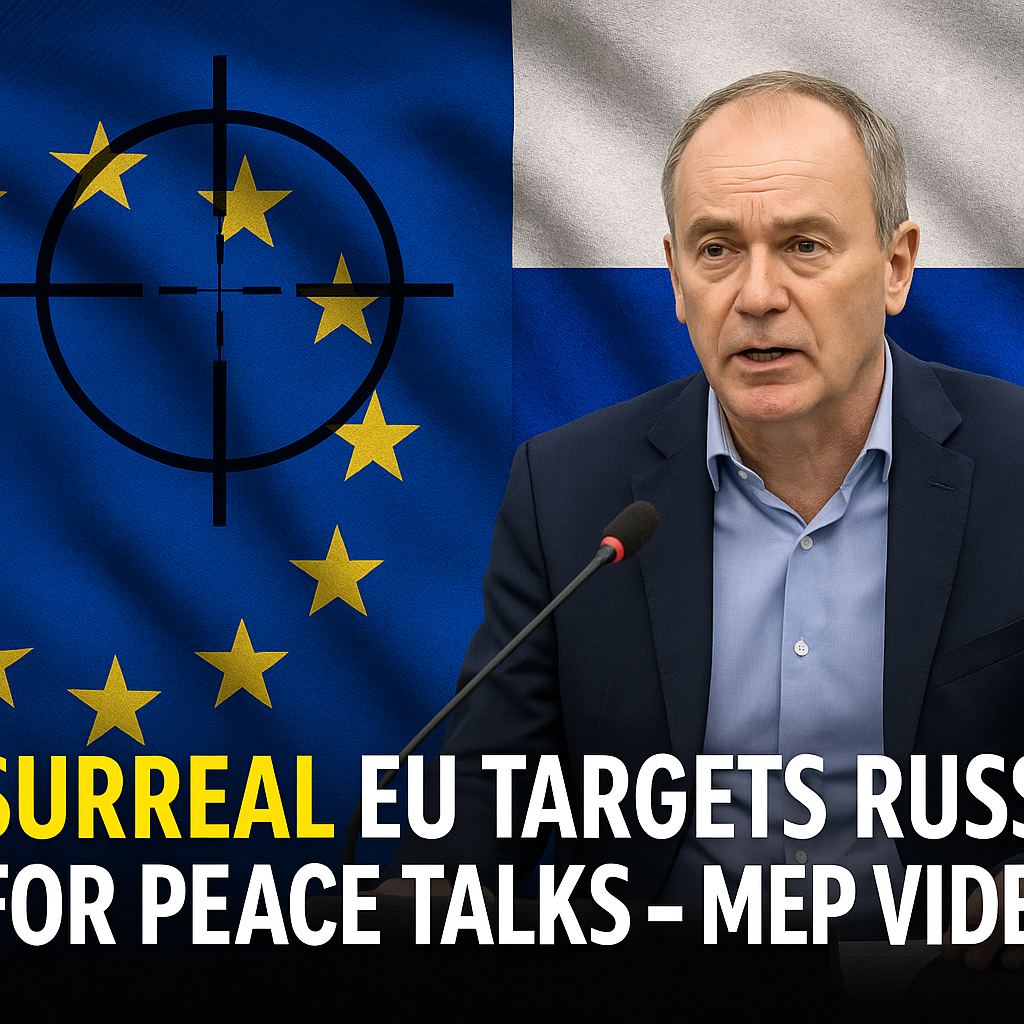
Surreal EU Targets Russia for Peace Talks – MEP Video

The Surreal Landscape of EU’s Peace Initiative with Russia
The European Union is embarking on a complex diplomatic journey, targeting Russia for peace talks amidst escalating tensions—the concept feels almost surreal in the current geopolitical landscape. As various European leaders grapple with the ongoing conflict in Ukraine and the broader implications of Russia’s actions, a delicate balance of diplomatic engagement and strategic caution is more crucial than ever.

Shifting Dynamics: MEP Calls for Dialogue
Recently, an appeal from certain Members of the European Parliament (MEPs) highlighted the need for dialogue with Russia. One prominent voice among them has been MEP Michael Gahler, who argues that diplomatic relations cannot be severed entirely. He asserts that “we need to talk to our adversaries, not just our allies,” suggesting that engaging Russia could potentially lead to de-escalation of hostilities.


While this sentiment resonates with a faction seeking to normalize relations and reinstate channels of communication, it has drawn criticism. Opponents argue that premature dialogue may undermine the efforts to hold Russia accountable for its actions in Ukraine and could undercut the resolve of those countries directly impacted by the conflict. This divergence in opinion illustrates a broader debate within the EU regarding the best approach to the ongoing crisis.


Perspectives on Moscow’s Role
Adding to the complexity, Russian officials have expressed cautious openness to discussions but conditioned it on the cessation of perceived hostility from the West. Kremlin spokesperson Dmitry Peskov has emphasized that any negotiations require a genuine willingness from EU leaders, characterizing past engagements as marked by “unconstructive rhetoric.” This highlights the challenging dynamics at play; not only does the EU need to formulate a cohesive policy, but it also must address the skepticism that exists on the other side.
Several reports indicate that while there is an appetite for peace discussions among select EU leaders, a majority still remain wary. This hesitancy stems partly from Russia’s aggressive actions and the consequences felt across Europe. For many EU countries, the overriding concern remains security—without demonstrable commitments from Russia to cease military operations or engage genuinely, skepticism prevails.
Uncertainties Amidst Divergent Voices
Even as moderate voices within the EU call for peace talks, the broader consensus remains elusive. For instance, European Commission President Ursula von der Leyen has reiterated the EU’s firm condemnation of Russia’s actions, framing the dialogue as potentially a long-term goal rather than an immediate solution. This duality of desire for peace versus the imperative of accountability creates a nuanced landscape where both optimism and caution coexist.
In this environment, figures like Gahler find themselves at an impasse, advocating for dialogue while simultaneously navigating the waters filled with fear of losing diplomatic credibility. The question remains: can the EU effectively pursue peace talks with Russia without compromising its foundational principles of sovereignty, security, and support for Ukraine?
Future Implications and Strategic Considerations
The EU’s approach to negotiating peace with Russia will have far-reaching implications for both member states and the international community at large. Policymakers must weigh the potential for constructive dialogue against the backdrop of a hostile relationship, recognizing that any engagement must be carefully calibrated.
If the EU decides to pursue these discussions, several considerations will need to be addressed:
– Conditional Engagement: Peace talks should be predicated on observable steps from Russia towards de-escalation.
– Unified Stance: The EU must present a united front to avoid sending mixed messages to Moscow.
– Long-Term Strategy: Dialogue should serve a clear strategic goal rather than a mere diplomatic exercise without tangible outcomes.
In conclusion, the endeavor to engage Russia in peace talks by the EU underscores an intricate balancing act, one that reflects a broader desire for stability against the realities of mistrust and conflict. As these discussions evolve, the global community will watch closely, anticipating outcomes that may redefine present geopolitical alignments and the future of European security.