
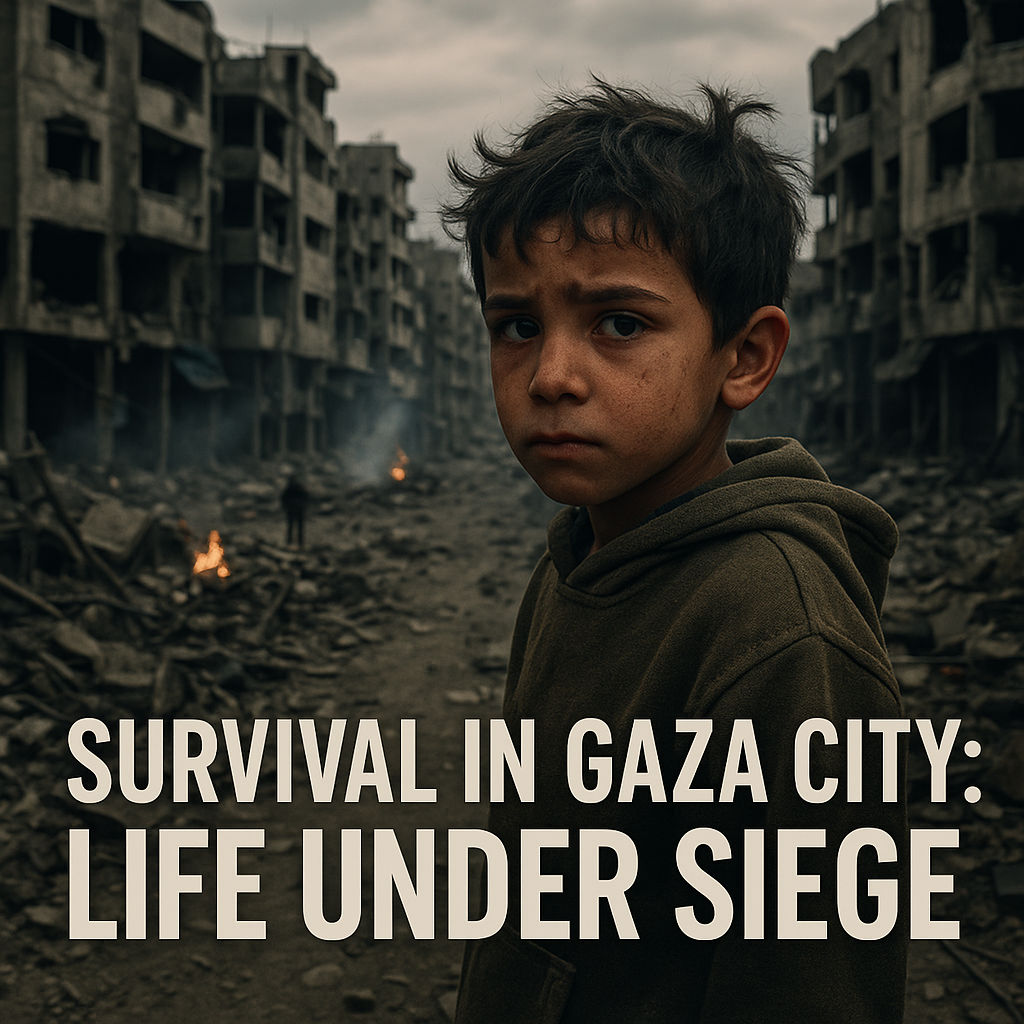
Survival in Gaza City: Life Under Siege

Survival in Gaza City: Life Under Siege
Life in Gaza City is a daily struggle for survival, shaped by the ongoing conflict and humanitarian challenges that affect the Palestinian population. This article aims to explore various dimensions of living under siege, drawing from diverse viewpoints and reputable news sources to provide a comprehensive perspective on the situation.

Everyday Challenges in Gaza City
In Gaza City, residents are confronted with a multitude of hardships that significantly impact their quality of life. A recent report from Al Jazeera highlighted that many families face ongoing shortages of essential supplies, including clean water, electricity, and medical resources. The blockade has compounded these issues, with restrictions on goods entering the enclave exacerbating conditions.


The economic toll of this situation cannot be understated. According to data, unemployment rates in Gaza hover around a staggering 50%, leaving many without stable incomes. The lack of opportunities contributes to a sense of hopelessness and despair among the youth, with many seeing no viable future within the territory. As one resident remarked, “We are not just struggling to survive; we are fighting to hold onto our dignity in the face of relentless adversity.”


The Psychological Burden of Siege
Beyond the immediate material challenges, the psychological effects of living under siege are profound. Reports from various sources indicate that the constant threat of violence, along with the pervasive sense of insecurity, takes a toll on mental health. Psychologists working in the area have noted a rise in anxiety, depression, and PTSD among residents, particularly children who have grown up in this environment.
A Sky News report pointed out that mental health professionals are overwhelmed by the demand for support services. Therapeutic interventions are crucial yet limited, leaving many individuals to cope with their traumas in isolation. “Children here are losing their childhood,” said a local psychiatrist. “They should be playing and learning, but instead, they’re just trying to survive day by day.”
A Complex Humanitarian Landscape
The humanitarian situation in Gaza City is a complex web of political, social, and economic factors. The ongoing blockade, political stalemate, and recurrent military escalations have led to a multi-layered crisis. While humanitarian organizations, including the United Nations, strive to offer assistance, their efforts are often hindered by the volatile situation.
Reports from RT highlight the tension between the need for immediate aid and the long-term resolution of the conflict. Aid workers face challenges like restricted access to certain areas and the politicization of humanitarian efforts. Moreover, while international actors often call for ceasefires and negotiations, the reality on the ground remains tense, with frequent clashes reported.
In the midst of this chaos, grassroots initiatives have emerged, reflecting the resilience and creativity of Gazans. Community groups work tirelessly to address immediate needs, from food distribution to educational programs for children. These efforts often fill gaps left by larger organizations, showcasing the indomitable spirit of the people of Gaza.
International Perspectives and Responses
International responses to the situation in Gaza City have been varied and, at times, contentious. On one hand, various governments and organizations advocate for the lifting of the blockade and increased humanitarian access. The United Nations has repeatedly warned that humanitarian needs are at a staggering high, urging the global community to respond effectively.
Conversely, there is also a counter-narrative that emphasizes security concerns, particularly from neighboring countries that fear the implications of a sudden influx of unregulated resources into conflict zones. This perspective often leads to calls for maintaining certain restrictions until concrete steps towards peace are observed.
The nuances of these viewpoints indicate that resolving the situation in Gaza is far from straightforward. The climate of distrust, both locally and internationally, complicates efforts to foster a genuine dialogue towards lasting peace.
A Call for Understanding and Action
To summarize, life in Gaza City under siege presents a myriad of challenges that intertwine physical survival with psychological resilience. The impacts of political decisions seep into everyday existence, affecting families and individuals striving to navigate through hardship.
While various actors work toward ameliorating conditions—both within Gaza and beyond—the need for a unified effort that considers the full range of human experiences remains crucial. Whether through advocacy for policy change or the support of grassroots initiatives, the call to action is clear: lasting change requires understanding, compassion, and an unwavering commitment to justice.
For the people of Gaza City, survival transcends the physical; it is about preserving hope, identity, and community in the face of hardship. The world would do well to listen to their stories and consider their needs as part of the broader conversation about peace and justice in the region.















