
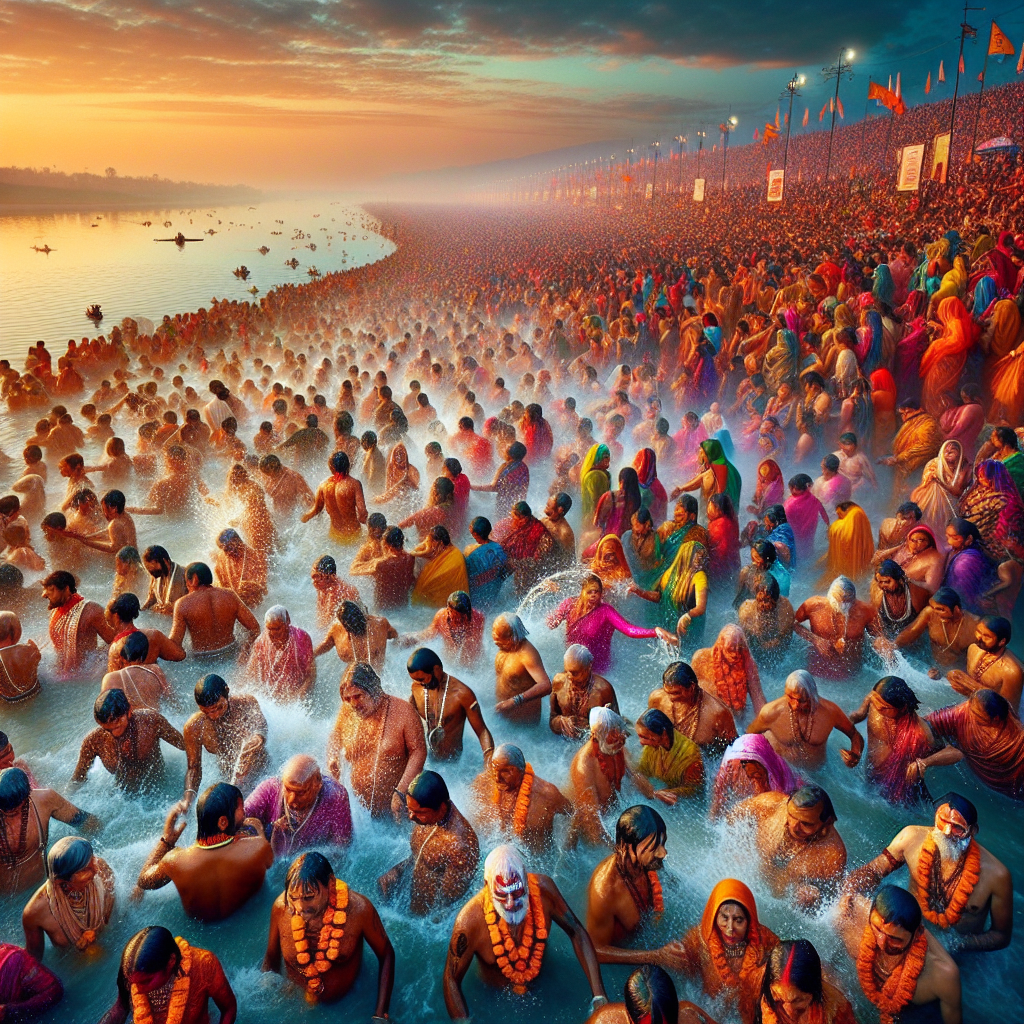
Thousands of Hindus Participate in Sacred River Rituals at India’s Maha Kumbh Mela Festival

Thousands of Hindus Participate in Sacred River Rituals at India’s Maha Kumbh Mela Festival
Introduction to the Maha Kumbh Mela
The Maha Kumbh Mela, one of the largest religious gatherings in the world, attracts millions of Hindu devotees to the banks of sacred rivers in India. This festival, held every 12 years, is a significant spiritual event marked by ritualistic bathing, prayers, and cultural activities.

Significance of the Rituals
The festival is deeply rooted in Hindu mythology and is believed to cleanse participants of their sins, offering them a path to salvation. The rituals are performed at the confluence of the Ganges, Yamuna, and the mythical Saraswati rivers, considered highly auspicious.


Key Highlights of the Festival
- Massive Participation: Thousands of devotees from across India and the world gather to take part in the sacred river baths.
- Spiritual Leaders: Prominent Hindu saints and spiritual leaders lead the rituals, offering blessings and guidance to the pilgrims.
- Cultural Extravaganza: The festival features a vibrant display of traditional music, dance, and art, showcasing India’s rich cultural heritage.
- Safety Measures: Authorities implement extensive safety and health measures to manage the large crowds and ensure a smooth experience for all attendees.
Conclusion
The Maha Kumbh Mela is not just a religious event but a cultural phenomenon that brings together people from diverse backgrounds in a shared spiritual journey. The festival’s grandeur and spiritual significance continue to captivate and inspire millions, reinforcing its status as a cornerstone of Hindu tradition.

















