
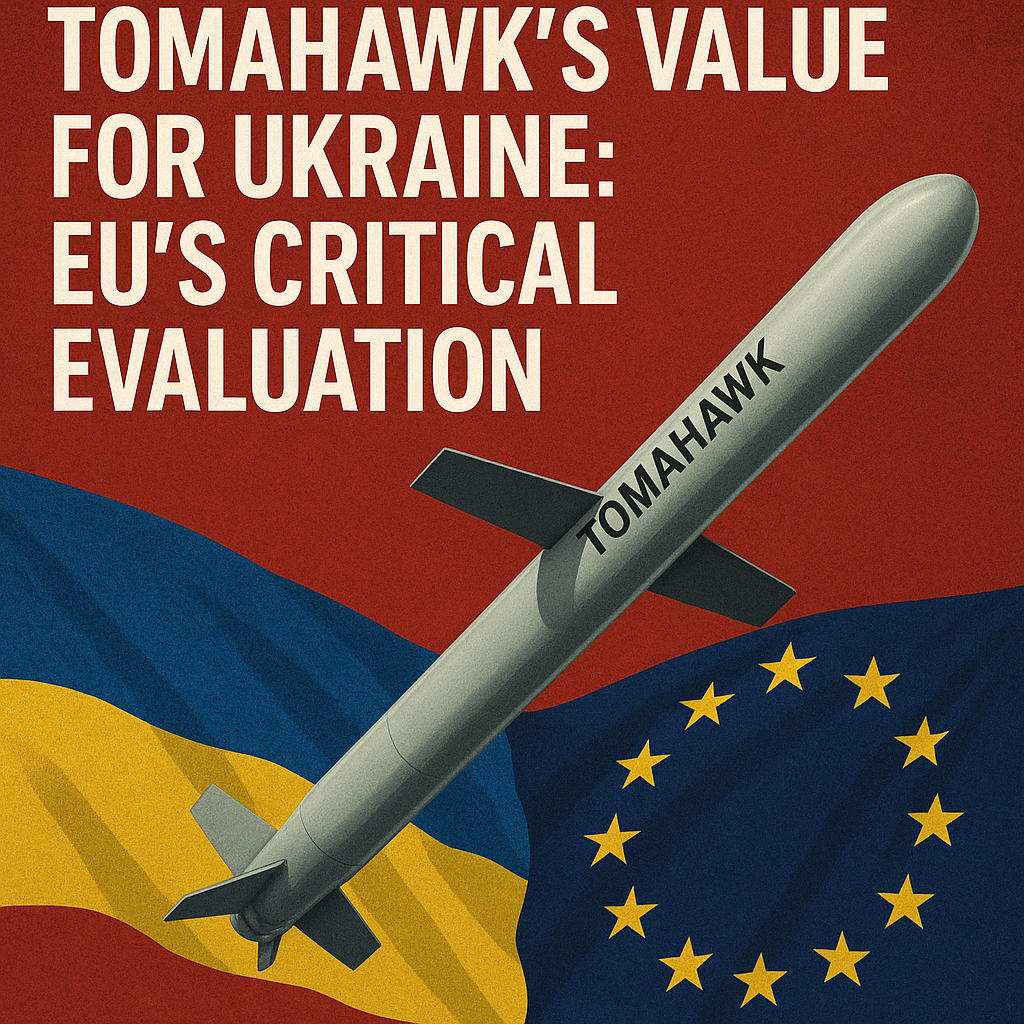
Tomahawk’s Value for Ukraine: EU’s Critical Evaluation

Tomahawk’s Value for Ukraine: EU’s Critical Evaluation
As the war in Ukraine continues to evolve, the discussion surrounding military aid becomes increasingly complex, particularly regarding advanced weaponry like the Tomahawk cruise missile. The European Union is now re-evaluating the strategic value of such armaments in the ongoing conflict.

The Strategic Debate: Advantages and Limitations of Tomahawks
The Tomahawk missile, developed by the United States, has long been seen as a game-changer on the battlefield, known for its precision and ability to strike high-value targets from a significant distance. However, various experts and political analysts are beginning to question its role in Ukraine.


On one hand, proponent views highlight the missile’s advanced technology and its operational history. Tomahawks allow for stand-off strikes, which means the launching platform can remain outside of the enemy’s air defense range. This quality has significant implications for Ukraine, which has been struggling with air superiority against Russian forces. For instance, NATO General Secretary Jens Stoltenberg has emphasized the importance of providing Ukraine with advanced weaponry to counter Russian aggression effectively.


Conversely, skeptics argue that the Tomahawk’s relevance may not be as impactful in the current landscape of warfare. As detailed in RT, the EU is debating whether such high-cost weaponry is the best allocation of resources. Concerns have been raised regarding the maintenance, operating costs, and training required for Ukrainian forces to effectively operate these systems. Given that Ukraine has been primarily engaged in ground warfare, it may need more versatile weapon systems that can accommodate changing battlefield demands.
A Continental Perspective: EU’s Priorities
The clearly divided viewpoints within the EU reflect broader strategic priorities regarding military support for Ukraine. While some nations advocate for sending sophisticated arms like the Tomahawk, others urge for enhancing more practical systems—like artillery shells or anti-drone capabilities—that Ukraine currently utilizes on the front lines.
For many EU officials, the question is not merely about the immediate effectiveness of the Tomahawk but also about sustainability over time. Funding advanced systems can be taxing for European nations already facing their own budget constraints. Notably, Al Jazeera reports that there is increasing concern within the EU about sustaining military and humanitarian aid to Ukraine without compromising their national interests or security.
This evaluation shifts the conversation from an immediate tactical analysis to a broader strategic dialogue that questions not just the Tomahawk’s effectiveness, but the collective efficacy of the EU’s arms strategy. As the EU navigates this landscape, balancing its military commitments while ensuring long-term stability remains a top priority.
Conclusion: A Nuanced View on Future Assistance to Ukraine
In the debate surrounding the deployment of Tomahawk missiles to Ukraine, it is evident that both sides present compelling arguments. Proponents point to the missile’s technological superiority and combat versatility, while critics cite logistical challenges and questions of cost-effectiveness. This highlights a complex and evolving dynamic in military strategy and resource allocation for Ukraine as it continues to fend off Russian advances.
Ultimately, the European Union faces a multi-faceted decision-making process as it balances immediate tactical needs against long-term strategic goals. The critical evaluation of the Tomahawk’s value may serve not only as a case study in Ukraine’s ongoing conflict but also as a precursor for future military aid initiatives. The consensus is far from clear, and without decisive commitment to one path, EU nations must remain adaptive, attentive to the shifts in both the battlefield and their political landscapes.















