
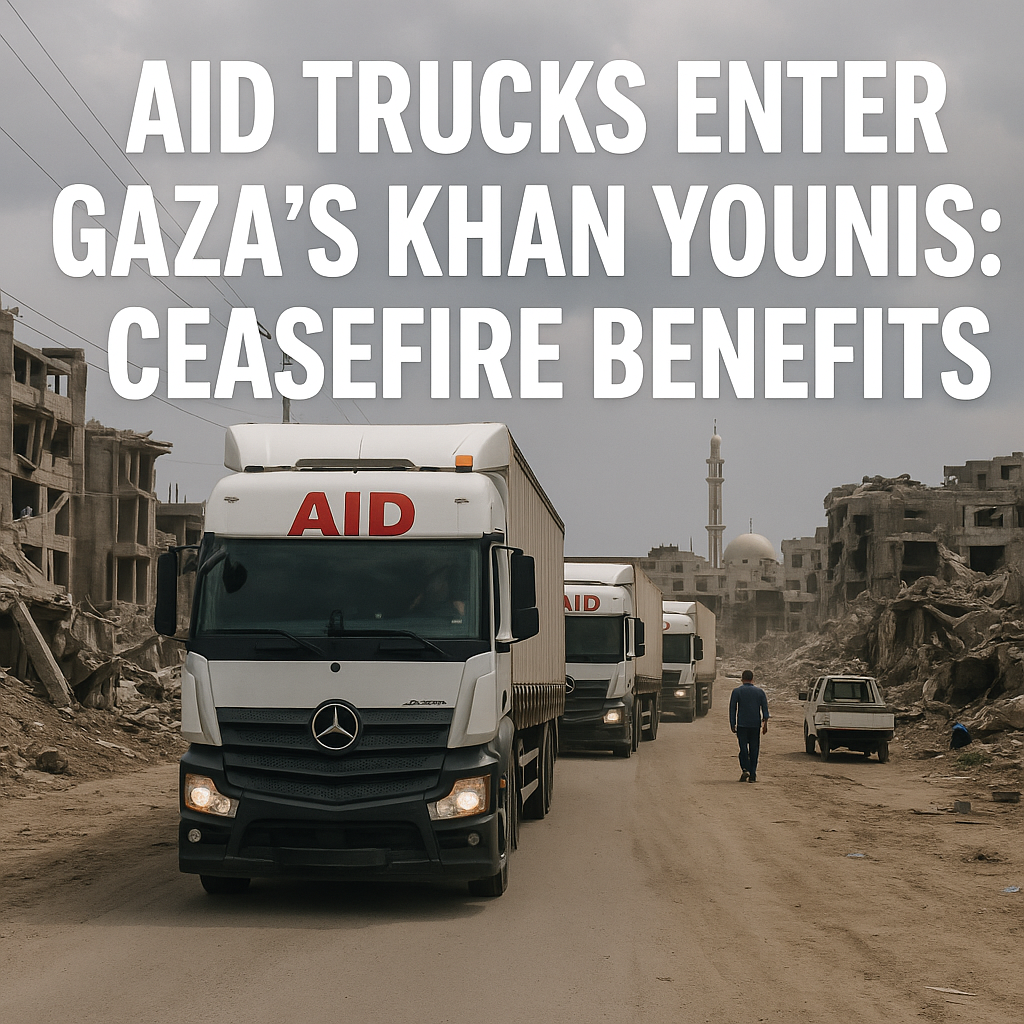
Aid Trucks Enter Gaza’s Khan Younis: Ceasefire Benefits

Aid Trucks Enter Gaza’s Khan Younis: Ceasefire Benefits
The recent entry of aid trucks into Khan Younis, Gaza, marks a significant turning point in the ongoing humanitarian crisis, highlighting the critical role of ceasefires in alleviating suffering in war-torn regions. With the backdrop of persistent violence, this development not only addresses immediate needs but opens the door for a wider discussion about the long-term implications of ceasefires on humanitarian efforts.

The Humanitarian Landscape
The situation in Gaza has garnered global attention as local populations struggle to access basic necessities such as food, water, and medical supplies. Reports indicate that the entry of aid trucks into Khan Younis has provided much-needed relief to many civilians. According to Al Jazeera, these trucks have delivered essential supplies that will assist thousands of families grappling with shortages due to ongoing conflict. Conversely, some critics argue that these aid efforts, although vital, are merely short-term fixes in a larger cycle of violence and humanitarian need.


Diverse Perspectives on Ceasefire Impacts
The ceasefire that has enabled the delivery of aid has received mixed responses. On one hand, humanitarian organizations and local leaders are praising the ceasefire as a necessary backdrop for delivering aid. Representatives from various NGOs have emphasized that such pauses in hostilities are crucial for providing life-saving assistance. As noted in Sky News, humanitarian corridors allow not only for aid transportation but also for medical evacuations and trauma care, addressing the immediate needs of civilians trapped in the conflict.


On the other hand, some voices within the region express skepticism regarding the durability of these ceasefires. Critics worry that they may serve as temporary respites rather than sustainable solutions. RT has reported that while there is widespread hope for peace, many locals remember past ceasefires that ended abruptly, leading to further escalations and humanitarian crises. This skepticism leads to broader worries about the reliability of international actors in ensuring that agreed-upon ceasefire terms are respected, suggesting a need for more robust mechanisms to protect civilian lives.
Long-Term Solutions or Temporary Relief?
The clear question arising from these discussions is whether such ceasefires can evolve into long-lasting solutions or whether they merely provide temporary relief while the fundamental issues remain unresolved.
The Case for Sustainable Change
Advocates for a more permanent resolution argue that international involvement is key to establishing a more stable peace. They advocate for diplomatic measures that go beyond ceasefires. As the humanitarian needs in Gaza grow, it becomes increasingly evident that addressing the root causes of the conflict must be prioritized in any peace negotiations. Without tackling the underlying issues—such as economic disparities, political disenfranchisement, and mutual recognition—any ceasefire may only serve to delay rather than prevent further violence.
The Challenge of Implementation
Conversely, the challenge lies in the implementation of any comprehensive peace agreement. Historical precedents show that while agreements can be made, the enforcement often falters. The complexities of political interests, both local and international, often complicate the situation further. Gaza’s unique geopolitical landscape means that any solution must navigate a web of alliances and hostilities that have long defined the region. Analysts caution that while aid distribution is essential, it should not distract from the urgent need for a political resolution that guarantees the rights and safety of all parties involved.
Conclusion: The Path Forward
The entry of aid trucks into Khan Younis is undoubtedly a beacon of hope amid the chaos. However, whether this initiative can catalyze a shift towards a peaceful and self-sustaining environment remains uncertain. As the world watches, the call for more than just humanitarian relief grows stronger. It underscores the importance of ongoing dialogue, international cooperation, and a commitment to a lasting resolution that addresses the complex realities facing Gaza and its people.
In summary, the ceasefire enabling this life-saving aid is just one step. For a hopeful, sustainable future, the commitment to broader engagement from all stakeholders is essential to create a long-lasting peace that prioritizes the well-being of civilians.















