
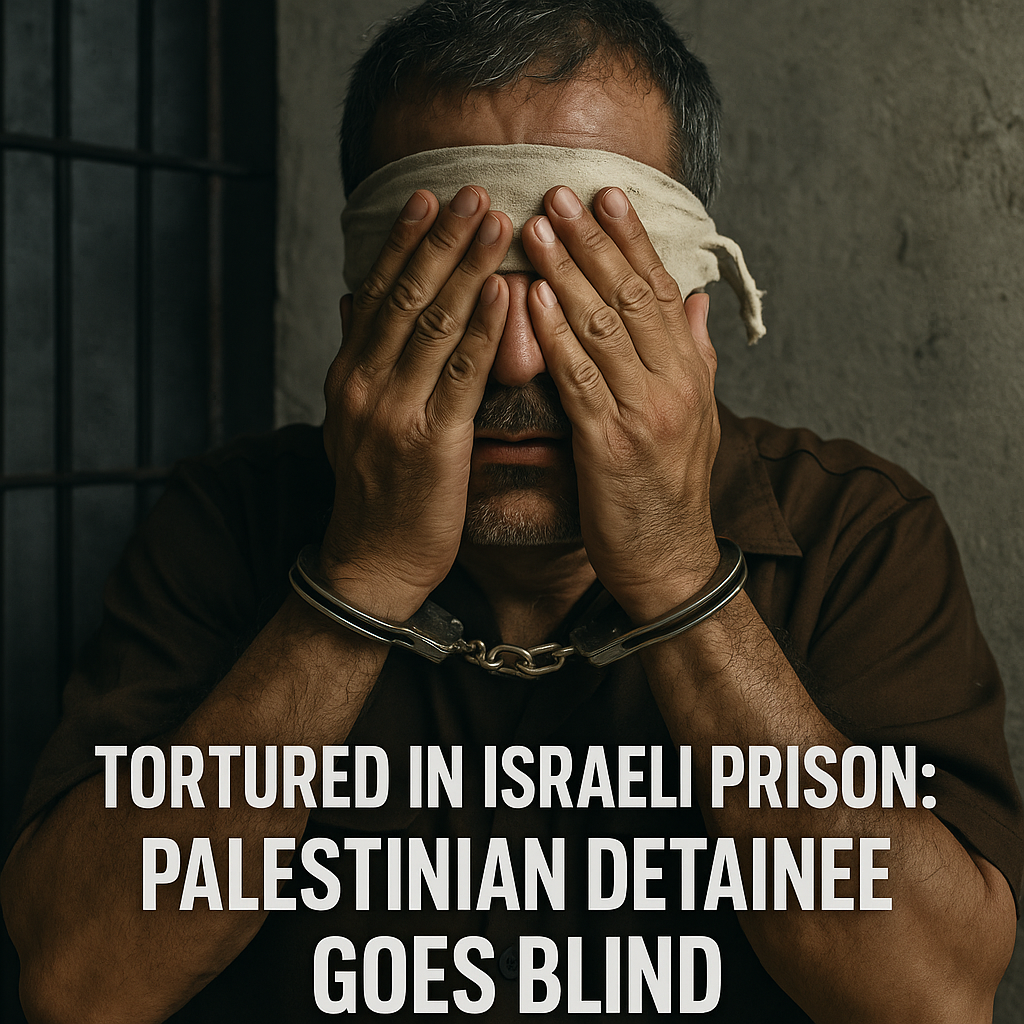
Tortured in Israeli Prison: Palestinian Detainee Goes Blind

Tortured in Israeli Prison: Palestinian Detainee Goes Blind
Reports of human rights abuses within the context of the Israeli-Palestinian conflict often evoke intense emotional responses and raise critical questions about justice, morality, and international law. A recent account from a Palestinian detainee, who asserts that he lost his eyesight due to torture while in Israeli custody, brings these issues to the forefront. This article explores the layers and complexities surrounding this case, drawing from various credible sources.

The Detainee’s Distressing Account
The harrowing experience shared by the Palestinian detainee sheds light on a broader issue concerning treatment in Israeli prisons. According to his testimony, he was subjected to brutal conditions and forced to endure physical and psychological torment. As reported by Al Jazeera, the detainee claims that during his confinement, he was exposed to punishments that included beatings, solitary confinement, and other forms of torture, which he contends led to his blindness.


Such allegations are not new. Human rights organizations, including Amnesty International and Human Rights Watch, have repeatedly reported that Palestinian detainees face aggressive interrogation techniques that often cross the line into torture. While the Israeli government denies these claims and asserts that its security forces operate within legal frameworks, the detainee’s story represents only a fragment of a much larger, troubling narrative regarding the treatment of Palestinians in custody.


The Diverging Perspectives
On the one hand, supporters of the Israeli government argue that the military and police actions are necessary for maintaining security in a region fraught with violence. They often frame the use of harsh interrogation methods as essential means to elicit information that could prevent attacks against Israeli citizens. This perspective is bolstered by the assertion that the detainees are often linked to terrorist activities, justifying the intense measures taken during captivity.
On the other hand, advocates for Palestinian rights stress the moral and legal implications of such treatment. They argue that torture is not only ineffective but also violates international laws including the United Nations Convention Against Torture. Activists contend that each account of abuses strengthens the argument for accountability and reform within the Israeli military and legal systems. The contrast in these narratives underscores the contentious atmosphere surrounding the Israel-Palestine conflict.
The Absence of Accountability
Despite the mounting evidence and testimonies from former detainees, accountability remains elusive. Reports indicate that there are few legal repercussions for those accused of torturing detainees. This lack of accountability further exacerbates the situation, as victims often lack avenues for redress. Sky News highlights the frustration expressed by human rights advocates who argue that without thorough investigations and holding perpetrators accountable, the cycle of abuse is likely to continue.
Data collected by organizations like B’Tselem indicate that a significant number of Palestinians report having faced ill-treatment while in custody. This grim statistic paints a stark picture of how systemic these abuses may be, echoing the detainee’s chilling account and reinforcing calls for international intervention.
The Role of International Communities
The global response to such allegations has been mixed. While some countries and organizations vocally condemn torture and advocate for human rights, others prioritize political alliances and regional stability. The ongoing debate in international forums often reflects deeper geopolitical interests rather than a unified stance against human rights violations.
In light of this, a critical question emerges: what actions can be taken to ensure that such allegations are not just heard but addressed? The need for independent investigations, international oversight, and stronger legal protections for detainees is becoming increasingly urgent.
Balancing Perspectives
While navigating the complexities of this issue, it is crucial to recognize that both sides are entrenched in their narratives. The Israeli perspective often emphasizes security; the Palestinian viewpoint calls for justice and human rights. Finding a pathway forward requires acknowledging the painful realities of both populations.
In the end, the story of the Palestinian detainee who went blind in an Israeli prison is not just an isolated account; it is emblematic of a much larger struggle. It serves as a reminder of the urgent need for dialogue, understanding, and ultimately, reform in how all individuals are treated within the justice system—regardless of their nationality or circumstances.
Conclusion
The accounts of torture in Israeli prisons underscore the complexities of human rights discussions within the context of the Israeli-Palestinian conflict. The diverging narratives and the stark realities faced by detainees like the one mentioned highlight an urgent need for justice and accountability. As the global community continues to grapple with these issues, the hope remains that increased awareness can lead to meaningful change, ensuring that such violations are addressed and prevented in the future.















