
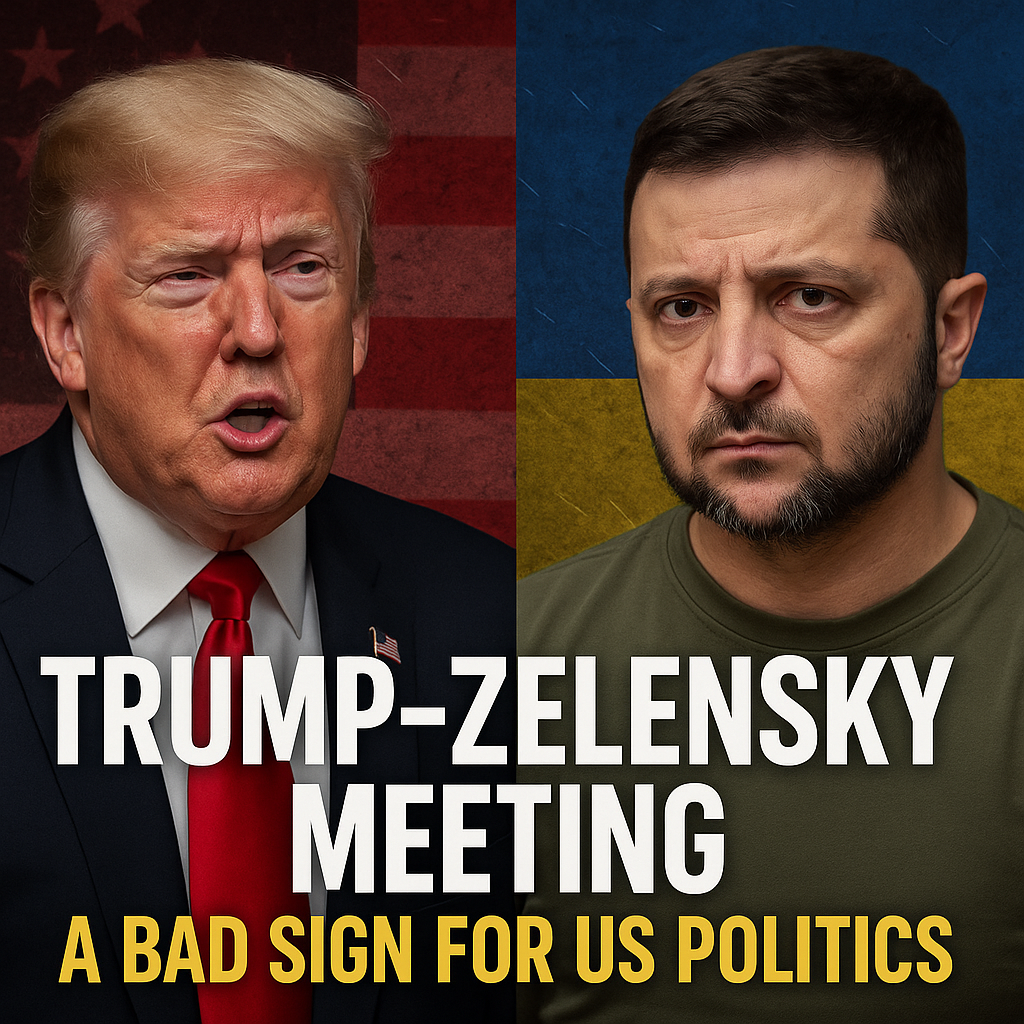
Trump-Zelensky Meeting: A Bad Sign for US Politics

Trump-Zelensky Meeting: A Bad Sign for US Politics
The recent meeting between former President Donald Trump and Ukrainian President Volodymyr Zelensky has ignited significant debate in political circles, raising questions about its implications for U.S. politics and international relations. This encounter seems to draw a line between past grievances and future strategies, effectively echoing back to the controversial 2019 phone call that led to Trump’s first impeachment.

Implications for U.S.-Ukraine Relations
When examining the dynamics of U.S.-Ukraine relations, the Trump-Zelensky meeting emerges as a critical moment, showcasing a complex interplay between personal diplomacy and national interests. Supporters of Trump argue that his engagement with Zelensky could strengthen ties that have become increasingly crucial amid the ongoing conflict with Russia. In establishing personal rapport, Trump may be seeking to bolster U.S. support for Ukraine against aggression, potentially signaling a shift towards a more unilateral approach to foreign policy.


Conversely, critics worry about the signals this meeting sends. Some analysts argue that the meeting could redefine what constitutes acceptable presidential conduct regarding foreign leaders. Lena Allen, a political analyst, stated in an article for Al Jazeera, “This meeting isn’t just a reunion; it may delineate a future where executive power is unchecked in matters of diplomacy.” The concern here is that Trump’s history of leveraging foreign relations for domestic political gain—like during the infamous phone call—could fan the embers of international discord, particularly if the U.S. public perceives favoritism or manipulation.


Public Perception and Political Fallout
The political ramifications of the meeting extend beyond the intricacies of diplomacy and strategy. Public opinion is a major force, shaping the narrative surrounding Trump’s actions. While a segment of the population views his meeting with Zelensky as a pragmatic step towards fortifying an alliance with Ukraine, another segment sees it as a blatant maneuver for political redemption.
In the aftermath of the meeting, polling data from various sources indicate a divided electorate. According to a recent Sky News report, “While many respondents support continued aid to Ukraine, a concerning portion of Trump’s base shows skepticism towards government involvement in foreign affairs.” This ambivalence highlights a burgeoning divide in American politics, where foreign policy is increasingly viewed through a partisan lens.
Opposition leaders have begun to capitalize on this divide, framing the meeting as a self-serving act rather than one framed in the context of national interest. This approach could ultimately backfire; as the urgency of the war in Ukraine persists, it’s crucial for parties across the aisle to find common ground.
The Future of U.S. Politics
As Trump eyes another run for the presidency, his meeting with Zelensky reinforces the idea that U.S. politics is becoming more intertwined with personal narratives and less with systematic policy frameworks. The potential for a fractious political environment is glaring, as the media frenzy surrounding the meeting has reignited debates about accountability, ethical standards, and national security.
With divergent perspectives proliferating, it’s essential for the political discourse to rise above partisan bickering. Unified support for Ukraine, which has been a bipartisan issue until this point, may erode if leaders fail to navigate the complexities of their allegiances wisely. While Trump’s engagement could theoretically provide tactical advantages, it is prudent to consider whether such strategies compromise the very values they are meant to protect.
Conclusion: Uncertainty Looms
The meeting between Donald Trump and Volodymyr Zelensky sends ripple effects across both U.S. politics and international relations. While it may promise intensified support for Ukraine in its conflict with Russia, it also raises thorny questions about the integrity of presidential engagements in foreign affairs. As the political landscape continues to evolve, the implications of this meeting will become clearer.
In a time marked by polarization and uncertainty, the effectiveness of American foreign policy hinges not only on strategic interests but also on the integrity of its leaders. Moving forward, the focus must be not just on who meets whom but on the underlying values that govern these high-stakes interactions. The future of U.S.-Ukraine relations will require more than personal diplomacy; it will demand a concerted, genuine commitment to shared democratic ideals.















