
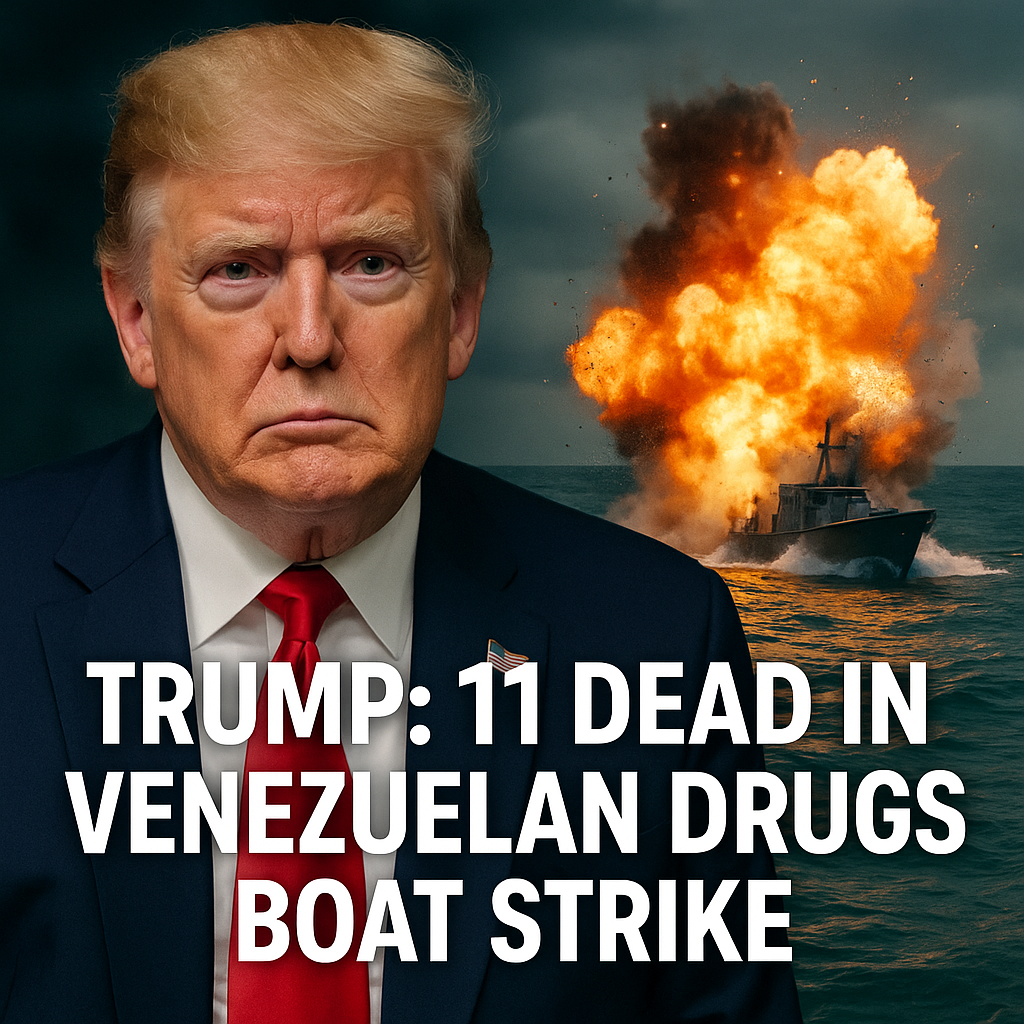
Trump: 11 Dead in Venezuelan Drugs Boat Strike

Trump’s Statement on Venezuelan Drugs Boat Strike: Analyzing the Impact
In a recent statement, former President Donald Trump claimed that 11 individuals perished during a military strike on a Venezuelan drugs boat. This incident raises critical questions about international drug trafficking, military interventions, and the broader implications for U.S.-Venezuelan relations.

The Context of the Incident
Reports indicate that the strike on the Venezuelan boat occurred amid growing tensions in the region, primarily fueled by President Nicolás Maduro’s government, which the U.S. has long accused of facilitating drug trafficking. Trump characterized the operation as a necessary step to combat the rampant drug trade emanating from Venezuela, suggesting that such measures are integral to U.S. national security.


Diverging Perspectives on Military Action
While some commentators laud the decisive action taken by the U.S. as a potent show of force against drug trafficking networks, others express concern about the consequences of military engagement. Advocates of military intervention argue that it reflects a commitment to curbing the inflow of illegal narcotics into the U.S. They assert that the sacrifice of lives, including the alleged 11 victims from the boat, underscores the high stakes of the ongoing drug war.


On the other hand, critics of U.S. military action believe it may exacerbate the already delicate humanitarian situation in Venezuela. They argue that such operations often contribute to regional instability and can jeopardize the lives of innocent civilians who may be inadvertently caught in the crossfire. The Venezuelan government has denounced the airstrike, framing it as an act of aggression and highlighting its potential to provoke retaliatory actions.
Implications for U.S.-Venezuelan Relations
The strike raises critical questions about future U.S.-Venezuelan relations. Tensions have already been high, marked by economic sanctions and a military buildup along the Colombian border. The Venezuelan government has historically viewed U.S. interventions—be they economic or military—as violations of sovereignty. As a result, the military action against the drugs boat could further entrench anti-American sentiment in the region.
Moreover, the complexities of international diplomacy come into play. Analysts warn that such military actions can hamper potential diplomatic solutions for resolving the Venezuelan crisis through dialogue. It becomes a fine balancing act for the Biden administration, which may want to pursue negotiations while addressing the very real issue of drug trafficking.
The Role of Drug Trafficking in Venezuelan Politics
The drug trade’s role in Venezuelan politics cannot be overstated. Allegations persist that members of Maduro’s government have been complicit in moving drugs through the country’s borders, creating a nexus between political power and narcotics. This complicates the landscape for U.S. military actions—both because of the risk of harming civilians and the question of whom exactly is being targeted.
Experts note that combatting the drug trade in Venezuela will require a multi-faceted approach, extending beyond military strikes and involving long-term strategies for economic development, governance, and community support. Addressing the roots of drug trafficking, including social and economic disparities, is essential for sustainable progress.
A Balanced Outlook
The incident serves as a microcosm of the broader debate about military intervention, drug policy, and international relations. While Trump’s emphasis on the deaths aboard the boat draws attention to the immediate implications of drug trafficking, it risks overshadowing the underlying complexities that contribute to such situations.
As we navigate this multifaceted issue, it becomes crucial to consider various perspectives to understand fully the potential ramifications of military action in Venezuela. The ongoing situation necessitates a careful appraisal of not only the geopolitical landscape but also the human costs involved.
In conclusion, the strike and its fallout illustrate the profound complexities embedded in U.S.-Venezuelan relations. While the urgency to combat drug trafficking is clear, the path forward requires consideration of broader implications and a balanced approach that weighs military intervention against the backdrop of diplomacy and humanitarian principles.















