
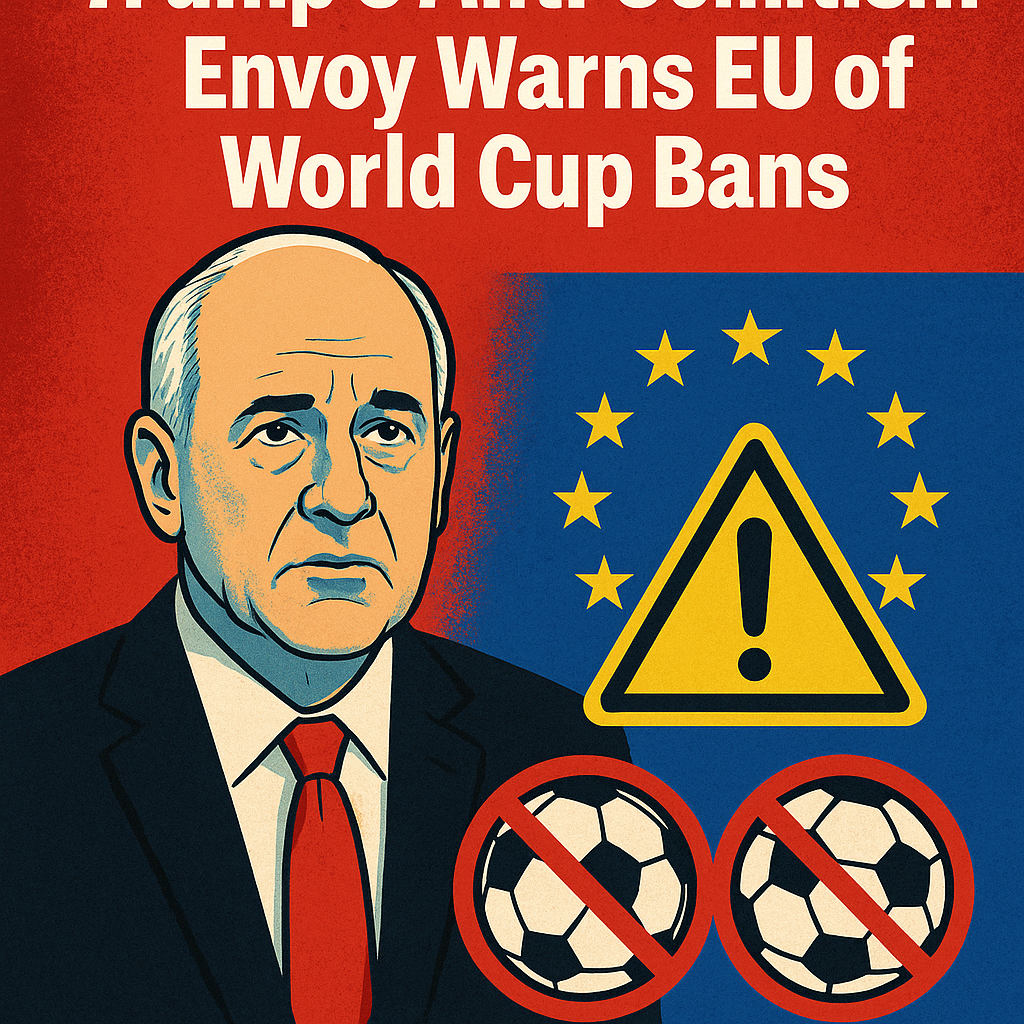
Trump’s Anti-Semitism Envoy Warns EU of World Cup Bans

Trump’s Anti-Semitism Envoy Warns EU of World Cup Bans
Trump’s Anti-Semitism envoy has recently issued stark warnings regarding potential World Cup bans directed at European nations. As the world navigates the complexities of international diplomacy and human rights, the implications of such declarations deserve a deeper examination.

Context Behind the Warning
The United States’ envoy for combating anti-Semitism, a position established under the Trump administration, has raised alarms about potential bans imposed on European teams participating in upcoming World Cup events. In the envoy’s view, these bans could stem from accusations related to anti-Semitic actions or rhetoric among teams or their supporters.


This stance is particularly significant given the historical context of anti-Semitism in sports, which has seen a resurgence in recent years. The envoy’s warning underscores a growing concern that sporting events, often seen as avenues for unity and integration, might be marred by political and ethical considerations. The political landscape is further complicated by the fact that sports, particularly soccer, are deeply intertwined with national identities.


The EU’s response to such warnings is twofold. On one hand, European nations emphasize their commitment to promoting diversity and tolerance in sports; on the other hand, the possibility of facing sanctions or bans creates a contentious dialogue. The envoy expressed concerns that the tolerance for anti-Semitism and discrimination could lead to “repercussions,” further complicating the push for inclusivity in global sporting events.
Diverging Perspectives on Anti-Semitism in Sports
Drawing insights from sources such as Al Jazeera and Sky News, it becomes evident that opinions regarding this issue are varied and complex.
A Call for Accountability
Some advocates argue that strict penalties for anti-Semitic behavior are essential in preserving the integrity of sports. They assert that the refusal to address anti-Semitism directly undermines the spirit of the game. According to a report on Al Jazeera, there is a consensus among certain European communities that decisive action must be taken against any form of hatred. This sentiment aligns with broader global movements advocating for social justice and inclusivity in sporting events.
Quote from Al Jazeera highlights this perspective: “FIFA and the EU must work together to ensure that any form of discrimination has no place in football, or else we face moral bankruptcy.” Here, the focus is on creating an environment where players, fans, and officials can participate without fear of discrimination.
Concerns Over External Pressure
On the flip side, critics of the envoy’s warning argue that it risks politicizing sports and could lead to backlash against genuine attempts at fostering diversity. According to a report from Sky News, some sports analysts suggest that placing bans or penalties could lead to division rather than unity among nations.
These experts caution against using sports as pawns in geopolitical games, emphasizing that sporting events should serve as unifying platforms rather than battlegrounds for ideological disputes. The concern here is that the ongoing global discourse attempts to balance moral standards with the realities of international relations.
The Balance of Perspectives
So, where does this leave us? The juxtaposition of these viewpoints illustrates the fine line international bodies must walk in addressing anti-Semitism while preserving the essence of sport. The potential for bans raises complex questions: How will these measures be enforced? Will they inadvertently silence important discussions around discrimination? The envoy’s warning indeed shines a light on the need for comprehensive frameworks that address these societal issues while also invoking a spirit of camaraderie among nations.
The Road Ahead: Toward a Unified Approach
As the world moves closer to monumental sporting events like the World Cup, the dialogue surrounding anti-Semitism in sports will likely evolve. Advocating for proactive measures that not only address hate speech but also foster understanding and tolerance may prove to be the most effective strategy.
It remains crucial for governing bodies like FIFA and the EU to establish transparent guidelines that not only penalize anti-Semitism but also promote education and awareness. Collaboration with player associations and community leaders could yield impactful changes that resonate beyond the realm of sports.
In conclusion, while the envoy’s warning has amplified discussions surrounding anti-Semitism in the context of international sports, the complexity of perspective highlights the necessity for balance in this conversation. Only by addressing the nuances and engaging in diplomatic discussions can we hope to bridge divides and ensure that global sporting events remain inclusive, celebratory, and free from discrimination. The discussion is far from over, and as the world tunes into the games, it is vital that the spirit of fairness and unity takes center stage.















