
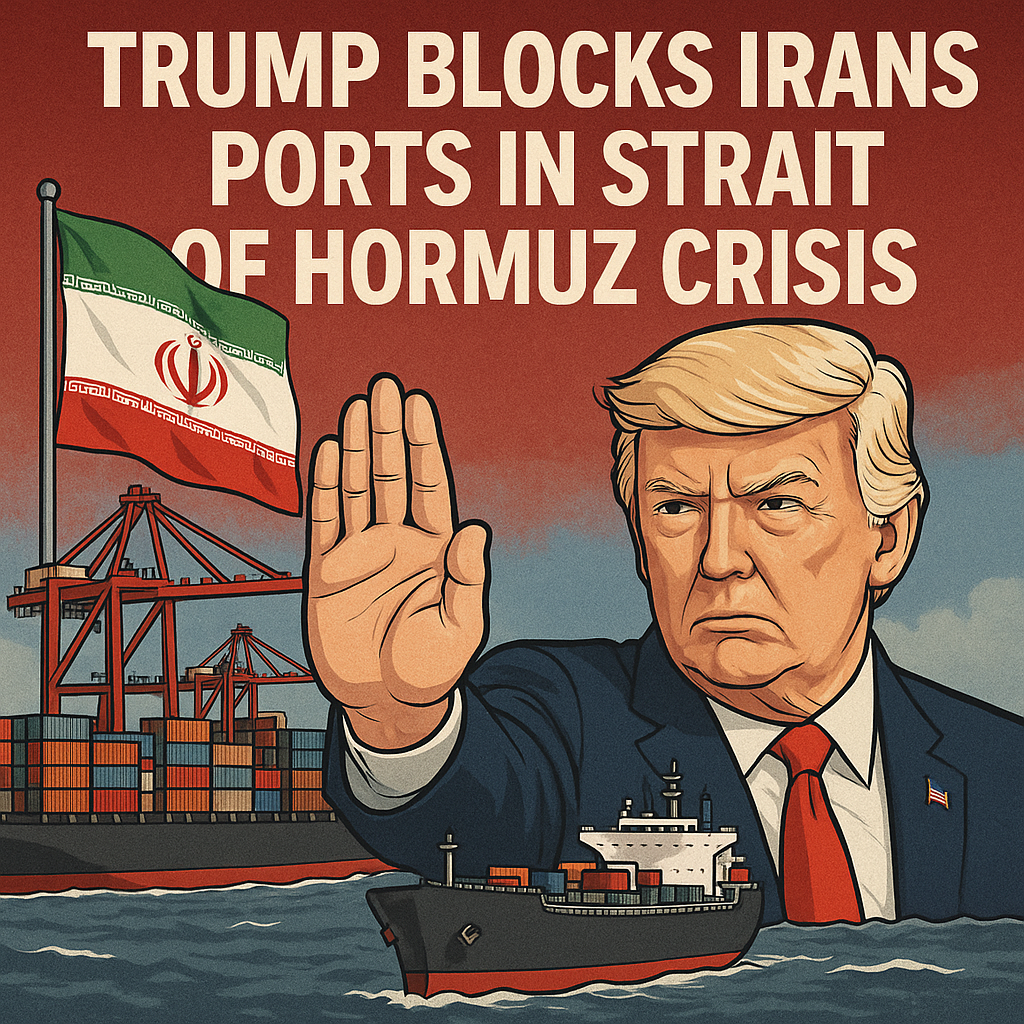
Trump Blocks Iran’s Ports in Strait of Hormuz Crisis

Trump Blocks Iran’s Ports in Strait of Hormuz Crisis
The ongoing tension in the Strait of Hormuz has escalated sharply, with recent actions taken by the Trump administration drawing widespread scrutiny. This strategically vital waterway—a crucial conduit for global oil shipments—has witnessed increased military presence and sanctions aimed at Iran, underscoring the complexity of geopolitical dynamics in the region.

The Strait of Hormuz: A Crucible of Tensions
The Strait of Hormuz connects the Persian Gulf to the Arabian Sea and is vital for the transit of oil, with nearly a fifth of the world’s oil supply passing through it. Given its critical importance, the region has long been a hotspot for conflict and diplomatic strife. Recently, the U.S. has intensified its actions in the area, significantly impacting Iran’s access to its ports.


Trump’s administration has employed a combination of military posturing and economic sanctions to exert pressure on Iran. According to reports from Sky News, these measures include increased naval deployments and inconsistent patrol routes, aimed at both deterring Iranian aggression and stymying Iranian maritime activities. Iran, for its part, has issued threats of retaliation, vowing to respond to any perceived aggression as tensions have flared.


The Blockade: Strategic or Counterproductive?
Critics argue that the blockade of Iran’s ports represents a hasty approach to foreign policy, potentially deepening hostilities rather than fostering stability. Al Jazeera points out that isolating Iran could backfire, uniting its fragmented political factions against a common adversary and increasing anti-American sentiment in the region.
Conversely, proponents of the blockade contend that limiting Iran’s access to international trade is essential to curb its nuclear ambitions and influence in areas like Syria and Yemen. The administration argues that a strong stance sends a clear message that aggressive actions will have immediate consequences. As stated by various U.S. officials, a threatened Iran is less likely to act out against its neighbors and might be persuaded to abide by international norms regarding nuclear development.
Irregularities in International Response
The international community remains divided on how to respond to this crisis. While several European nations express concern and seek to maintain diplomatic channels with Iran, countries like Saudi Arabia and Israel echo U.S. sentiments, advocating for tougher measures against Tehran. Russia, on the other hand, has condemned the blockade and signaled support for Iran, warning that any escalation could lead to broader conflict.
Furthermore, the economic implications of blocking Iranian ports cannot be underestimated. The Strait of Hormuz is a pivotal route for crude oil transport; disruptions here can lead to spikes in global oil prices. Reports highlight that continued blockades could result in economic fallout not just for Iran but also for nations that rely on a stable flow of oil.
Navigating the Path Ahead
As tensions mount, it is crucial to weigh the potential outcomes of U.S. actions carefully. The prospects for military conflict or an expanded blockade seem to hinge on diplomatic efforts moving forward. Experts suggest that the U.S. may still seek to engage in negotiations, albeit from a position of strength, as indicated by past diplomatic overtures during similar crises.
Nonetheless, the unpredictability of Iranian responses poses a risk. Analysts warn that further military actions could result in direct confrontations, with potential consequences that extend beyond the immediate region.
In conclusion, the situation in the Strait of Hormuz is emblematic of a broader struggle for power and influence in the Middle East. Trump’s decision to block Iran’s ports may serve as a tactical maneuver in the short term; however, it raises significant questions about the long-term effectiveness of such tactics in stabilizing the region. As various players continue to compete for advantage, the need for a nuanced and balanced approach to U.S. foreign policy has never been more pressing. The future of the Strait and its surrounding areas hangs in the balance, contingent on the capacity for dialogue amid increasing tensions.















