
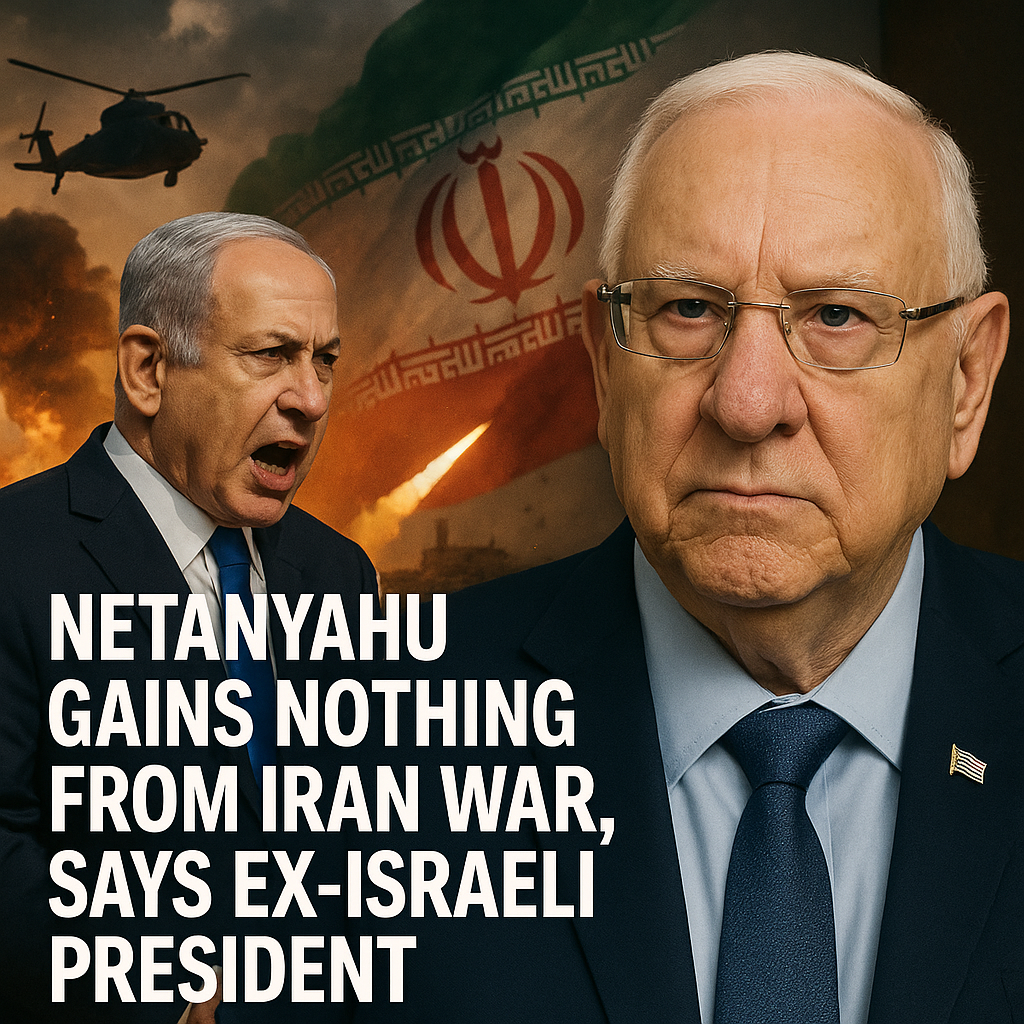
Netanyahu Gains Nothing from Iran War, Says Ex-Israeli President

Netanyahu Gains Nothing from Iran War, Says Ex-Israeli President
Former Israeli President Shimon Peres once said, “There is no greater illusion than the belief that you can have peace by making war.” This perspective echoes in recent comments from former Israeli President Reuven Rivlin, who suggests that Israel would derive no tangible benefits from engaging in a war with Iran. His insights add valuable context to the ongoing conversations around the Israeli-Iranian conflict and the broader implications for regional stability.

The Current State of Israel-Iran Relations
Tensions between Israel and Iran have escalated in recent years, with both nations accusing each other of hostile intentions. Iran’s nuclear ambitions are frequently a focal point for Israeli officials, who view the Islamic Republic as a substantial threat to their national security. In a recent interview, Rivlin emphasized that any military conflict would be detrimental not only to Israel but also to the broader Middle Eastern landscape.


Rivlin’s Perspective
Rivlin’s analysis aligns with opinions expressed in various sources. He stated unequivocally that war would lead to loss rather than gain for Israel. This viewpoint reflects a growing sentiment among political analysts and former leaders who advocate for dialogue over military action. “An all-out war would only empower Iran further, whereas diplomatic relations, even with rivals, can foster stability,” he argued.


The dangers of a military confrontation are well-documented. According to a report from Al Jazeera, military analysts warn that a direct conflict could not only destabilize the already volatile region but also prompt retaliatory strikes from Iranian allies in Lebanon and Syria. This interconnectedness among Middle Eastern nations complicates the situation, emphasizing the need for diplomatic solutions.
Counterarguments and Concerns
However, there are voices that counter this argument, claiming that military action is necessary to curb Iran’s nuclear ambitions. Supporters of military intervention argue that allowing Iran to continue its nuclear program unchecked poses an existential threat to Israel. Yet, even within this camp, there are divisions regarding the efficacy and consequences of such actions.
A Sky News report highlighted this divide by illustrating that military engagement might offer short-term security gains but could ultimately compromise long-term peace. The potential for escalating violence raises questions about whether any military action could truly neutralize the perceived threat from Iran.
Weighing the Evidence
The complexity of Israel’s relationship with Iran cannot be overstated. Rivlin’s argument suggests that military escalation would likely lead to more chaos than resolution. This perspective brings together voices from various corners, including military experts and peace advocates, who argue for diplomatic efforts over bombs.
While some analysts stress the need for preemptive measures, Rivlin’s call for a cautious and diplomatic approach has garnered a mixed response. The fact remains that military options could rejuvenate Iranian aggression, as experts from various news sources insist that addressing Iran’s grievances might serve as a foundation to a more stable, peaceful future.
The Path Forward
Finding a way to navigate this precarious geopolitical landscape may not be easy. Diplomacy, while slow and often frustrating, could yield substantive outcomes if approached with mutual respect and understanding. Rivlin’s cautionary stance suggests that Israel should instead seek to build coalitions not just against Iran but for broader regional cooperation.
Additionally, leveraging international diplomatic channels could dilute tensions and create a more harmonious atmosphere for negotiations. As articulated in discussions across several platforms, fostering dialogue between regional players—including Iran—could be the key to unlocking stability in a historically tumultuous area.
Conclusion
In a world brimming with conflict, the realities presented by Rivlin serve as a vital reminder that military solutions often fail to deliver the peace and security they intend to achieve. The stakes in the Israeli-Iranian conflict require careful navigation; after all, as Rivlin aptly puts it, “We gain nothing from a war.”
The takeaway from this discourse is that while military intervention may seem like a straightforward answer to an urgent threat, the repercussions can be far-reaching and destructive. A comprehensive strategy that invites all parties to the table may ultimately serve as a stronger pillar for both Israel and regional stability. In the end, constructive dialogue and collaborative efforts will bring us closer to understanding—and perhaps resolving—the complexities that characterize the daunting landscape of the Middle East.















