
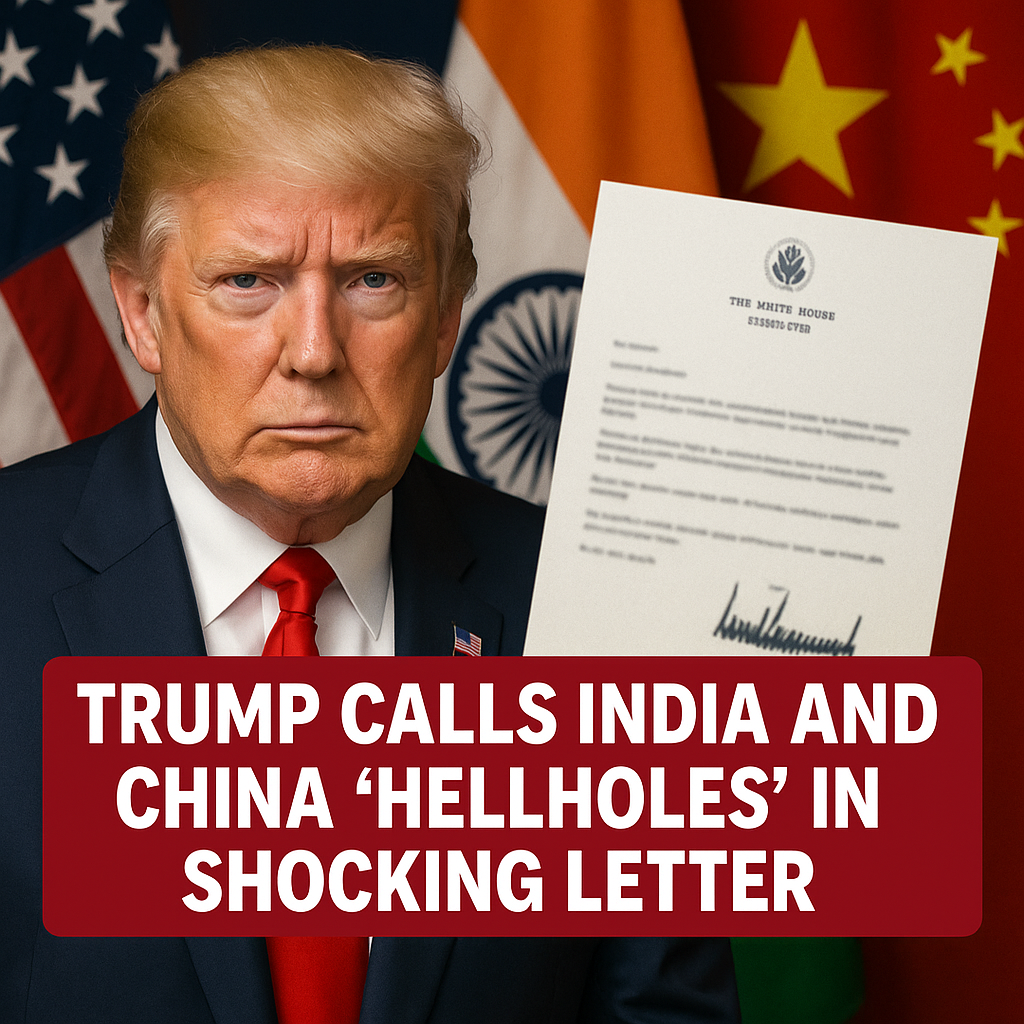
Trump Calls India and China ‘Hellholes’ in Shocking Letter

Trump’s Controversial Letter: A Closer Look at His Remarks on India and China
In an unexpected twist during his public communications, Donald Trump referred to India and China as “hellholes” in a recent letter, sparking a flurry of reactions and discussions around his choice of words. This provocative characterization raises questions not only about international relations but also about how such statements resonate with domestic and global audiences.

The Context of Trump’s Remarks
The letter in question was shared on social media, capturing attention due to its vivid language and stark comparisons. Trump has been known for his direct and often controversial style, but this latest comment draws attention to a deeper conversation about the state of affairs in these two significant nations.


Economic and Social Dynamics
India and China, both emerging economic powerhouses, command significant roles on the global stage. Each country has its unique set of challenges, from economic inequality to political repression. In response to Trump’s characterization, various commentators weighed in with differing viewpoints.


1. Perspective from Economic Analysts:
Some analysts argue that while both countries face considerable challenges—including poverty, pollution, and human rights violations—terms like “hellholes” are far too hyperbolic. For instance, even as issues of governance and civil liberties persist, many in India and China point to remarkable advances in technology and infrastructure. A report from Al Jazeera highlighted ongoing debates around economic reform in these nations, suggesting that the development trajectories have been more nuanced than Trump’s description implies.
2. Contrasts in Political Climate:
The political climates in India and China are also crucial factors contributing to their complexities. Critics of both governments have documented significant human rights abuses and restrictions on freedoms, which some argue justifies a stronger rhetoric. However, others contend that inflammatory language undermines productive dialogue. For instance, RT noted reactions from Indian officials who emphasized the importance of diplomatic tones, pointing out that such comments do not foster international cooperation.
Reactions and Implications
The implications of Trump’s remarks stretch beyond simple electoral theatrics; they signal an attitude that could have real-world consequences for diplomatic relations.
– Support from Some Constituencies:
Among Trump’s supporters, there’s a sentiment that calls for blunt honesty regarding global issues. These supporters often express frustration with political correctness, advocating for a more straightforward critique of nations perceived as adversaries. Proponents argue that Trump’s bold statements compel governments to address their shortcomings head-on.
– Critique from Opponents:
Conversely, Trump’s critics argue that such rhetoric diminishes the possibility of constructive engagement. His comments reflect a worldview that simplifies complex international dynamics, potentially alienating allies. As noted in Sky News, diplomatic relationships depend on nuanced understandings, and using derogatory terms can present barriers to critical discussions needed to address shared global challenges like climate change and trade disparities.
A Balanced Perspective: Navigating Complexity
Balancing the viewpoints around Trump’s letter reveals several complexities. While it’s essential to confront uncomfortable truths about governance and human rights in India and China, applying incendiary language may stifle rather than promote significant conversations.
Efforts by civil society organizations in both nations to positively influence policy and advocacy work demonstrate that there are constructive paths forward. Indeed, these nations have vast populations with diverse experiences and expectations, making any sweeping generalization precarious.
Conclusion: Moving Beyond Rhetoric
Trump’s “hellhole” remarks compel a reconsideration of how leaders discuss international issues. Rather than resorting to polarizing language, there is a pressing need for dialogue characterized by empathy and inquiry. Acknowledging legitimate concerns while fostering an honest and respectful discourse could pave the way for deeper understanding and potential collaborations.
In the end, how international leaders choose to express criticism can significantly impact diplomatic relations, public perception, and global actions. As observers, holding our leaders accountable for the language they choose helps nurture a more constructive global community. The discussions around Trump’s letter thus serve as a reminder of the careful intricacies involved in the interplay of power, rhetoric, and international relationships.















