
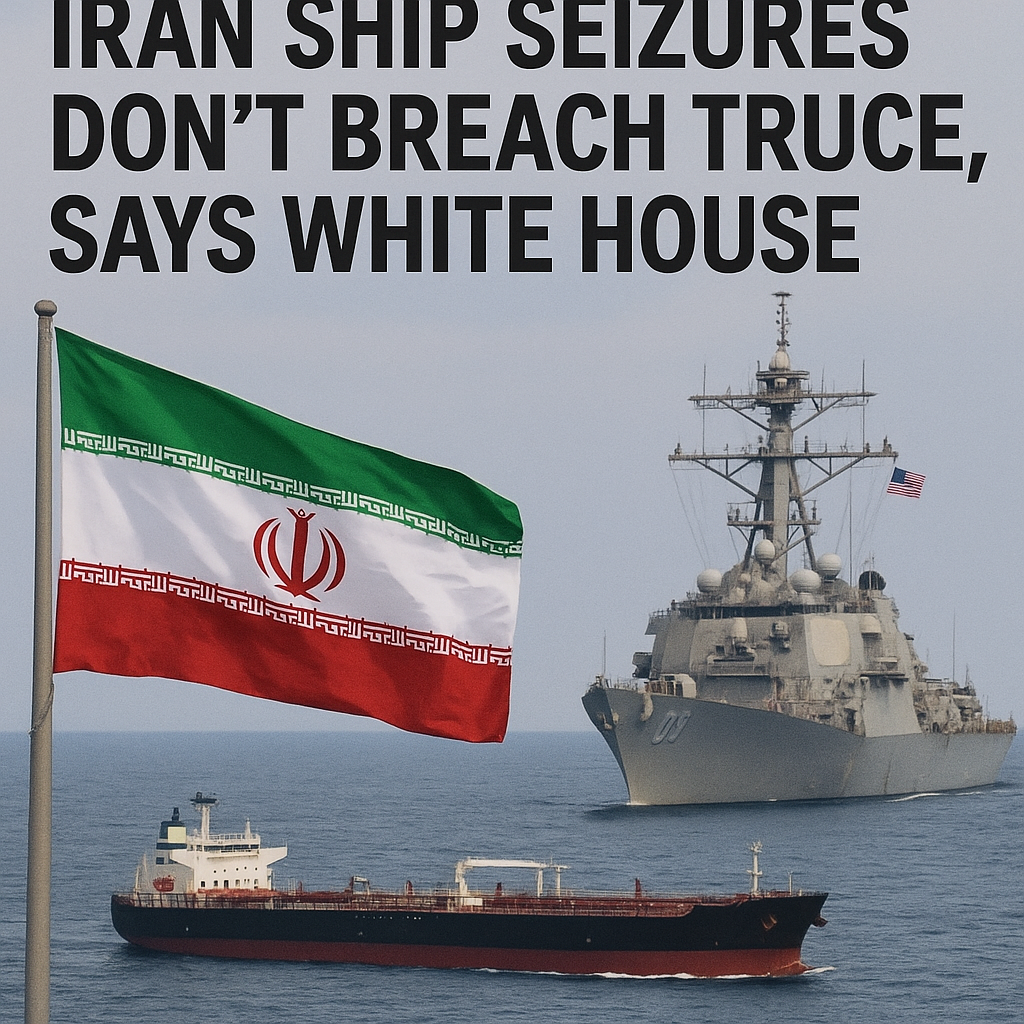
Iran Ship Seizures Don’t Breach Truce, Says White House

Iran Ship Seizures Don’t Breach Truce, Says White House
The recent seizure of ships by Iran in the Strait of Hormuz has sparked a heated dialogue among international observers and government officials. The White House asserts that these actions do not violate any existing truce, leading to diverse opinions on the implications for U.S.-Iran relations and regional stability.

Context of the Seizures
Iran’s recent actions come amid ongoing tensions in the Persian Gulf region. Reports indicate that Iranian naval forces have detained several vessels, including a U.S.-flagged ship, claiming they were involved in illegal activities. This escalation in maritime confrontations has led some analysts to question whether the U.S. response could provoke further hostilities.


According to the White House, the seizures do not represent a breach of any previously negotiated agreements. Officials argue that the truce, primarily established to de-escalate military threats in the region, was not intended to restrict Iran from enforcing its maritime laws within what it considers its territorial waters. This position has drawn a mix of support and skepticism from various commentators and political analysts.


Perspectives from Diverse Sources
Al Jazeera’s coverage highlights Iran’s perspective, framing the seizures as a necessary action to protect its economic interests from alleged foreign incursions. The outlet notes that Iran has consistently maintained that its naval operations are aimed at safeguarding its sovereignty and maritime rights, particularly around critical shipping lanes like the Strait of Hormuz, through which a significant portion of global oil trade passes.
Conversely, outlets like RT emphasize U.S. concerns about the broader implications of Iran’s actions. Analysts cite the potential for increased military engagement as a consequence. The report remarks that despite the White House’s stance, such maritime incidents threaten to undermine any existing truce, especially considering the United States has a substantial military presence in the region to counter Iranian influence.
Weighing Evidence and Sentiment
At the heart of the debate lies a fundamental question of legality and morality in international maritime law. On one hand, Iran’s actions can be interpreted as upholding the law within its territorial waters; on the other hand, these seizures could be seen as acts of aggression that disrupt international shipping networks. Several experts suggest that without a clear framework for accountability, the situation could spiral out of control.
As many commentators have noted, the U.S.’s military maneuvering in the Gulf has historically been justified by the need to ensure safe passage through one of the world’s busiest maritime routes. This raises concerns about whether Iran’s actions could escalate tensions and provoke a military response from Washington.
Conclusion and Uncertainties
In the context of U.S.-Iran relations, the current situation is emblematic of a broader trend of heightened tension fueled by mutual distrust and differing interpretations of international law. The White House’s assertion that Iranian ship seizures do not breach a supposed truce may reflect a desire to de-escalate tensions without appearing weak on national security.
However, as the situation continues to unfold, uncertainties remain. The lack of a unified interpretation of what constitutes a breach of truce speaks to the complexities of diplomatic engagements in volatile regions. With Iran’s determination to assert its rights and the U.S. commitment to maintaining freedom of navigation, future maritime confrontations seem inevitable unless a more sustainable resolution is pursued by all parties involved.
As both nations grapple with their respective narratives, the stability of the region hangs in the balance, underscoring the need for renewed dialogue and understanding. The choice between defensiveness and diplomacy may ultimately define the future trajectory of U.S.-Iranian relations.















