
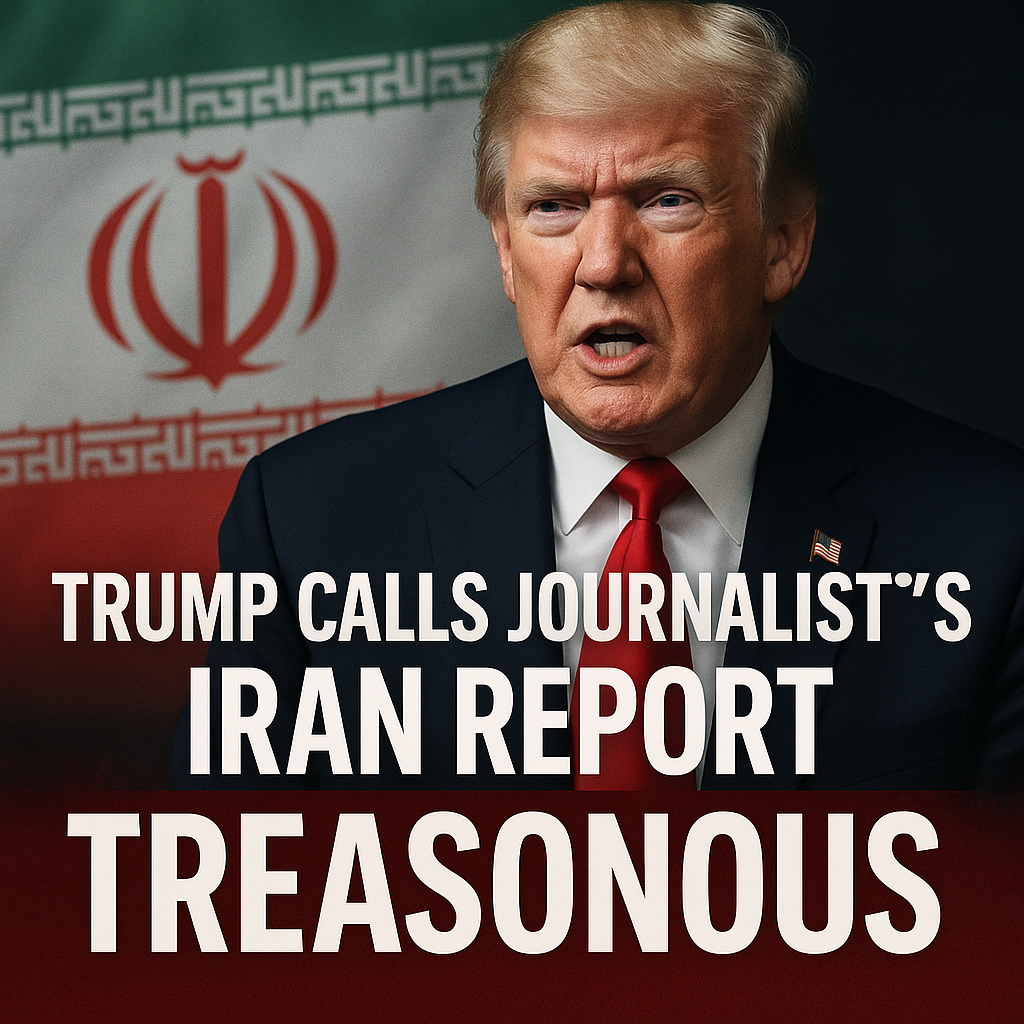
Trump Calls Journalist’s Iran Report Treasonous

Trump Calls Journalist’s Iran Report Treasonous: An Analysis of Media Scrutiny and National Security

In a recent fervent exchange, former President Donald Trump labeled a journalist’s report regarding Iran as “treasonous,” sparking a heated discussion about the intersection of media freedom and national security. This situation illustrates how critical yet contentious the role of journalism can be, particularly when covering sensitive topics like international relations.


The Context Behind the Controversy
Trump’s assertion arose after a report surfaced detailing alleged negotiations between the U.S. and Iran, aiming to revive the ailing nuclear agreement. The journalist in question, who has faced criticism from Trump before, asserts that transparency in documenting such governmental actions is paramount for public knowledge. In contrast, Trump’s remarks reflect a belief that certain information should remain confidential to safeguard national interests.


This tug-of-war encapsulates a broader argument: the balance between journalistic integrity and national security. Many political commentators argue that while journalists have an obligation to inform the public, there are moments when the nuances of reporting on sensitive topics can have real-world implications.
Different Perspectives on Responsible Reporting
The Argument for Press Freedom
Supporters of the journalist’s reporting contend that transparency is essential in a democratic society. They believe that citizens should be able to scrutinize their leaders’ decisions—especially those that might lead to significant diplomatic negotiations or military engagements. Advocates for press freedom argue that labeling a report as treasonous stifles healthy discourse and scrutiny of governmental actions.
According to a report from Al Jazeera, experts in media ethics emphasize that truthful reporting on governmental affairs can contribute to a more informed electorate. “The public’s right to know is foundational to democracy,” stated one analyst, indicating that exposure of governmental dealings fosters accountability.
The National Security Perspective
On the other side of the debate, critics echo Trump’s sentiments, asserting that some details should not be publicly disclosed, especially when they might compromise national security or our diplomatic position. A viewpoint echoed by voices from RT highlighted concerns that certain journalistic revelations can inadvertently benefit adversaries or undermine critical negotiations.
The fear is that the very act of reporting on sensitive issues may jeopardize ongoing diplomatic efforts. This viewpoint suggests a more cautious approach to reporting, where journalists weigh the implications of their stories against potential risks to national safety.
Weighing the Evidence: A Nuanced View
The discordant viewpoints create a complex web of ethical considerations. While the importance of transparency cannot be downplayed, the potential consequences of certain revelations must factor into journalistic decision-making. Instances where critical reports have leaked sensitive information leading to political fallout may lend weight to calls for a more restrained approach.
Recent historical events illustrate this delicate balance. Journalists have often faced backlash for reports that heightened tensions between nations or jeopardized negotiations, suggesting a need for responsible editorial judgment that factors in the gravity of the situation.
Conclusion: Navigating the Future of Journalism and National Security
As this ongoing conversation unfolds, it’s crucial to recognize that both perspectives hold merit. Journalists have a responsibility to report but must also consider the broader implications of their work. The tension between free speech and the protection of national interests is not easily resolved and likely will continue to evolve.
The debate sparked by Trump’s characterization of the journalist’s report should not be simplified into binary choices. Instead, it reflects a broader societal challenge of navigating information dissemination in an era where news often shapes the political landscape. Only by engaging in these conversations can society hope to arrive at balanced solutions respecting both journalistic freedom and national security.















