
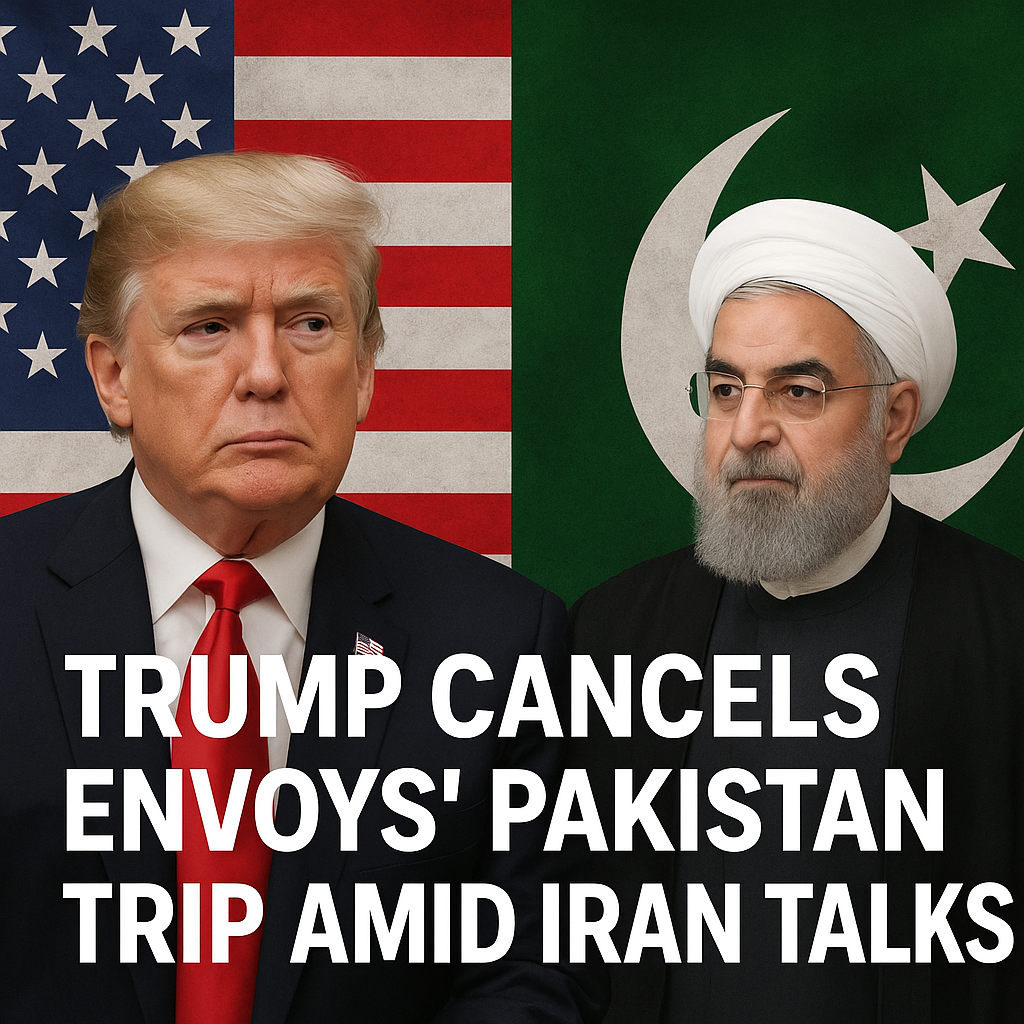
Trump Cancels Envoys’ Pakistan Trip Amid Iran Talks

Trump Cancels Envoys’ Pakistan Trip Amid Iran Talks
Former President Donald Trump’s recent decision to cancel an envoy’s diplomatic mission to Pakistan raises several questions about U.S. foreign policy and its complex dynamics with Iran. This move reflects the ever-shifting landscape of international diplomacy and underscores how pivotal the relationship between the U.S. and both Pakistan and Iran remains.

The Implications of the Cancellation
The abrupt cancellation of the envoy’s trip has been viewed through multiple lenses. On one hand, proponents of Trump’s decision argue that prioritizing talks with Iran is crucial in light of the escalating tensions surrounding its nuclear program. A spokesperson from the White House indicated that engaging Iran directly could prove beneficial in stabilizing the region.


On the contrary, critics claim that this move neglects the important role Pakistan plays in regional security, particularly in mediating between the U.S. and Taliban-controlled Afghanistan. Analysts at Al Jazeera warn that such actions could alienate key allies in South Asia, potentially limiting U.S. influence in peace negotiations and counter-terrorism efforts.


The Iranian Perspective
Iran has long viewed U.S. engagement in South Asian politics as a threat to its influence in the region. The cancellation of this trip may signal a shift in diplomatic focus that could further complicate U.S.-Iran relations. Reports from RT note that the Iranian government sees any reduction in American diplomatic presence as favorable, as it allows Tehran greater leeway in its regional activities without U.S. scrutiny.
The nuance here is critical; while direct talks with Iran are essential for addressing nuclear concerns, there is a tangible risk that ignoring Pakistan could allow extremist groups to gain a foothold—something Iran might exploit in its own favor.
Balancing Act: U.S. Interests
To navigate the complex web of international relations, the U.S. must balance its interests in both Iran and Pakistan. The United States has historically used diplomatic channels with various states to foster regional stability. However, Trump’s move raises concerns about the long-term strategy. Critics question whether an aggressive pursuit of Iran will yield substantive results or merely isolate the U.S. from former partners.
Furthermore, with the withdrawal from Afghanistan, the U.S. may need Pakistan more than ever to ensure the country remains stable and free from extremist elements. A strong partnership with Islamabad is crucial, especially as the Taliban governs a fragmented Afghanistan that could serve as a breeding ground for terrorism.
Conclusion: A Path Forward
While the decision to cancel the Pakistan trip underscores the complexities of Trump’s foreign policy strategy, it also highlights the balancing act required when dealing with multi-faceted international relationships. The impact of such decisions often extends beyond immediate analyses, shaping geopolitical dynamics in unexpected ways.
Going forward, fostering constructive dialogue with both Iran and Pakistan is essential. An unbalanced approach could diminish U.S. standing in South Asia and jeopardize peace negotiations that require intricate and sustained cooperation. The truth is evident; diplomacy rarely follows a straightforward path, and it remains to be seen how these recent developments will alter the long-term landscape of U.S. foreign policy.
In conclusion, the balance of power in the region hinges upon continuous engagement, strategically targeted diplomacy, and an understanding of the historical contexts driving these relationships. Whether Trump’s cancellation of the Pak envoy’s trip proves beneficial or detrimental remains to be seen, but the stakes have undoubtedly risen.















