
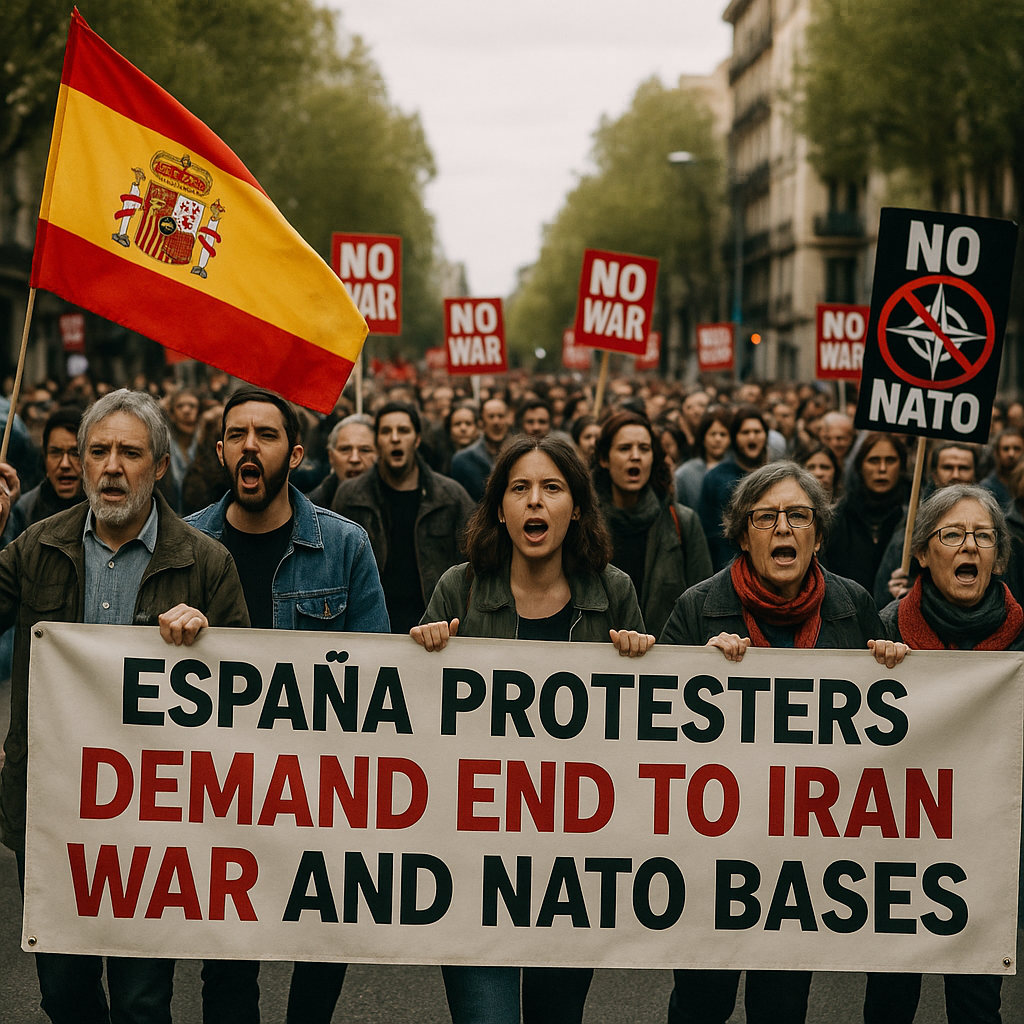
Spain Protesters Demand End to Iran War and NATO Bases

Spain Protesters Demand End to Iran War and NATO Bases
In recent weeks, Spain has witnessed a significant surge in protests where demonstrators are calling for an end to the ongoing Iran conflict and the expulsion of NATO military bases from the country. This wave of activism highlights a growing sentiment across Europe regarding military intervention and foreign influence, and it raises critical questions about national sovereignty and international alliances.

The Context of the Protests
The protests in Spain are not occurring in a vacuum. The geopolitical tensions surrounding Iran have persisted for years, fueled by various factors including nuclear ambitions, regional conflicts, and the role of Western powers. In the backdrop of these protests, the Spanish government’s endorsement of NATO’s military presence has come under scrutiny. Many Spaniards believe that the consolidation of military bases on their soil undermines their national autonomy and contributes to global tensions, particularly in the Middle East.


As reported by RT, demonstrators are calling not just for peace but for a reevaluation of Spain’s military commitments. Activists argue that the presence of NATO bases serves to escalate rather than alleviate potential conflicts. They have voiced concerns about the implications of aligning with Western military strategies that may pursue aggressive postures rather than diplomatic solutions.


Voices from the Ground
Protesters have diverse motivations for their participation, drawing from various political affiliations and personal experiences. According to Al Jazeera, the protests have attracted a wide spectrum of citizens, from anti-war activists to left-leaning political groups, all uniting under a common cause. Many protesters express deep-seated frustrations about increasing military budgets at the expense of social services, questioning the ethical dimensions of Spain’s participation in NATO operations.
The complexity of public sentiment is evident, as not everyone agrees on the approach to international conflicts. Some argue that NATO plays a vital role in global security and that Spain’s involvement is crucial for maintaining order in an increasingly chaotic world. However, the protests challenge this narrative, suggesting that military intervention often leads to long-lasting instability rather than peace.
The Role of Media and Public Discourse
Media coverage of these protests has varied significantly. Outlets like Sky News have framed the protests within a broader conversation about international alliances, highlighting that many Spaniards believe their country’s participation in NATO is more passive than proactive, essentially limiting their agency in international matters. On the other hand, RT’s framing emphasizes the grassroots nature of the protests as a reaction to perceived imperial overreach, emphasizing themes of sovereignty and nationalism.
One critical aspect that appears across multiple sources is the generational divide in perceptions of NATO and military intervention. Younger activists, who have grown up during various conflicts in the Middle East, are particularly vocal about opposing military bases. They argue that diplomacy should be prioritized over military deployments, pointing to the historical failures of armed interventions.
Diverging Perspectives on NATO
The contrasting viewpoints on NATO’s role stand out markedly in the protest rhetoric. While a section of the public remains committed to the idea of collective defense and sees value in Spain’s NATO membership, demonstrators have compellingly argued against this narrative. They contend that Spain should prioritize its own sovereignty, suggesting that military bases essentially make the nation a target rather than a protector.
Yet, proponents of NATO argue that withdrawal could lead to increased instability, possibly leaving Spain vulnerable to external threats. This dichotomy illustrates the complexities facing policymakers, as the clash between maintaining NATO commitments and honoring public sentiment grows increasingly pronounced.
Conclusion: A Path Forward
The protests in Spain signal a critical juncture in public opinion regarding NATO’s military bases and interventions in global conflicts such as those involving Iran. As sentiments shift, policymakers must grapple with the implications of public discourse while considering the geopolitics that influence defense strategies.
While there is a clear call from many demonstrators for diplomatic resolutions and an end to military roots in foreign conflicts, there remains significant debate regarding NATO’s role in ensuring security. As the situation develops, Spain’s government faces the task of reconciling these divergent perspectives while addressing pressing social needs domestically.
The conversations stemming from these protests are likely to resonate beyond Spain’s borders. As more citizens question the efficacy and implications of military presence, the discourse around global military alliances may evolve, reflecting broader societal changes and emerging sentiments toward foreign policy.















