
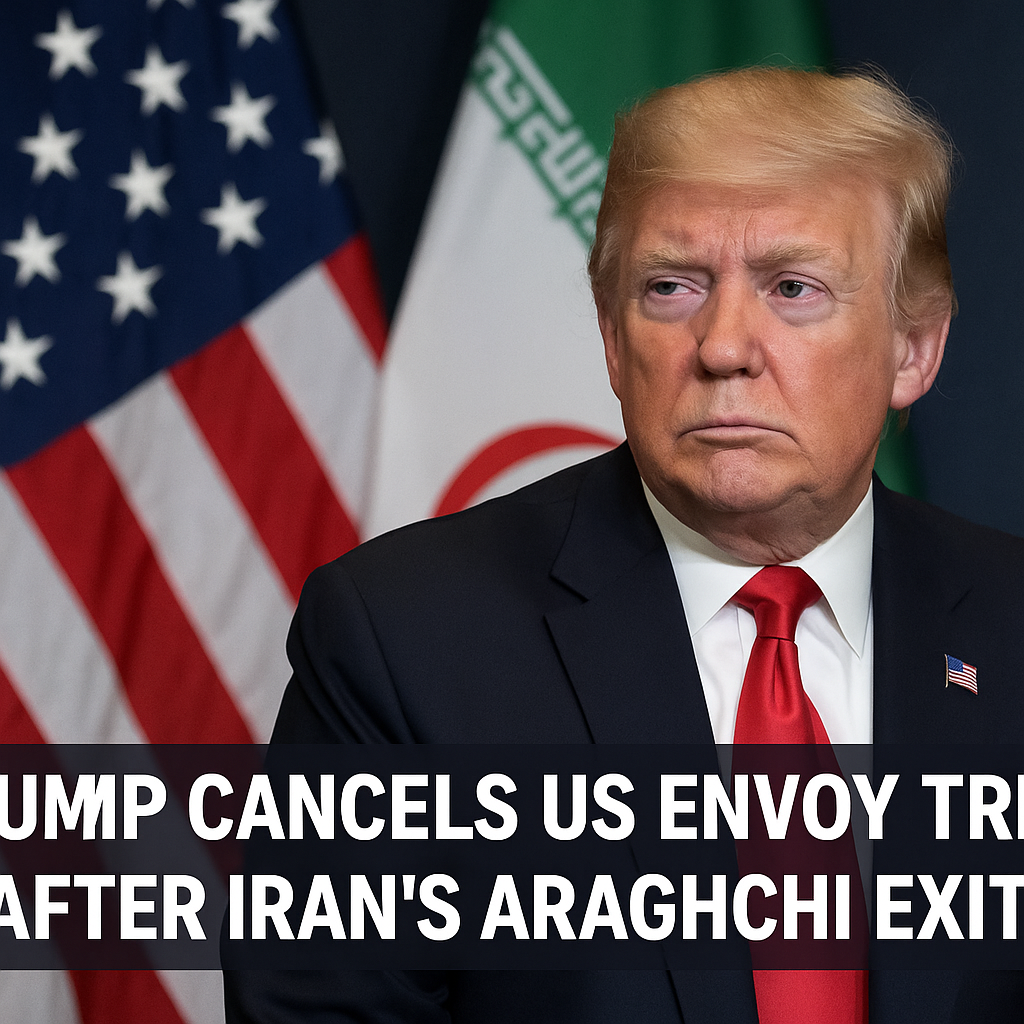
Trump Cancels US Envoy Trip After Iran’s Araghchi Exit

Trump Cancels US Envoy Trip After Iran’s Araghchi Exit
In a significant development that underscores the complexities of international diplomacy, Donald Trump has decided to cancel a planned trip for a U.S. envoy to Pakistan following the unexpected departure of Iran’s Deputy Foreign Minister, Abbas Araghchi, from the country. This decision reflects a myriad of geopolitical factors and highlights the complex web of relationships that define current U.S.-Iranian interactions.

Context of the Cancellation
The abrupt cancellation of the envoy’s trip is intertwined with broader tensions in U.S.-Iran relations, as well as the ongoing discussions surrounding nuclear negotiations. Iran’s Araghchi had been engaged in high-stakes diplomacy aimed at navigating the fraught landscape of nuclear agreements, especially in the wake of the Joint Comprehensive Plan of Action (JCPOA) discussions. His departure from Pakistan came at a time when many observers were hopeful for a breakthrough in the diplomatic talks.


The U.S. envoy’s trip was seen as a chance to bolster relationships in South Asia, a region where Iran’s influence has grown, particularly given Pakistan’s strategic positioning. However, Trump’s decision to cancel this engagement has raised questions about U.S. commitment to diplomatic engagement in the area.


Diverging Perspectives on Diplomacy
The narratives surrounding this cancellation illustrate a broader divide regarding the effectiveness of diplomacy in resolving complex geopolitical issues.
1. Proponents of Diplomacy
– Supporters of diplomatic engagement argue that cancelling such trips sends a negative signal to both allies and adversaries. They emphasize the importance of maintaining open lines of communication, especially when concrete steps towards peace and stability appear imminent. Analysts from Al Jazeera highlight that the impending negotiations were crucial for regional cooperation and stability in a time of heightened tension.
2. Advocates for a Tough Stance
– On the other hand, critics of the administration’s approach argue that engaging with Iran—especially in the context of Araghchi’s departure—could undermine U.S. interests. Commentators from sources like RT suggest that a tougher stance is necessary, and that prioritizing security and deterrence over diplomacy is more advantageous for U.S. foreign policy. They contend that the U.S. should be wary of giving concessions without tangible outcomes.
Geopolitical Implications
The implications of Trump’s cancellation extend beyond immediate U.S.-Iran relations. Observers note that the move may discourage further diplomatic outreach not only towards Iran but also within the broader Middle East region. With increasing tensions stemming from nuclear issues, regional conflicts, and economic sanctions, the potential for any diplomatic breakthrough appears to be diminishing.
Furthermore, as indicated by reports on Sky News, Pakistan plays a pivotal role as a mediator in South Asian relations, particularly regarding Afghanistan and its ties with Iran. The cancellation of a U.S. envoy’s trip could hinder collaborative efforts to tackle issues like terrorism and economic challenges that require joint strategies among regional players.
A Shifting Landscape
As international dynamics evolve, so too do the strategies employed by various nations. The recent developments, including Trump’s cancellation of the envoy’s trip, serve as a chilling reminder of how fragile progress can be in diplomacy. The interplay between U.S. foreign policy decisions and developments in Iran highlights the unpredictability of international relations.
In light of these factors, it is evident that while some policymakers may view a hardline approach as the way forward, the complexities of global diplomacy often necessitate a more nuanced strategy. The future of U.S.-Iran relations remains uncertain, and the road ahead may require more significant commitments to dialogue and cooperation.
Conclusion: A Need for Diplomacy?
In the wake of Trump’s decision to cancel the U.S. envoy’s trip, it becomes increasingly clear that effective diplomacy relies on a delicate balance between engagement and national interests. As both nations navigate their respective geopolitical landscapes, it is vital for the U.S. to remain vigilant but also open to initiatives that foster conversation rather than confrontation.
Ultimately, the path to stability in South Asia, and by extension, U.S.-Iran relations, may hinge on whether leaders can move beyond immediate reactions and engage in meaningful dialogues that address the root causes of conflict. The stakes are high, and the need for wisdom in navigating these waters has never been more crucial.















