
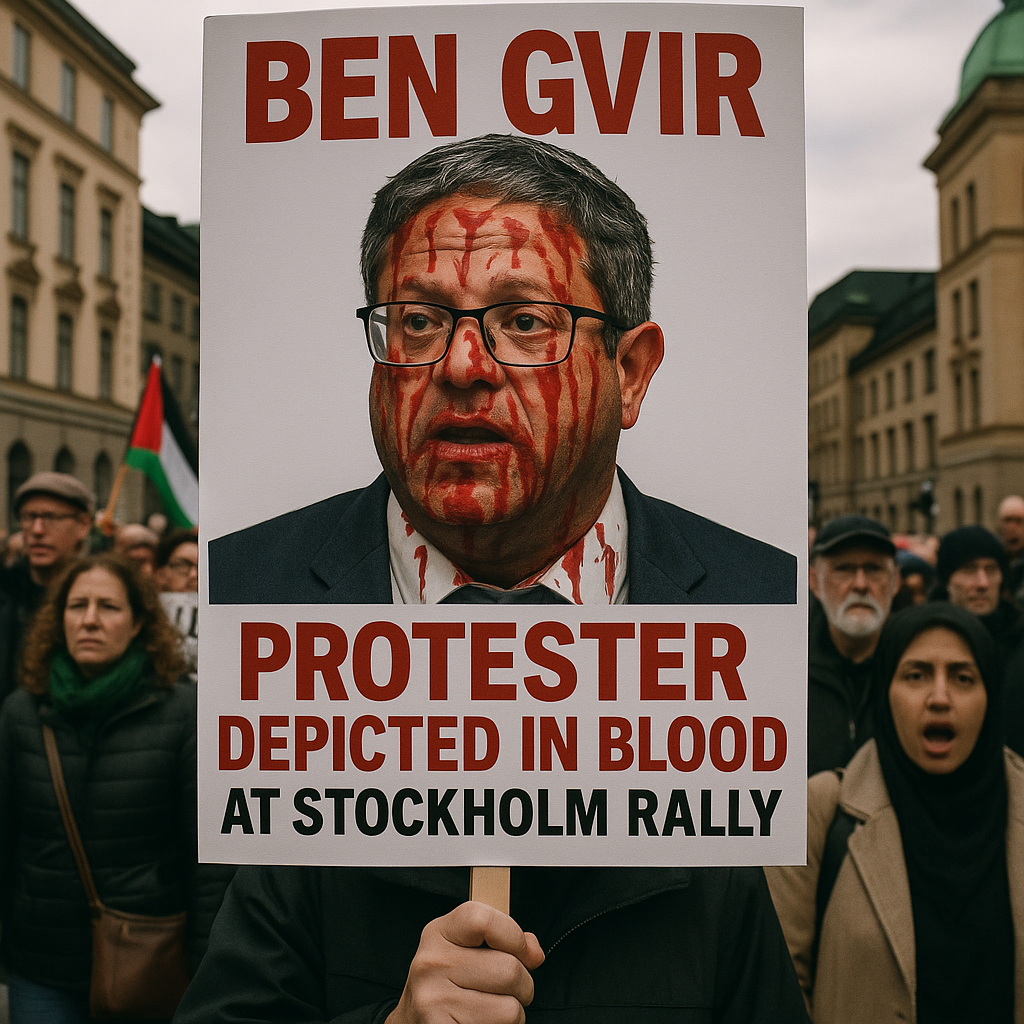
Ben Gvir Protester Depicted in Blood at Stockholm Rally

Ben Gvir Protester Depicted in Blood at Stockholm Rally
Recent protests in Stockholm have brought international attention to the Israeli National Security Minister Itamar Ben Gvir, following a demonstration where a protester was depicted dripping in blood, symbolizing the ongoing strife in the Israeli-Palestinian conflict. This act not only reflects deep-seated frustrations but also sparks discussions on the complexities surrounding activism, media representation, and governmental accountability.

The Context of the Protest
The protest that sparked controversy unfolded against a backdrop of escalating tensions in the region, particularly regarding Ben Gvir’s hardline stance on security and Palestinian rights. Itamar Ben Gvir, known for his notorious rhetoric and actions, has been a polarizing figure in Israeli politics, advocating for strict security measures and promoting nationalist policies.


In Stockholm, protesters aimed to draw attention to what they describe as human rights violations occurring in the occupied territories. The visual representation of a protester adorned in fake blood was intended as a provocative symbol, illustrating the struggles faced by Palestinians. As the demonstrator stood in front of a crowd, the imagery was a striking reminder of the violence associated with the ongoing conflict.


Diverse Perspectives on the Imagery
Reactions to the protest have varied significantly across different media outlets and public commentators. Supporters of the demonstration argue that such imagery is necessary to jolt the international community into acknowledging the harsh realities on the ground. Al Jazeera noted the rally’s goal was to shed light on perceived injustices that often go unaddressed in global discussions about the Israeli-Palestinian issue. They highlighted that protest actions, particularly using impactful visuals, serve as critical tools for activists advocating for human rights.
Conversely, critics argue that extreme representations, such as the bloodied imagery, can potentially alienate moderate supporters and frame the conversation in a manner that oversimplifies complex issues. RT has pointed out that while the protesters’ intent may be rooted in genuine concern, provocative symbols can sometimes backfire, creating deeper divides rather than fostering understanding. This tension underscores the challenge of balancing impactful activism with the risk of misinterpretation.
The Role of Media in Shaping Narratives
Media portrayal plays a crucial role in framing public perception of events like the Stockholm protest. How news outlets cover such demonstrations often influences the narratives that shape international discourse on the Israeli-Palestinian conflict.
While outlets such as Sky News covered the demonstration, they highlighted the broader implications of such protests in Europe, pointing out that activism around Palestinian rights is gaining traction in various parts of the world. This shift reflects a growing raised awareness of historical and ongoing injustices faced by Palestinians. However, the choice to emphasize certain aspects—be it the dramatic imagery or the intended messages—inevitably influences public perception.
Championing Open Dialogue Amidst Polarization
As discussions surrounding the protest continue, it’s essential to consider the nuances involved. The blood imagery, while shocking, aims to convey a message of urgency regarding the plight of Palestinians. However, it also opens the door to polarized responses that can detract from constructive dialogue.
While some may view such protests as necessary for raising awareness, others see them as counterproductive. The delicate balance between advocacy and extremism is a significant aspect of contemporary social movements. Advocates for Palestinian rights point out that ensuring accurate representation in activism is essential for fostering understanding, while critics remind us that the complexity of the Israeli-Palestinian conflict requires more nuanced discourse.
Conclusion: Moving Towards Understanding
In closing, the protest depicting Itamar Ben Gvir in blood in Stockholm serves as a reflection of the tensions permeating discussions about the Israeli-Palestinian conflict. While powerful imagery can instigate necessary conversations, it is crucial to approach these topics with sensitivity and an understanding of their multifaceted nature.
The varied responses to the protest highlight the ongoing challenge of promoting effective activism that encourages dialogue without alienation. In navigating these complexities, stakeholders on all sides must strive for a balance that allows for voices to be heard while fostering a broader understanding of the historical and socio-political contexts involved. The path toward peace and understanding remains fraught, yet discussions like these are essential stepping stones toward reconciliation.















