
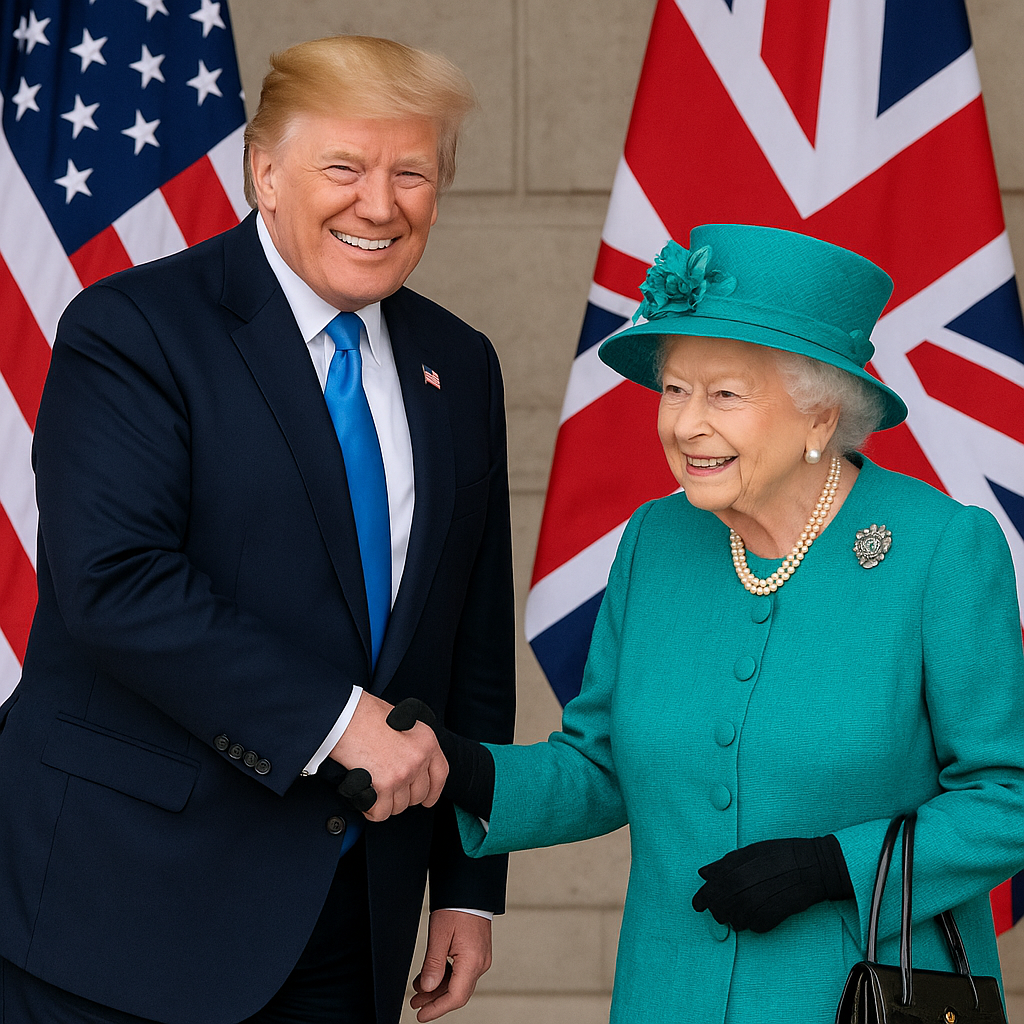
Trump Celebrates Strong US-UK Bond with Royal Visit

Trump Celebrates Strong US-UK Bond with Royal Visit
In an era defined by shifting international relationships, former President Donald Trump recently reaffirmed the enduring bond between the United States and the United Kingdom during a royal visit. This diplomatic interaction, which is rich in historical significance, serves as a platform for Trump to underscore the importance of the “special relationship” between the two nations.

The Nature of the US-UK Relations
The term “special relationship” has often been employed to describe the longstanding political and cultural ties between the US and the UK. These connections are rooted in shared history, values, and language, making the partnership particularly robust. As Trump welcomed British royals during the recent visit, he emphasized this relationship’s cultural and strategic importance.


According to reports from sources like Al Jazeera, Trump hailed the collaboration in areas such as trade, defense, and global security. He noted that the historic bond has contributed to numerous joint efforts, from military alliances to shared economic ventures. Trump’s remarks were met with approval from straightforward supporters who see this close partnership as fundamental to both nations’ prosperity.


However, interpretations of the significance of these ties vary. While many support this diplomatic closeness, especially among conservative factions, others view it with skepticism. Critics point to the complexities of modern geopolitics, arguing that reliance on a single ally (albeit a powerful one) could create vulnerabilities in a rapidly changing world.
Public Opinions and Expert Insights
Public sentiment surrounding Trump’s endorsements of the US-UK bond reveals a stark divide. Among his loyal supporters, sentiments are often infused with patriotic fervor, believing that the strong alliance is vital for national security and economic stability. Trump’s alignment with royal family members, such as Prince Charles and Prince William during the visit, is interpreted by many as a validation of his policies during his presidency and his ongoing influence in international politics.
Conversely, commentators from outlets like RT express concerns regarding the implications of Trump’s emphasis on bilateral relationships. These views suggest that the celebration of ties, while having its merits, could overshadow other equally important relationships the US might engage with, especially in Europe. There is an emerging discourse questioning if a one-sided focus on the US-UK relationship is truly beneficial or pragmatic.
Moreover, experts in international relations highlight the influence of contemporary challenges such as climate change, digital privacy issues, and global health crises as areas where America may need a broader, more inclusive approach. The “special relationship” may need to adapt in the face of new challenges—challenges that require coalition-building beyond just one ally.
The Future of Diplomacy
The recent royal visit raises pertinent questions about what the future holds for the US-UK relationship in a changed global landscape. While Trump’s statement reinforces his view of a strong partnership, history suggests that relationships evolve. The reception and adaptation of these diplomatic principles could bear long-term implications for each nation’s foreign policy strategy.
Interest in maintaining strong ties with Britain remains prevalent among certain American political elites. Still, scholars caution against interpreting this relationship as an absolute. A more nuanced approach acknowledges that fostering connections with other nations allows for more robust international diplomacy.
Despite opposing views, the visit illustrates a significant point: diplomatic relationships are multifaceted and must consider evolving global dynamics. The bond between the US and the UK, celebrated by Trump and his supporters, undoubtedly has its strengths, but the dialogue surrounding it should reflect the complex realities of today’s geopolitical landscape.
In conclusion, while the strong US-UK bond remains a critical aspect of international relations, it is essential to continually evaluate its relevance and adaptability amid global changes. As political leaders and the public navigate these complex issues, fostering an inclusive perspective toward international diplomacy may better serve both nations in the long run.















