
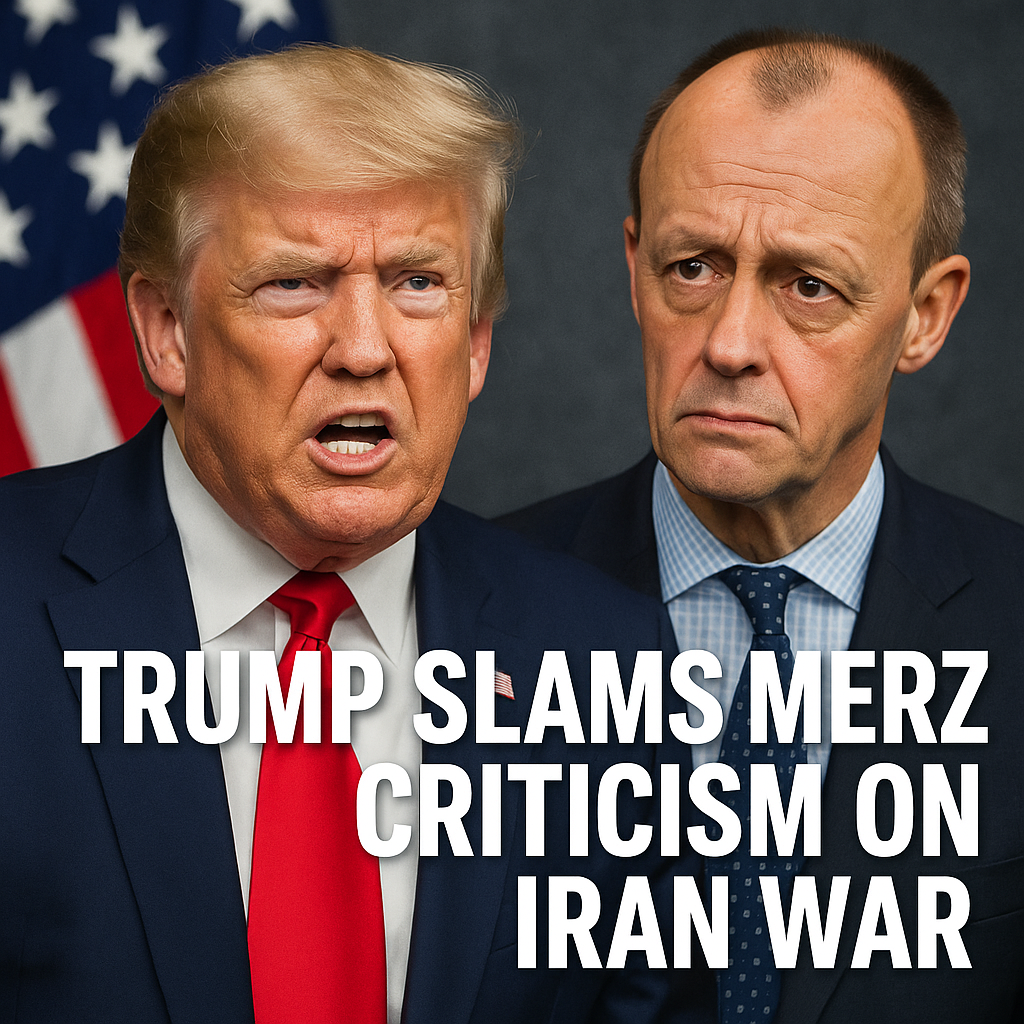
Trump Slams Merz’s Criticism on Iran War

Trump Slams Merz’s Criticism on Iran War
In a recent statement that has stirred the political waters, former President Donald Trump has strongly rebuked German politician Friedrich Merz for his critical stance on U.S. involvement in the Iran War. This exchange highlights not only the diplomatic tensions between the U.S. and its European allies but also showcases the differing perspectives on foreign intervention and national security.

A Clash of Perspectives
The backdrop to this political drama involves various geopolitical stakes, as nations grapple with the implications of military engagement abroad. Trump’s remarks came in response to Merz, leader of the German Christian Democratic Union (CDU), who argued that the U.S. approach in Iran lacks foresight and could lead to further regional destabilization. Merz’s critique resonates with a broader sentiment among European leaders who advocate for diplomatic rather than military solutions to international conflicts.


In his counter-argument, Trump emphasized the necessity of a strong military presence to counter threats from “rogue nations.” He cited the need for a proactive strategy in the face of what he termed Iran’s destabilizing activities. This outlook reflects a more aggressive American foreign policy doctrine, one that prioritizes military readiness over a diplomatic dialogue.


The European Perspective on U.S. Intervention
Merz’s criticism is part of an increasing trend among European leaders who call for a reevaluation of U.S. interventionist policies. Many European nations have historical reservations about military involvement, stemming from past conflicts that have resulted in unintended consequences. Some political analysts suggest that the ongoing fallout of U.S. operations in the Middle East influences these apprehensions.
A point of concern referenced in various reports is the impact of military action on civilian populations and regional stability. The German politician argued that U.S. military strategy could provoke further unrest rather than mitigate threats, urging a reconsideration of tactics that may escalate conflicts rather than resolve them. He highlighted the importance of “soft power” strategies, including diplomacy and economic sanctions, as a means to engage Iran and other such nations.
The U.S. Position: Strength as Deterrence
In contrast, Trump’s assertive stance suggests a belief that shows of military might serve as a deterrent to potential aggressors. In interviews, he framed his argument by asserting that a robust U.S. presence is essential for maintaining global order and reassuring allies who may feel vulnerable. Trump supporters agree with this viewpoint, asserting that strong action sends a clear signal to adversaries about American resolve.
Critics, however, caution that such an approach could lead to a cycle of violence where diplomacy is sidelined. They point to examples where military action has resulted in unforeseen escalations, arguing that a nuanced strategy is required. Notably, commentators across multiple platforms note that military involvement can often exacerbate situations, rather than ameliorate them.
Navigating Complexity in U.S.-European Relations
The broader implications of this exchange may indicate shifting dynamics in U.S.-European relations, particularly concerning foreign policy. As the geopolitical landscape evolves, both sides must navigate complex realities that include varying public sentiments and political pressures.
Recent polling data has shown mixed reactions among the American public regarding military intervention, suggesting a growing appetite for prioritizing diplomacy over warfare. Meanwhile, European nations seem increasingly unified in their call for more thoughtful foreign engagement strategies. The contrast between Trump’s military-first mindset and the more diplomatic inclinations of European leaders like Merz underscores a crucial but often contentious debate about the future of international relations.
Conclusion: Seeking Balance Amidst Divergence
The dialogue between Trump and Merz encapsulates a critical moment in global politics. As both American and European leaders grapple with the dilemmas of foreign involvement, the challenge lies in finding a balance that prioritizes both national security and global stability.
In a world rife with complex challenges, the need for nuanced discussions around military engagement becomes ever more essential. As we observe the unfolding debate, it is clear that the differing perspectives will continue to influence international relations, compelling leaders to articulate their positions on military and diplomatic strategies more effectively. This ongoing dialogue about U.S. involvement in conflicts like the Iran War serves as a reminder of the intricate web of political, ethical, and humanitarian considerations that shape our world today.















