
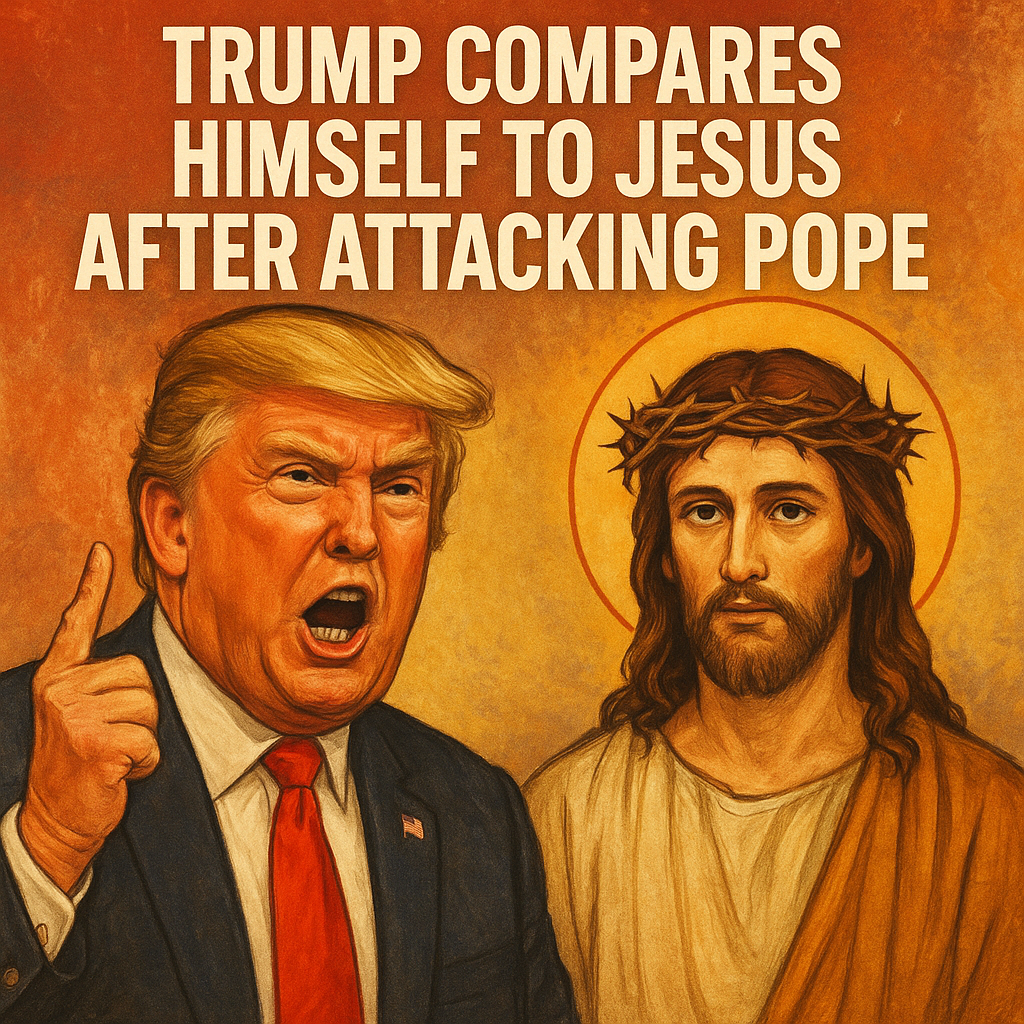
Trump Compares Himself to Jesus After Attacking Pope

Trump Compares Himself to Jesus After Attacking Pope: Understanding the Context
Donald Trump has once again stirred controversy, this time by comparing himself to Jesus while engaging in a heated exchange regarding the Pope. In a recent interview, he criticized Pope Francis’s remarks on moral leadership, particularly against the backdrop of his own tumultuous relationships with various religious figures, including Evangelicals and his criticisms of the Catholic Church. This juxtaposition of self-identity against spiritual leadership raises important questions about both Trump’s perception of authority and the implications for his followers.

Strained Relations with Religious Authority
Trump’s contentious relationship with Pope Francis dates as far back as 2016 when the Pope suggested that Trump’s immigration policies were “not Christian.” Since then, the dialogue has been laden with mutual skepticism. Recently, Trump seemed to up the ante by asserting that he faces persecution akin to that faced by Jesus, perhaps an attempt to resonate with a base that often feels marginalized.


In light of this backdrop, Trump’s remarks can be viewed through several lenses. According to sources like RT, Trump stated, “I stand with the people against the church hierarchy,” implying that he believes the Pope represents an oppressive establishment that does not align with certain American values. This characterization resonates with his base, which appreciates a straightforward, combative approach to authority figures, especially in the context of culture wars.


Nuanced Responses from Religious Leaders
Reactions from Christian leaders have been polarized. While some Evangelicals express support for Trump’s self-comparison to Jesus, claiming that he embodies the fight against moral and spiritual decay in society, others view it as an audacious misstep. Notably, a prominent pastor from Texas stated, “Instead of seeking affirmation in the guise of martyrdom, we ought to seek genuine humility.” This sentiment highlights an inherent conflict within Christian communities regarding Trump’s rhetoric and his alignment with Christian values.
Conversely, Catholic commentators and officials have expressed dismay at his approach. Many argue that equating one’s struggles with the crucifixion of Jesus diminishes the historical and spiritual significance of that sacrifice. As a result, the Pope’s stance against certain Trump policies is being interpreted not just as a political disagreement, but as a fundamental clash over what constitutes genuine moral leadership.
The Political Implications
The implications of Trump’s statements extend beyond religious discourse; they also play into his larger political strategy. By framing himself in such divine terms, Trump effectively positions himself as a martyr in the eyes of his supporters, nurturing a narrative that he is an outsider against the corrupt established order. This tactic may energize his base, particularly among voters who feel that mainstream political and religious institutions have failed them.
Moreover, the intersection of faith and politics raises questions about how leaders curate their images and align themselves with spiritual ideologies for electoral gain. As the midterms approach, such comparisons could embolden Trump’s followers, yet they may alienate moderates who find his theology dubious.
Uncertainties and Contrasts
Amid conflicting viewpoints, it remains unclear how these statements will impact both Trump’s support and the broader religious landscape in America. Critics of the former president argue that while he employs religious language, his actions often contradict the very tenets of the faith he professes to uphold. This inconsistency leaves many wondering whether his self-comparison to Jesus serves a genuine belief or merely functions as a calculated political maneuver.
While both religious leaders and political analysts offer varied interpretations of Trump’s remarks, the one consensus that appears to lack is a clear path forward for those seeking authentic moral leadership. As churches grapple with the implications of such public proclamations, it becomes increasingly important for congregations to define their values in ways that transcend personality politics.
Conclusion
Trump’s recent remarks about being persecuted in a manner similar to Jesus while attacking Pope Francis underscore the ongoing struggles between authority, faith, and identity in contemporary America. With strong opinions spanning from staunch support to outright disapproval within the religious community, the conversation is far from settled. Whether these comparisons will ultimately strengthen or fracture his political base remains uncertain, but what is clear is that Trump’s approach continues to provoke thoughtful dialogue on the intersections of faith, leadership, and morality in a rapidly evolving societal landscape.















