
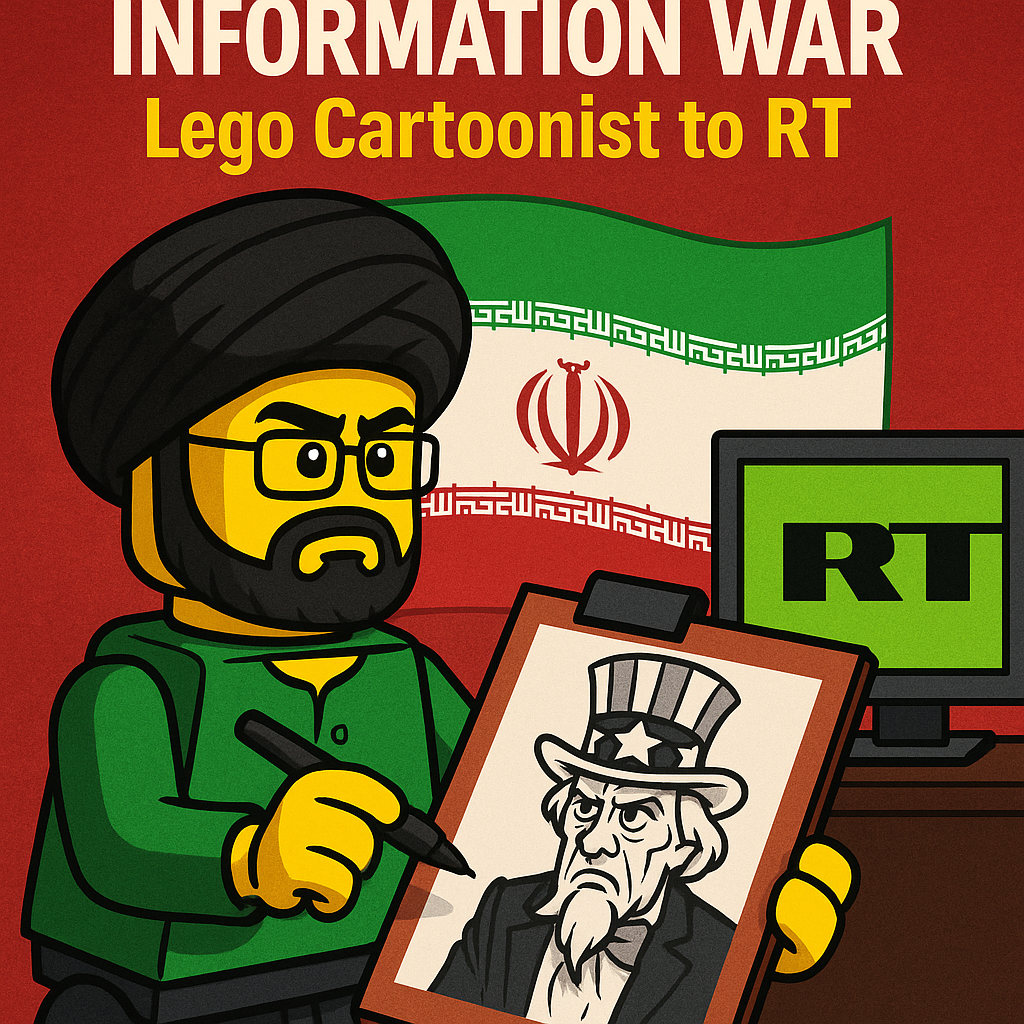
Iran’s Winning Information War: Lego Cartoonist to RT

Iran’s Winning Information War: Lego Cartoonist to RT
In today’s rapidly evolving landscape of global information warfare, Iran has emerged as a significant player, utilizing innovative content to shape its narrative. The recent rise of a Lego cartoonist, drawing attention through a viral artistic form, exemplifies how countries leverage cultural mediums to advance their interests. This article explores Iran’s strategic implementation of art and media in its information campaigns, highlighting contrasting perspectives from several reputable sources.

The Role of Creative Media in Political Messaging
Iran’s government has increasingly recognized the power of visual storytelling. The case of an Iranian artist transforming international politics into Lego animations illustrates a broader trend in which creative mediums become tools of diplomacy and propaganda. These approachable, child-friendly animations simplify complex political issues, making them more accessible to a diverse audience.


According to RT, this artist uses the Lego format to critique Western policies toward Iran and highlight themes of resilience and national pride. The artist’s work saturates social media platforms, allowing it to engage younger audiences who may not be as attuned to traditional news narratives. By embodying Iran’s perspective in a playful medium, such art can reshape opinions and encourage discussions that favor Iran’s view.


Conversely, critics argue that relying on such creative formats can dilute serious political discourse. Voices from Al Jazeera suggest that while entertaining, these animations risk oversimplifying complex geopolitical situations, which can lead to a misinformed public. They call for a more nuanced approach that balances creativity with substantial analysis, emphasizing that while art is powerful, it should not overshadow factual reporting.
Information Manipulation or Cultural Innovation?
As Iran continues to employ this artistic strategy, the implications of its information warfare tactics warrant examination. On one hand, promoting Lego cartoons can be seen as a savvy move to connect with global audiences; on the other hand, it may also raise questions about the authenticity of the narratives being promoted.
According to a report from Sky News, there are concerns regarding the authenticity of the information coming from such creative outlets. The piece highlights the possibility that these animations serve to obfuscate harsher realities, masking contentious issues under a layer of playful imagery. This brings forth the central debate: Is Iran’s approach an innovative form of cultural expression, or is it a means of manipulation?
Weighing Different Perspectives
The existence of these contrasting viewpoints raises important considerations about the role of media in shaping public perceptions. Proponents of the Lego cartoonist’s work argue that it opens the door for diplomatic dialogue in a medium that transcends language barriers. This sentiment echoes across various platforms, highlighting how art can foster a more engaging discussion around international relations.
However, this perspective is not without its drawbacks. Just as art can bridge divides, it can also create them. Critics of Iran’s approach warn that oversimplified narratives could mislead viewers about the country’s complexities, risking a superficial understanding of larger geopolitical tensions. They argue for a more responsible application of such media tactics, advocating for greater transparency in the information being presented.
In synthesizing these varied viewpoints, it becomes clear that Iran’s information war is not simply a matter of right versus wrong, innovation versus manipulation. Instead, it occupies a nuanced space where cultural expression and political maneuvering intersect.
The Future Implications of Iran’s Narrative Strategy
As new forms of media continue to evolve, the implications of Iran’s strategy will likely ripple through the global information landscape. On a broader scale, the use of creative formats by state actors raises ethical questions regarding the boundaries between art and propaganda.
For observers and analysts, it is crucial to remain vigilant about the messages being conveyed through such channels. While art can certainly play a role in softening hard political narratives, reliance on these formats must be tempered with critical oversight. Detractors assert that failing to scrutinize these forms of media can lead to a climate where misinformation flourishes.
Moreover, as other countries observe Iran’s success in using art for information warfare, we may witness similar strategies being adopted elsewhere. This could potentially normalize the use of creative media as a means of promoting national interests, resetting the standards for political communication globally.
In conclusion, Iran’s experience with the Lego cartoonist underscores the complexities involved in information warfare. Combining innovative strategies with cultural expressions can yield both opportunities for connection and challenges regarding authenticity. As nations navigate the intricate web of information dissemination, the impact of such creative endeavors warrants continued scrutiny and discourse.















