
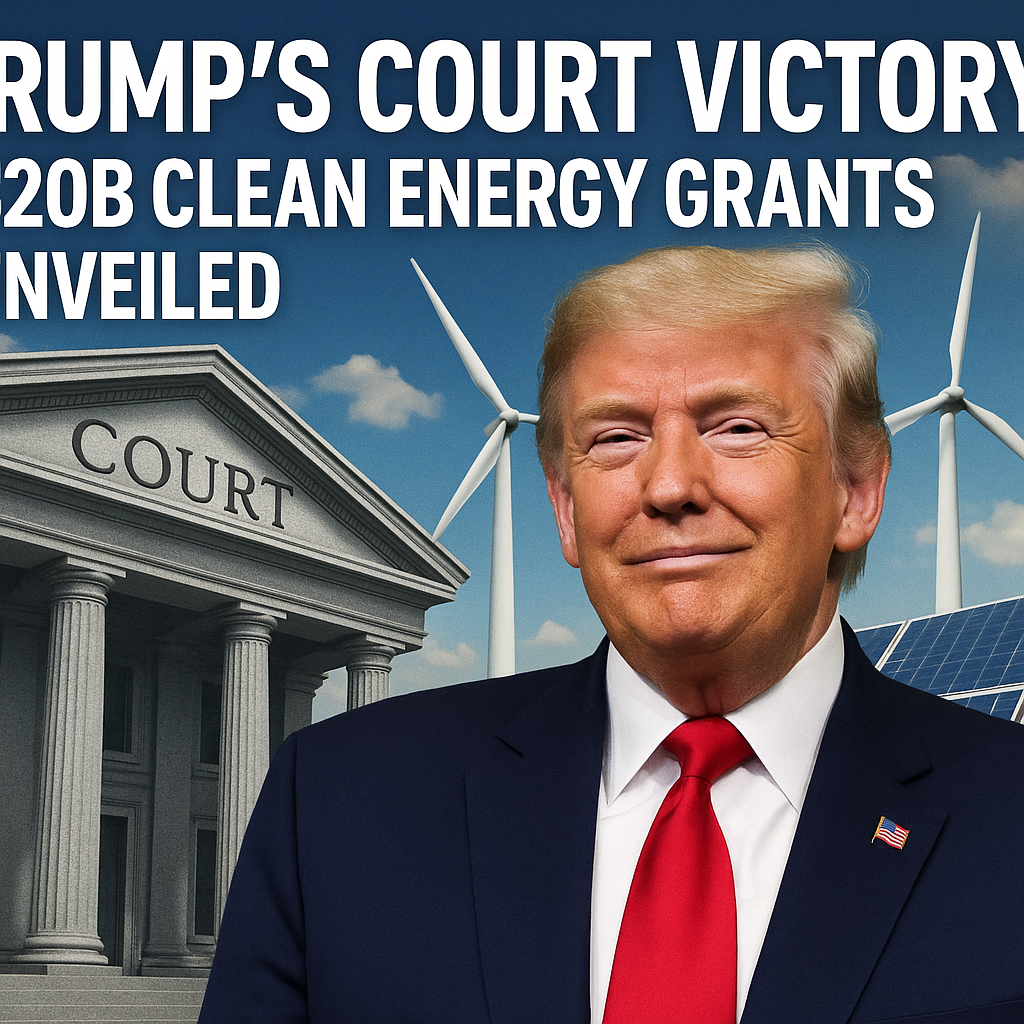
Trump’s Court Victory: $20B Clean Energy Grants Unveiled

Trump’s Court Victory: $20B Clean Energy Grants Unveiled
In a recent legal decision, a U.S. appeals court granted former President Donald Trump the ability to peel back $20 billion in allocated clean energy grants, a move that has stirred both excitement and concern across various sectors. This ruling raises critical questions about the future of clean energy initiatives and the broader implications of Trump’s legal maneuvering.

The Legal Landscape and Its Implications
The appeals court’s ruling does not merely grant Trump access to alter the use of these substantial funds; it also brings into focus the shifting dynamics of energy policy in the U.S. The $20 billion grants were initially designated to bolster clean energy initiatives aimed at reducing reliance on fossil fuels, combating climate change, and promoting innovative technologies.


Supporters of this ruling argue that Trump’s approach could lay the groundwork for revitalizing the economy, especially in regions reliant on traditional energy sectors. In a statement, a pro-trump environmental policy consultant noted, “By allowing states to decide how to use these funds, we are harnessing local expertise, which can lead to more effective solutions.”


Conversely, critics assert that this decision undermines national commitments to sustainability and environmental protection. Environmental advocacy groups expressed concerns that the reallocation of funds might lead to decreased investment in renewable energy sources. “This is a step backward for efforts to combat climate change,” said a spokesperson for a prominent environmental organization. “It jeopardizes the progress we have made in transitioning to a sustainable future.”
The Broader Context of Clean Energy Investments
As the energy sector navigates this turbulent legal environment, it is essential to examine the broader context of clean energy investments. At a time when many countries are pushing for ambitious climate goals, including the United States’ commitment to reduce greenhouse gas emissions, the decision to roll back such substantial funding for clean energy initiatives raises red flags.
Many energy analysts emphasize the importance of federal support for innovation and investment in clean technologies. A report from Al Jazeera highlighted that cutting these grants would likely slow momentum in developing renewable energy projects across the country. In the current global landscape where energy security and climate resilience are paramount, such decisions can have long-lasting impacts.
The Economic Argument
The economic ramifications of altering the trajectory of $20 billion in clean energy funding cannot be underestimated. Proponents of Trump’s ruling argue that prioritizing a more localized approach can resonate with communities struggling economically, particularly those linked to fossil fuel industries.
During a press briefing, financial analysts noted that reallocating funds could open doors for new job creation in sectors that blend traditional energy practices with innovative technologies. This sentiment aligns with Trump’s historically pro-business stance, aiming to marry economic growth with energy production.
However, detractors warn that any economic advantage gained from short-term investments in fossil fuels could be overshadowed by long-term environmental costs. As one environmental economist pointed out, “The cost of inaction on climate change is significantly higher than the upfront investments in clean energy technologies.”
A Future of Uncertainties
The debate surrounding the $20 billion clean energy grants illustrates the complexities of U.S. energy policy in the face of legal and political turmoil. As various interest groups rally behind differing viewpoints, the path forward remains murky. The appeals court’s decision embodies a broader ideological struggle within American society.
Many citizens find themselves caught in the middle, wondering who truly benefits from these policies. While the short-term economic arguments for altering grant distributions are compelling, the long-term implications on environmental health and sustainability remain crucial factors to consider.
As the situation evolves, observers will need to weigh the benefits of localized decision-making against national climate obligations. The bifurcated landscape of clean energy investment, influenced by legal and political narratives, is reflective of enduring societal values around economic growth and environmental responsibility.
In conclusion, while the court’s ruling may open new avenues for energy production and economic revitalization, stakeholders must remain vigilant about the broader context of climate change and its far-reaching effects on future generations. The journey to a balanced approach requires a collective commitment to innovate, invest, and prioritize sustainability in a rapidly changing world.















