
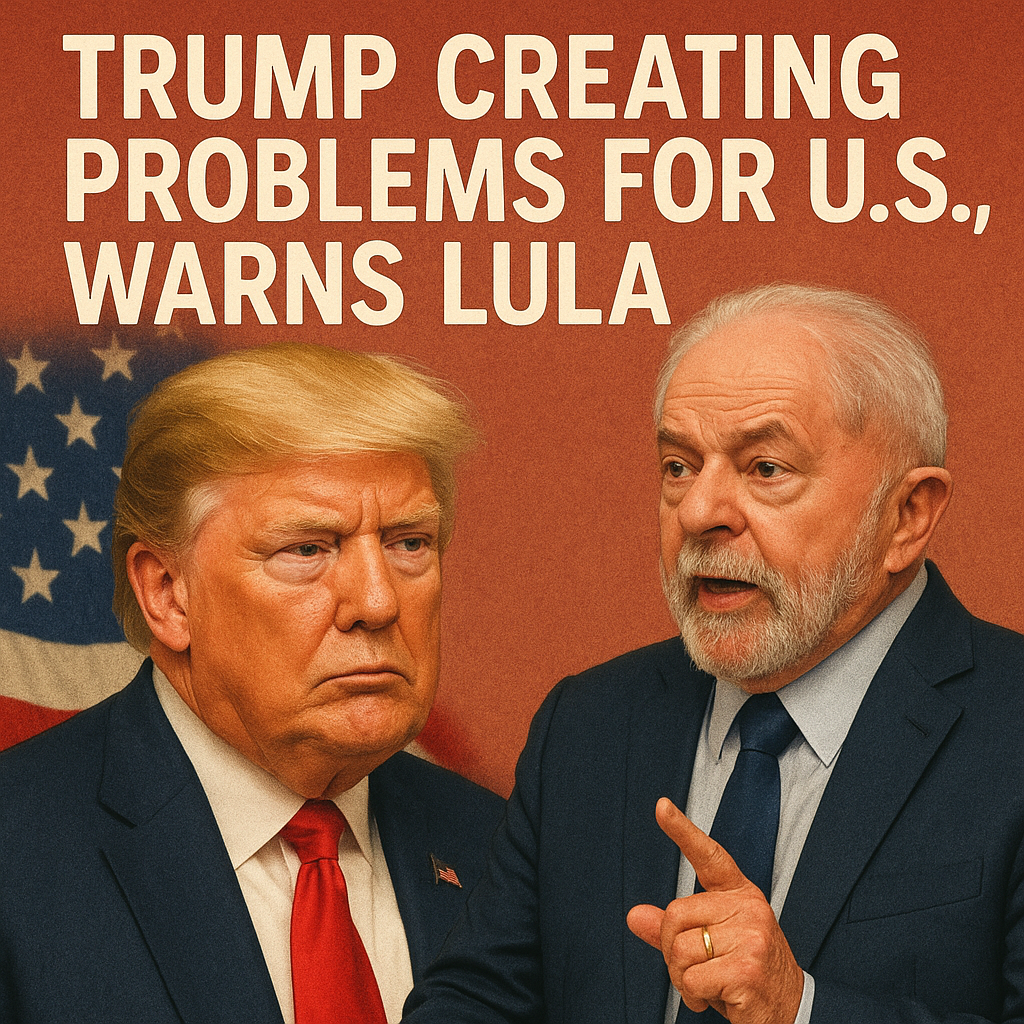
Trump Creating Problems for US, Warns Lula

Trump Creating Problems for US, Warns Lula
In recent discussions about the political landscape, the impact of Donald Trump’s actions on the U.S. has become an increasingly contentious topic. Brazilian President Luiz Inácio Lula da Silva recently voiced concerns about Trump’s potential to create significant problems for the United States, reflecting a sentiment that has been echoed in various global discussions. This article delves into Lula’s comments and the wider implications they pose, assessing multiple viewpoints and the complexities surrounding Trump’s political influence.

Lula’s Perspective on Trump’s Influence
Lula’s warnings come in the context of a polarized American political environment. During a recent address, he indicated that Trump’s potential return to power could exacerbate existing societal divisions and instability within the U.S. Lula’s remarks suggest that Trump’s leadership style, characterized by populist rhetoric and divisive policies, poses risks not only domestically but also internationally. He emphasized the need for more unity in global politics, arguing that the repercussions of American leadership decisions extend beyond its borders.


Analysts interpreted Lula’s comments as a call for the U.S. to rethink its trajectory. By highlighting the sense of instability that Trump’s policies may cultivate, Lula presents the argument that the U.S. must embrace collaborative internationalism over unilateralism if it hopes to regain its standing in the global community.


Diverse Reactions to Lula’s Statement
While Lula’s caution resonates with many, the U.S. political sphere is rife with contrasting opinions on Trump’s influence. Supporters argue that Trump’s approach revitalizes American interests by prioritizing domestic issues such as job creation and national security. They contend that his policies, such as tax cuts and deregulation, have drawn attention to the concerns of working-class Americans, making him a necessary voice in contemporary politics.
Contrastingly, critics assert that Trump’s presidency exacerbated social inequalities and polarized the political landscape. Public figures and political analysts have raised alarms about Trump’s divisive rhetoric and its potential to undermine democratic institutions. In this view, Lula’s warnings serve as an important reminder of how fragile political stability can be.
Furthermore, some U.S. foreign policy experts highlighted that Trump’s confrontational stance on global issues may hinder international cooperation. They argue that if Trump were to reclaim the presidency, the shift towards a more isolationist America could alienate key allies and disrupt existing diplomatic relationships. This perspective aligns with Lula’s assertion that global unity is vital for addressing pressing issues such as climate change and economic inequality.
The Global Context of Trump’s Legacy
The concerns about Trump’s impact are not limited to the United States. Countries around the world are keenly watching the potential implications of his political maneuvering. Lula’s statements reflect broader anxieties that nations may feel regarding U.S. credibility and reliability on the global stage. Given the interconnected nature of today’s geopolitical tensions, a Trump-led administration could pose risks that extend far beyond American borders, impacting international coalitions and agreements.
It is essential to consider how Trump’s leadership style, which often prioritizes “America First” policies, resonates in diverse geopolitical contexts. Some international leaders view such patterns as detrimental not only to U.S. interests but to global stability as well. The worry is that an inward-looking U.S. may lead to power vacuums that could be exploited by less democratic regimes, altering the balance of power in various regions.
Unsurprising Uncertainty Ahead
However, it is also crucial to recognize the uncertainties inherent in politics. While Lula expresses significant concerns about Trump’s potential resurgence, the future of U.S. politics remains unpredictable. Polls and public sentiment can shift dramatically, influenced by social movements, economic changes, and foreign relations. Critics of Lula argue that the focus should be on addressing issues within Brazil rather than commenting on U.S. politics.
The political landscape is complex, and while Lula’s warnings are grounded in a desire for global cooperation and stability, not everyone agrees on the implications of Trump’s potential return. Some view Trump as a symptom of deeper-rooted issues within American society rather than a cause that could destabilize it further.
Conclusion
The concerns raised by Lula about Trump and his capability to create problems for the U.S. encapsulate a multifaceted political debate that stretches far beyond American borders. As discussions regarding Trump’s influence unfold, it is vital to engage with diverse perspectives to grasp the complexities involved. Whether one agrees with Lula’s viewpoint or not, the underlying message promotes reflection on the type of global leadership that nurtures collective resilience and cooperation. In an increasingly interconnected world, the implications of American leadership decisions resonate globally and demand our urgent attention.















