
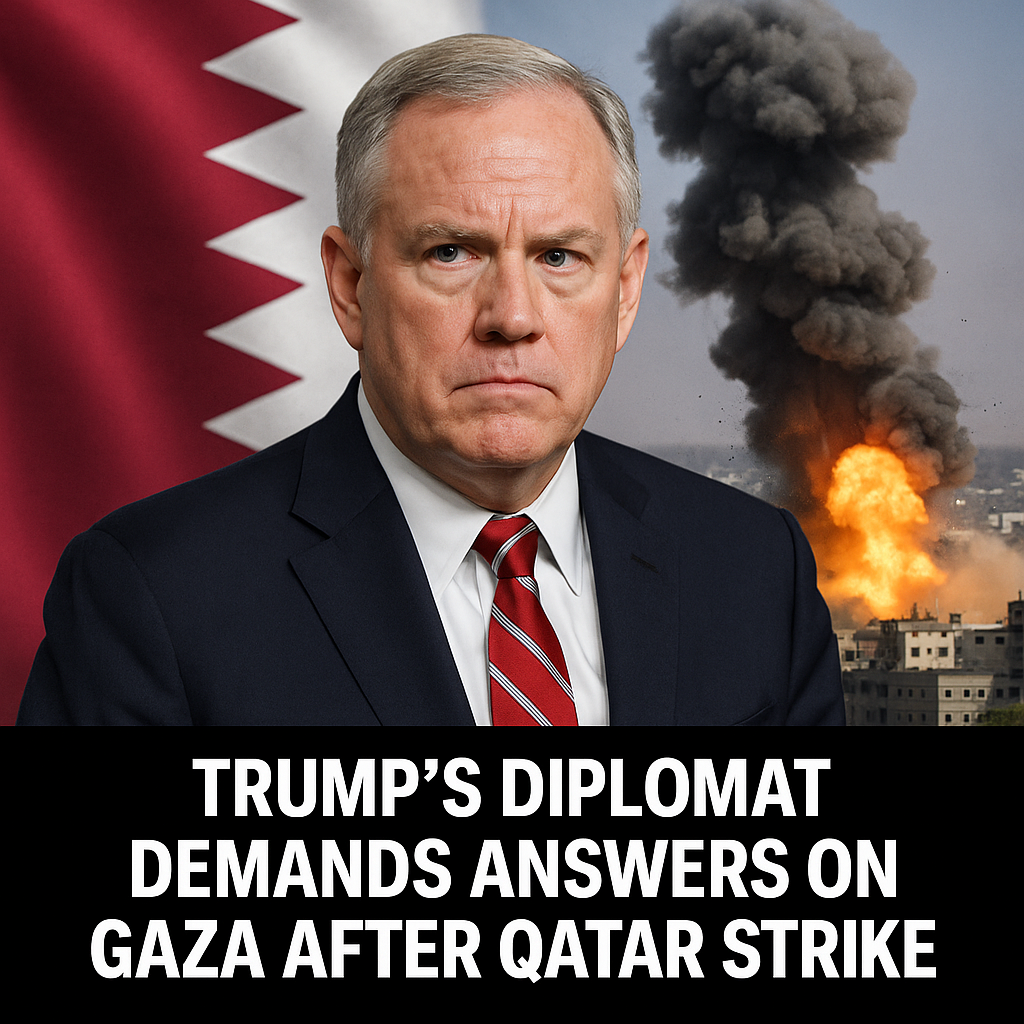
Trump’s Diplomat Demands Answers on Gaza After Qatar Strike

Trump’s Diplomat Demands Answers on Gaza After Qatar Strike
In the wake of escalating tensions in the Middle East, Donald Trump’s former diplomat, Marco Rubio, is calling for clarification on the situation in Gaza, especially following a recent strike that targeted a Qatari-supported location. This development underscores not only the intricate dynamics at play but also reveals the competing narratives surrounding the Israel-Palestine conflict.

The Current Landscape in Gaza
Recent reports indicate that airstrikes in Gaza continue to inflict damage on civilian areas, claiming lives and intensifying despair amongst the Palestinian population. Rubio’s concerns come amid a broader international call for accountability and transparency regarding Israel’s military actions. As a prominent figure advocating for stronger U.S. foreign policy, Rubio’s statements reflect a crucial intersection of American diplomatic interests and regional stability.


Al Jazeera notes that while Israel states the strikes are directed at Hamas, the ramifications are felt deeply in civilian spaces. The humanitarian impact raises questions about the strategic rationale behind targeting locations that allegedly have ties to Qatari funding. For many, this is indicative of a pattern where military actions, even those framed as responses to terrorist threats, often overlook the complexities and the dire consequences for everyday civilians.


Diverging Perspectives on the Conflict
The responses to the situation reflect a stark divide in perspectives, especially concerning U.S. involvement and policy direction. On one side, Rubio’s approach advocates for the necessity of strong diplomatic dialogue with Israel, emphasizing the need for accountability as a precondition for U.S. support. In contrast, there are voices from various quarters—ranging from human rights organizations to some political analysts—who criticize Rubio’s stance as being insufficiently critical of Israel’s approach, arguing that merely demanding answers will not drive necessary change in the humanitarian landscape.
Sky News highlights that many Palestinians and supporters of Palestinian rights view the strikes as part of a broader narrative of oppression. As the Palestinian territories remain under siege, the inability of international actors to mediate effectively compounds the crisis. This perspective challenges Rubio’s call for answers, arguing instead for transformative policy changes that prioritize human rights over military considerations.
Conversely, commentators from RT argue that the geopolitical context complicates the narrative, suggesting that Qatar’s involvement could potentially introduce new dynamics to the conflict. They highlight that Qatar has been a significant player in supporting Gaza, thereby complicating reactions from Israel. In this view, the strike was not only a tactical military maneuver but also a strategic message about regional power dynamics.
The Path Forward: International Responsibility
As the situation in Gaza continues to unfold, the international community faces a significant challenge. Rubio’s inquiry into Israel’s military strategies signifies a growing recognition among U.S. officials that unconditional support may no longer be tenable without accountability. However, achieving meaningful dialogue requires more than questions; it demands an acknowledgment of the humanitarian crisis at hand.
What remains uncertain is the extent to which international pressure, driven by diplomats like Rubio, will shift Israel’s policies. Advocates for Palestinians stress that the ongoing dialogue must include voices from Gaza, ensuring that their stories are heard amid the conflicting narratives. Furthermore, the role of other regional players, particularly Qatar and neighboring countries, should not be overlooked. These nations have a stake in the peace process and their influence could facilitate a more balanced discussion on the future of both Gaza and Israel.
Conclusion
Ultimately, the need for a nuanced understanding of the Israeli-Palestinian conflict has never been more pressing. With Trump’s former diplomat demanding answers from Israel, we find ourselves at a critical juncture. There exists an opportunity for profound reflection and, potentially, change—but this requires a commitment to listening to diverse perspectives and prioritizing humanitarian considerations over political expediency. As the international community watches closely, the demand for accountability from figures like Rubio could pave the way for a more balanced engagement in the tumultuous landscape of Gaza.















