
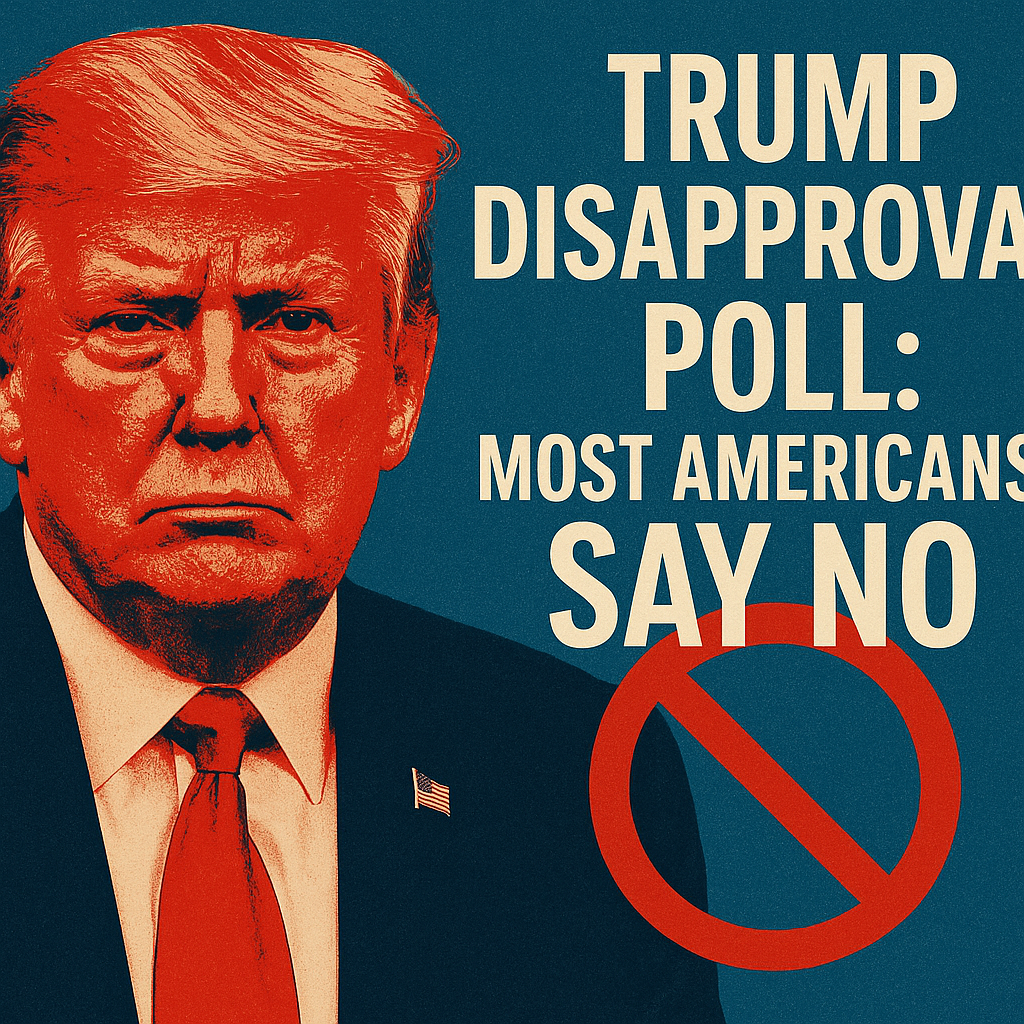
Trump Disapproval Poll: Most Americans Say No

Understanding the Landscape of Trump’s Disapproval Rating
The Trump disapproval poll reveals a significant sentiment among Americans, with many expressing their dissatisfaction toward the former president. As new data emerges, it sheds light on the complexities surrounding public opinion and the factors that contribute to the current political climate.

Current Polling Landscape
Recent reports indicate that Trump’s disapproval ratings have been rising. According to a survey referenced by RT, approximately 56% of Americans now disapprove of his performance, a figure that marks a noticeable increase from earlier months. This correlates with wider trends observed in various polls, suggesting that sentiments about his presidency remain deeply polarized.


Key Factors Influencing Disapproval
Several issues appear to influence these disapproval ratings. Economic concerns are paramount. For many, the lingering effects of inflation and economic instability have overshadowed Trump’s policies during his tenure. A poll from Al Jazeera highlights that voters’ economic anxieties significantly impact their views, emphasizing how economic indicators can shape political attitudes.


Moreover, social issues have played a critical role. Compounding matters, events such as the January 6th Capitol riots continue to resonate, further deepening divisions among the American populace. A Sky News report notes that many Americans feel a fundamental clash between Trump’s actions and the democratic ideals they cherish, enhancing their negative perceptions of his leadership.
Diverse Perspectives on Trump’s Legacy
While many polls indicate disapproval, the context surrounding Trump’s presidency illustrates a more nuanced reality. Supporters argue that his policies regarding the economy and foreign relations have merit. They contend that his tax reforms and deregulation efforts stimulated economic growth prior to the pandemic. Notably, a considerable portion of his base remains loyal, suggesting that their views are colored by a distinct narrative that celebrates his approach to governance.
Conversely, critics argue that Trump’s rhetoric and actions have fundamentally undermined democratic institutions. The divide is stark: support often stems from a dissatisfaction with the political establishment perceived as distant or elitist. This sentiment, expressed in articles from both Al Jazeera and Sky News, highlights a duality where appreciation for his disruptive tactics coexists with clear disapproval of his character and decisions.
The Role of Media and Polarization
Media coverage considerably shapes public perception. Different news outlets present contrasting narratives around Trump’s actions and their implications. For instance, RT’s coverage tends to emphasize discontent among those who feel marginalized by mainstream politics, while Al Jazeera might spotlight grassroots movements that challenge established norms. This divergence creates a fragmented landscape where citizens consume information that aligns with their pre-existing beliefs.
Polarization exacerbates these perspectives. As the political climate remains divisive, Trump’s disapproval ratings can be seen less as a straightforward measurement of his tenure and more as a reflection of the broader societal conflicts at play.
Conclusion: A Complex Reality
The latest Trump disapproval ratings don’t tell a complete story; they encapsulate an ongoing dialogue within a multifaceted political environment. While a majority express discontent, it is crucial to recognize the loyalty of his supporters and the influences of economic and social issues shaping their views.
The complexity of public opinion related to Trump underscores the necessity for informed discussions around governance, leadership, and the nuances of democratic engagement. As the 2024 election approaches, understanding these dynamics will be imperative for both political analysts and voters alike. The landscape of American politics continues to evolve, with many uncertainties lingering as to how these sentiments will translate into electoral actions. Hence, while the disapproval may resonate loudly, it is the conversations surrounding it that will ultimately define the path forward.















