
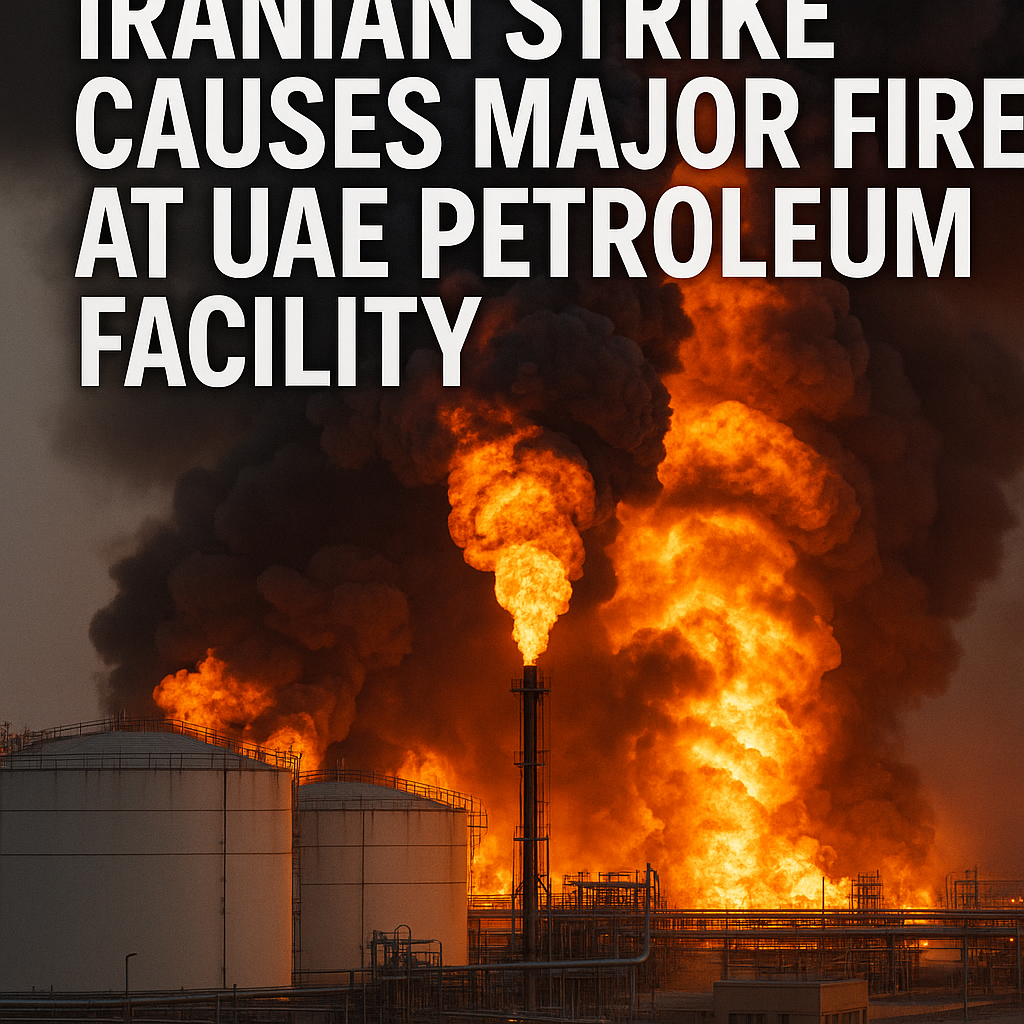
Iranian Strike Causes Major Fire at UAE Petroleum Facility

Iranian Strike Causes Major Fire at UAE Petroleum Facility
On a recent day marked by regional tension, an Iranian strike led to a major fire at a petroleum facility in the United Arab Emirates (UAE). This incident underscores the complex geopolitical landscape in the Middle East and calls into question ongoing security and diplomatic measures in the region.

The Incident: Timeline and Impact
According to reports from RT, the strike took place at a significant petroleum facility in a northern emirate of the UAE. This assault has raised alarms given the UAE’s status as a key player in global oil production. Eyewitness accounts describe thick smoke pluming from the facility, persisting well into the afternoon after the attack.


Initial investigations indicated that the fire was caused by drones, a method increasingly deployed in conflicts throughout the region. The UAE’s Ministry of Defense confirmed the attack but did not specify the extent of damage or casualties. However, the implications of such strikes extend beyond the immediate damage to infrastructure; they threaten to escalate tensions in an already volatile region.


Regional Reactions: A Divided Response
The reactions to this incident have varied significantly. Al Jazeera reported that the Iranian government quickly claimed responsibility, asserting that the attack was a direct response to perceived aggressions from the UAE and its allies. This response is part of Iran’s broader strategy to assert influence in the Gulf and demonstrate its military capabilities, especially in light of the ongoing tensions over its nuclear program.
Conversely, UAE officials have condemned the attack, viewing it as an act of aggression that breaches regional security. The UAE has previously positioned itself as a stabilizing force in the Gulf, and this incident threatens to undermine its diplomatic efforts. Furthermore, the UAE has called for international solidarity against aggression, drawing support from allies, including the United States.
Broader Implications for the Gulf Region
This episode highlights not only the fragility of regional security but also the intricate web of alliances and enmities that define the Middle East. The UAE has been actively involved in various coalitions, often aligning with Western powers, which could further complicate responses to such provocations from Iran.
The incident may catalyze a reevaluation of military readiness among Gulf states. Nations that have previously overlooked military enhancements may feel compelled to increase their defenses in light of these recent events. Reports indicate a growing possibility of an arms race in the region, where nations may seek advanced technologies to counteract drone capabilities effectively.
A Moment for Diplomacy?
While military responses may seem inevitable in the wake of such incidents, this situation could also open doors for renewed diplomatic efforts. The history of conflict in the region suggests military might often leads to waiting for the next escalation. However, diplomacy could pave the way for a more sustainable resolution.
Iran’s actions underscore a larger pattern of behavior aimed at drawing attention to its grievances in the context of broader geopolitical negotiations, particularly regarding its nuclear agenda. Western powers and Gulf states might see this incident as an impetus to engage with Iran in dialogue, albeit carefully framed by existing tensions.
Conclusion: Navigating Complexity in the Middle East
The fire at the petroleum facility in the UAE is not just an isolated incident but a flashpoint in the ongoing conflict patterns in the Middle East. With rising tensions, diplomatic avenues will be essential to de-escalate future conflicts and avoid a spiral into armed conflict. The worldwide community must closely monitor the aftermath of this event, seeking a balanced response that promotes both security and dialogue in a region fraught with complexities.
The implications hold far beyond just regional actors—global oil markets and international relations could be affected, necessitating a thoughtful and measured approach by all parties involved. This delicate dance between power, influence, and diplomacy underscores the importance of cooperation over aggression, as stakeholders in the region seek a path forward.















