
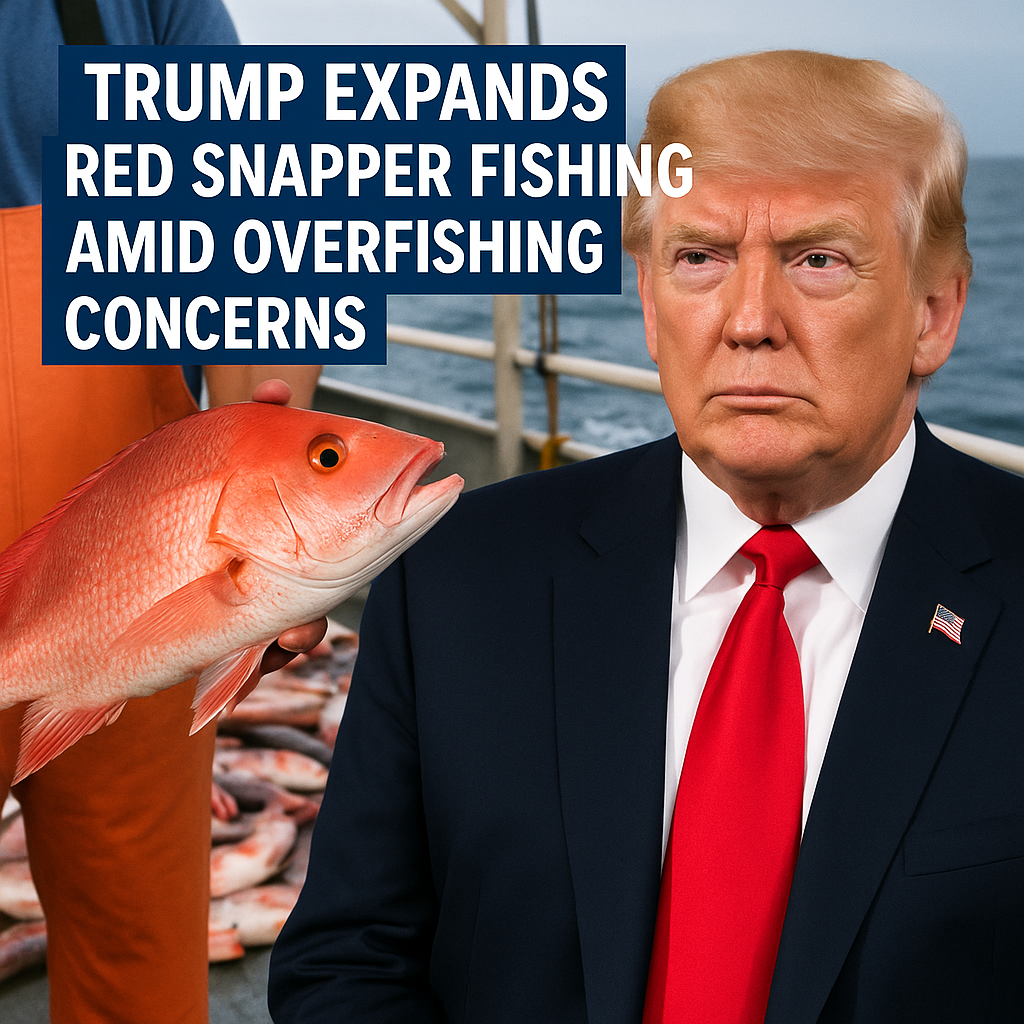
Trump Expands Red Snapper Fishing Amid Overfishing Concerns

Trump Expands Red Snapper Fishing Amid Overfishing Concerns
The recent expansion of red snapper fishing under Trump’s administration raises alarm bells for environmentalists and fishery experts who worry about the implications for marine ecosystems. This new policy decision comes at a time when concerns about overfishing are paramount, highlighting a contentious debate that weighs economic interests against environmental sustainability.

A New Chapter in Fishing Regulations
The move to expand red snapper fishing has been framed by some lawmakers and economic advocates as a necessary step to boost local economies. Proponents argue that increasing access to red snapper fisheries means more jobs and opportunities for fishermen who have struggled under stringent regulations in recent years. They claim that responsible management practices can create a balance between fishing rights and environmental concerns.


However, critics warn that loosening regulations could exacerbate the already precarious state of red snapper populations. According to a report by Al Jazeera, data from various marine research organizations indicate that red snapper populations were previously overfished, which raises serious questions about the sustainability of current fishing practices. Agencies including the National Oceanic and Atmospheric Administration (NOAA) advocate for caution, urging that scientific assessments should guide policy changes rather than political motivations.


Evidence from the Field
The validity of these concerns becomes clearer when examining the current health of the red snapper population. Fishing experts have observed patterns that suggest stocks are still recovering from extensive overfishing in past decades. Research shows that while populations may be on the mend, they are still not at optimal levels. Critics like marine biologist Dr. Jane Waters argue that “expanding fishing limits without thorough ecological assessments is akin to gambling with our oceans.”
Conversely, proponents of the new fishing policies argue that existing regulations have already demonstrated their efficacy in allowing red snapper numbers to rebound. They assert that new technological advances in fishing can help ensure that catches are sustainable. The claim is backed by some fishery reports suggesting that improved methods can reduce bycatch and target only mature fish.
Balancing Economic and Ecological Interests
This ongoing debate encapsulates the broader struggle between economic growth and environmental protection. Supporters of the red snapper fishing expansion often emphasize the need for economic revitalization, particularly in coastal communities where fishing represents a crucial source of income. For many, the fishery isn’t just a profession but a way of life that has been passed down through generations.
On the flip side, staunch advocates for marine conservation view the new regulations as erosion of critical environmental safeguards. Organizations like the Ocean Conservancy contend that policies must prioritize sustainable practices to protect vital marine ecosystems. They argue that without careful management, communities may find themselves in a cycle of boom-and-bust, where short-term profits lead to long-term ecological disasters.
While many positions are firmly entrenched, there is a growing call for collaborative approaches that encompass perspectives from both circles. Hybrid solutions that integrate scientific data with local fishing practices could offer a pathway forward that addresses both economic and ecological needs.
Navigating Uncertainties Ahead
As the situation unfolds, it remains unclear how this policy shift will play out in real terms. Concerns persist about whether the current governance structures are robust enough to monitor compliance and assess the ecological impacts adequately. Environmentalists are urging for independent reviews and ongoing assessments to ensure that any expansions in fishing practices do not jeopardize the recovery of red snapper stocks.
With both sides presenting valid arguments, the discourse around the expansion of red snapper fishing illustrates the complexity of managing natural resources in a politically charged environment. The coming months will likely see intense scrutiny of the impacts of the new regulations and the effectiveness of management strategies.
In summary, while the expansion of red snapper fishing under Trump’s administration aims to support local economies, the concerns voiced by experts regarding overfishing should not be ignored. A more integrated approach that balances economic interests with ecological requirements could be essential in navigating future policies in this contentious area. Sustainability, after all, is not just a buzzword; it is a necessity for the longevity of the fishing industry and the preservation of marine biodiversity.















