
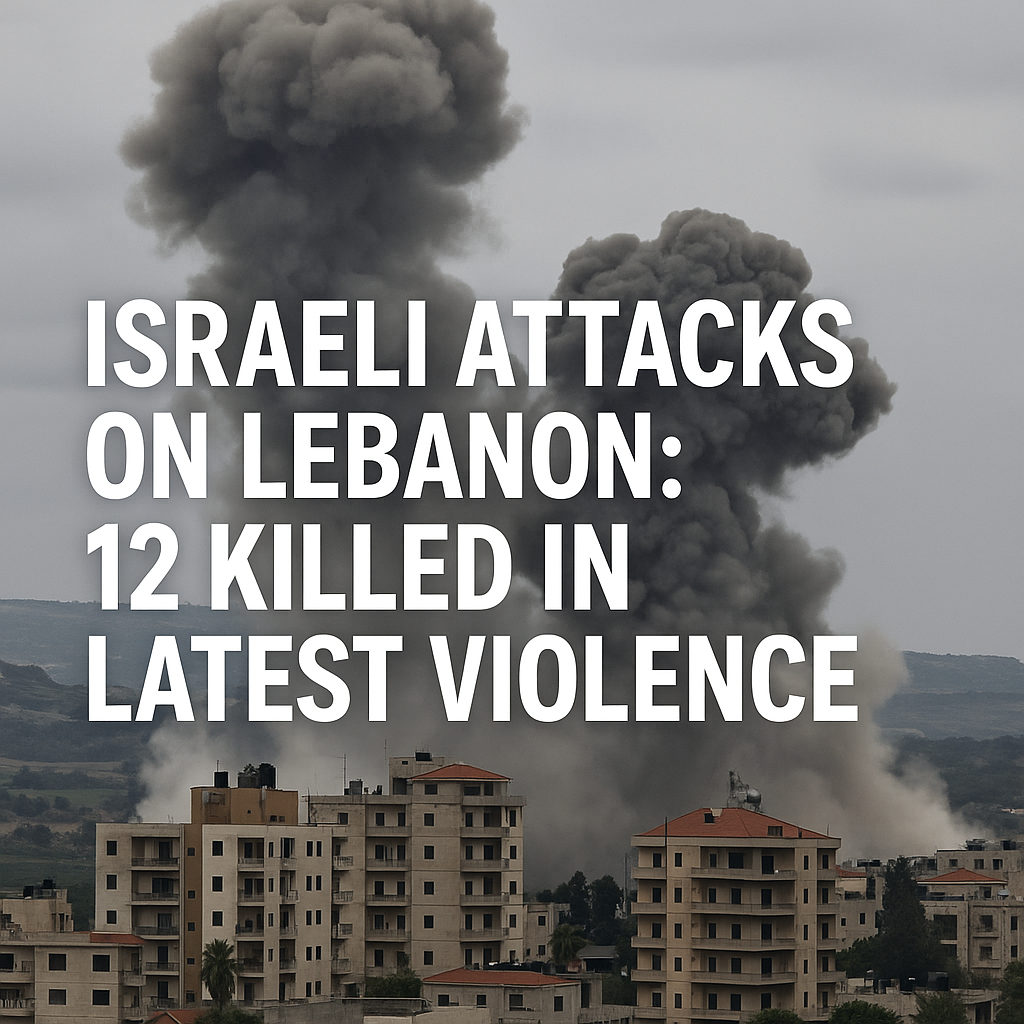
Israeli Attacks on Lebanon: 12 Killed in Latest Violence

Israeli Attacks on Lebanon: 12 Killed in Latest Violence
In recent days, the situation along the Israel-Lebanon border has escalated dramatically, resulting in significant loss of life. The latest Israeli attacks have left at least 12 people dead, a grim reminder of the longstanding and volatile tensions in the region. This situation underscores a larger, complex narrative that involves geopolitical interests, historical grievances, and the ever-present threat of violence.

Historical Context of the Conflict
To fully understand the implications of the recent strikes, it is crucial to consider the historical backdrop of the Israel-Lebanon relationship. The animosity stretches back decades; the most significant milestones include Israel’s invasion of Lebanon in 1982, the emergence of Hezbollah—a militant group that arose during the Lebanese Civil War—and subsequent conflicts, including the 2006 war. Underlying these events is a mix of territorial disputes, national security concerns, and sectarian tensions.


Recent articles reveal that the recent violence has been sparked, in part, by escalating tensions in the region. Al Jazeera reported that the Israeli airstrikes were in response to rocket fire from Lebanon towards northern Israel, which Israel attributed to Hezbollah. Conversely, sources from RT emphasized that the air attacks were also aimed at broader Iranian influences in Lebanon, suggesting a more significant geopolitical maneuver rather than a localized response. These contrasting viewpoints highlight the multifaceted nature of the conflict.


The Human Cost of Violence
The immediate human toll of the latest violence cannot be overlooked. According to Al Jazeera, the airstrikes have resulted in the deaths of civilians, including women and children, igniting outrage across Lebanon and drawing condemnation from various international organizations. Sky News reports that many Lebanese citizens feel the weight of this escalation in violence, expressing fears for their safety and calling for an end to hostilities.
– Casualties: The number of deceased has climbed to 12, a figure that resonates deeply with a population that has endured countless cycles of violence.
– Displacement: Many families have been forced to flee their homes due to the danger posed by further airstrikes. Displacement often exacerbates humanitarian issues in Lebanon, where resources are already strained.
In the wake of the attacks, local leaders have called for solidarity against aggression, stressing the need for unity within Lebanon. The emotional appeal for national cohesion contrasts sharply with the strategic calculations unfolding on a more global scale.
Responses from the International Community
The reaction from the international community has been mixed. Some nations have called for restraint on both sides, emphasizing the necessity for dialogue rather than armed confrontation. A spokesperson for the United Nations expressed concern about the deteriorating situation, urging both parties to de-escalate tensions.
Conversely, other countries have shown support for Israel’s right to defend itself against hostile actions originating from Lebanese territory. This divergence in international opinion complicates the path to a long-term resolution and highlights the geopolitical stakes involved in this longstanding conflict.
In addition to political responses, humanitarian organizations are mobilizing to address the immediate needs arising from the violence. Aid workers have reported difficulties in delivering supplies to affected areas, demonstrating the challenges of operating within a conflict zone.
A Complex Road Ahead
As hostilities continue, questions abound regarding the future of both Israeli and Lebanese citizens. Will there be a repeat of past conflicts, or can a framework for sustainable peace be negotiated? The developments of the past few days suggest a cycle that is all too familiar: military action leading to civilian suffering and international disputes.
The reality is stark; the loss of life and suffering will cast long shadows over political maneuvers in the region. While some sources predict further escalation, others hold out hope for peace negotiations. As noted by sources across the spectrum, the landscape is fraught with uncertainty.
Conclusion: A Call for Restraint and Dialogue
The recent Israeli attacks on Lebanon remind us of the fragile nature of peace in the region. The death of 12 individuals, including civilians, underscores the immediate human impact of military actions fueled by broader geopolitical conflicts. Moving forward, it is imperative for both local leaders and the international community to prioritize dialogue and restraint to break the cycle of violence. As history has shown, military solutions often breed further conflict rather than lasting resolution; it is through understanding, concession, and cooperation that a more peaceful future can be envisioned for both Israelis and Lebanese alike.
In this precarious situation, the road ahead is undoubtedly complex. Engagement from various stakeholders will be crucial in determining whether the present hostilities will open avenues for meaningful dialogue or lead to more devastating consequences.















