
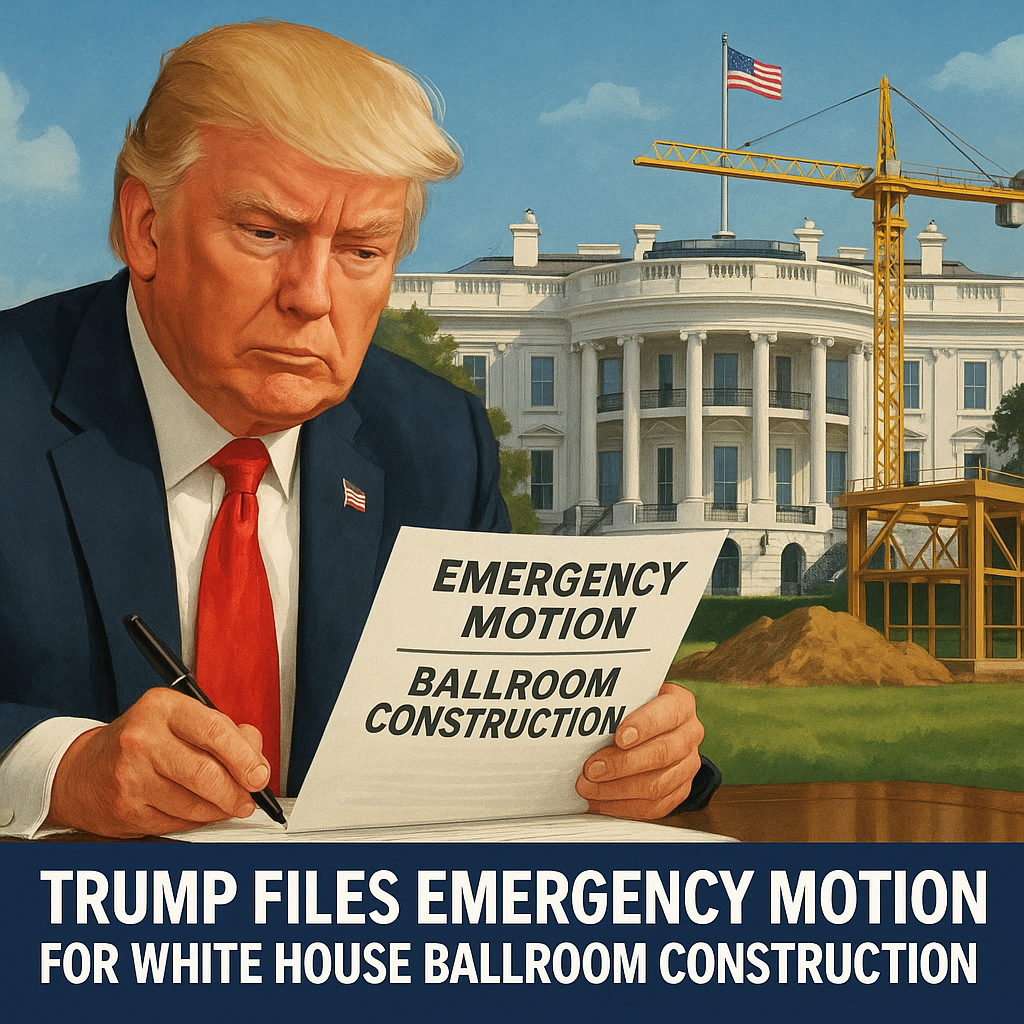
Trump Files Emergency Motion for White House Ballroom Construction

Trump Files Emergency Motion for White House Ballroom Construction: A Closer Look
Former President Donald Trump is once again in the headlines as he files an emergency motion for the continuation of construction for a White House ballroom. This move has sparked a debate across various media platforms, reflecting a diverse array of opinions and fueled further discussions on the implications of Trump’s persistent efforts to remain in the political spotlight.

Understanding the Motion
Trump’s emergency motion aims to expedite the construction process of a lavish ballroom within the White House premises, a project that has faced numerous delays due to legal challenges and public scrutiny. The ballroom, a space intended for state functions and gatherings, signifies more than just architectural ambition; it embodies Trump’s ongoing campaign to cement his legacy and influence, even outside the confines of his presidency.


Perspectives from Opposing Ends
On one side of the debate, supporters argue that the ballroom would serve as a functional venue for various state events and could potentially stimulate economic activity in the region by attracting tourism. Trump’s loyal base may view this motion as a continuation of his agenda to restore America’s prominence on the world stage, as state events and ceremonies often hold significant diplomatic weight.


Conversely, critics question the necessity and priority of such a project amid pressing national concerns, including economic instability, healthcare issues, and political polarization. Many opponents express skepticism, asserting that investing taxpayer money into a luxury ballroom distracts from addressing the urgent needs of the nation. As political commentator Sarah Jennings articulated, “In a time when the country is grappling with significant issues, the focus on a ballroom feels misplaced, if not downright frivolous.”
Weighing the Implications
The implications of Trump’s emergency motion extend beyond mere construction. It raises questions about fiscal responsibility and the role of a former president in shaping public funds and projects. While the ballroom could theoretically create a space for future state engagements, one must consider the context—especially as the nation grapples with socio-economic challenges.
Additionally, Trump’s choice to pursue this construction is emblematic of his broader strategy to maintain relevance in the political arena. By filing an emergency motion, he not only seeks to assert his influence but also potentially galvanizes support from his base, who may see him as a figure of perseverance against perceived administrative roadblocks.
The Broader Context
This construction debate is not isolated; it aligns with Trump’s overarching narrative of resilience and authority. Throughout his political career, he has positioned himself as a fighter against the establishment, a trait that resonates with many of his followers who feel marginalized by traditional political discourse. As noted by political analyst James Roberts, “Trump’s move to push forward with the ballroom construction can be seen as a symbolic act of defiance, aimed at both his supporters and the political establishment that opposed him.”
Moreover, the legal troubles surrounding Trump also add layers of complexity to this scenario. With ongoing investigations and hearings, his motion serves dual purposes: it asserts his commitment to his projects while simultaneously redirecting attention away from his legal challenges. This tactic has been noted in previous instances where Trump has attempted to pivot discussions towards initiatives that may resonate with his supporters.
The Future of the Ballroom and Public Perception
As the motion unfolds, public perception will undoubtedly play a pivotal role in determining the fate of the ballroom construction. The current political climate, marred by division and heightened tensions, complicates the straightforward acceptance of such projects. The general public’s acceptance—or rejection—will hinge on their views regarding the current administration’s priorities and the pressing needs of the American populace.
As engagement with this issue continues, it becomes increasingly essential to navigate this conversation with sensitivity to both sides. Whether Trump’s motion succeeds or falters, it embodies not just a desire for opulence but also a larger discourse about values, priorities, and the role of leadership in contemporary society.
Conclusion: A Tension of Interests
Trump’s emergency motion for the White House ballroom construction encapsulates a broader conversation about legacy, governance, and the responsibilities attached to leadership. The varying perspectives surrounding this issue reflect the inherent tensions in American political discourse today. As this situation evolves, it will undoubtedly serve as a litmus test for public sentiment towards both Trump and the intricacies of contemporary American governance. Whether this ballroom becomes a pillar of state celebration or a symbol of excess will likely depend on the ever-changing landscape of American political and social priorities.
In summary, Trump’s motion is not merely about a physical structure but a representation of ongoing socio-political narratives, making it crucial for all stakeholders to engage thoughtfully and critically with the implications of such decisions.















