
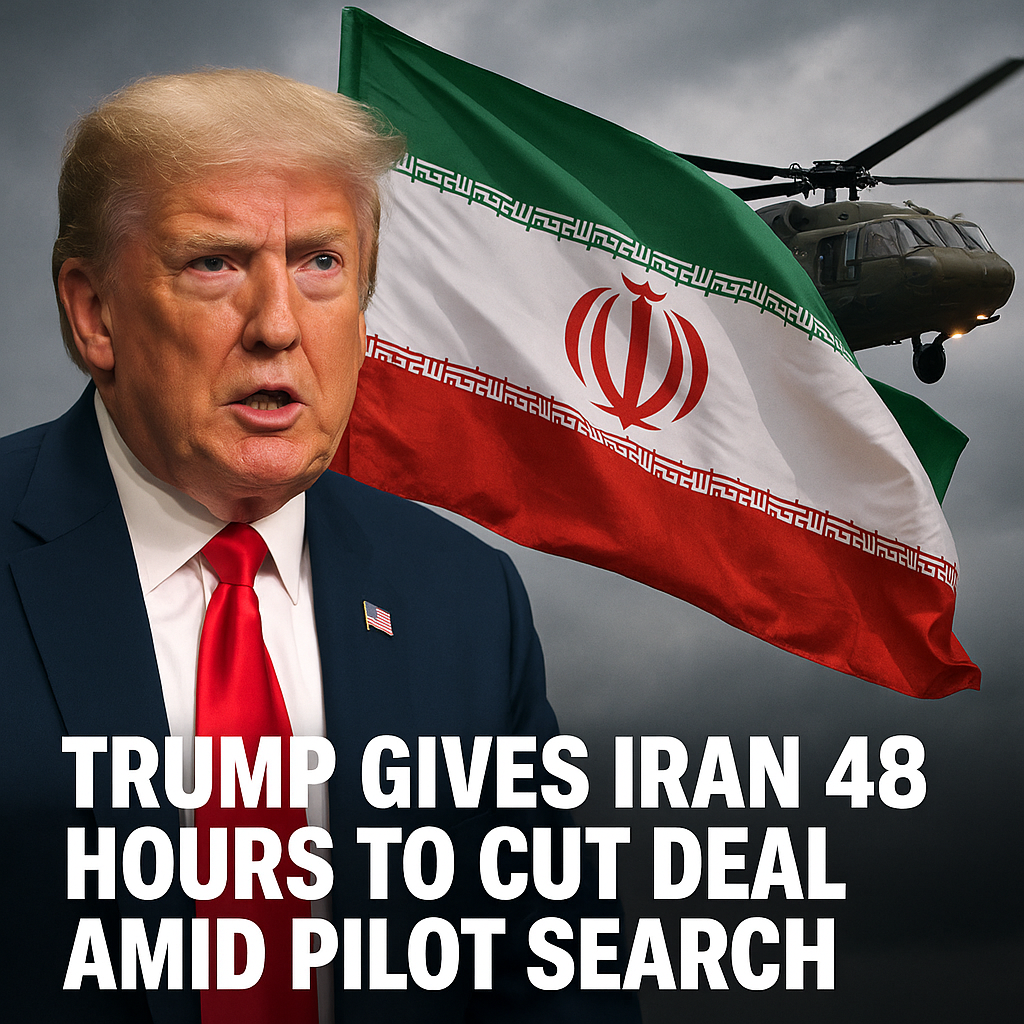
Trump Gives Iran 48 Hours to Cut Deal Amid Pilot Search

Trump Gives Iran 48 Hours to Cut Deal Amid Pilot Search
In an urgent diplomatic twist, former President Donald Trump has issued a stark ultimatum to Iran, stating that the nation has 48 hours to negotiate a deal concerning a U.S. pilot presumed to be held captive. This striking development has evoked a mix of responses within the complex landscape of international relations, highlighting the intricacies of U.S.-Iran ties amidst a backdrop of geopolitical tensions.

The Stakes of the Negotiation
Trump’s demand comes during a critical period as the search for the U.S. pilot intensifies. According to multiple reports, the pilot’s fate hangs in a precarious balance, with Trump emphasizing the necessity of a prompt resolution. The former president has been vocal about his administration’s tough stance on Iran, which he claims is vital for national security.


– Urgency of the Situation: The 48-hour stipulation indicates a heightened sense of urgency. Observers note that this deadline could signal a strategic ploy to pressure Iran into concessions quickly. However, critics argue that such stark ultimatums often exacerbate tensions rather than foster productive dialogue.


On the Iranian side, officials have responded cautiously. Reports from Al Jazeera indicate that Iran views Trump’s ultimatum as a form of political theater, with senior Iranian diplomats suggesting that they are already prepared for negotiations but will not be coerced by arbitrary timelines. This reaction points to a broader strategy within Iranian diplomacy, which often emphasizes sovereignty and the assertion of national interests.
International Implications and Reactions
The international community is closely monitoring this situation, with various nations weighing in on the potential consequences of Trump’s demands. Observers argue that the former president’s approach to diplomacy raises fundamental questions about the effectiveness of ultimatums in resolving long-standing conflicts.
Divergent Perspectives on Diplomatic Strategies
1. Support for Tough Stances: Proponents of Trump’s hardline tactics contend that a firm approach is necessary given Iran’s history of engagement in activities that undermine regional stability. They argue that by setting a deadline, Trump is sending a clear message about U.S. resolve and the importance of rapidly securing American lives.
2. Concerns Over Escalation: Conversely, critics highlight the risks associated with ultimatums. They argue that a 48-hour window could escalate the situation, leading to increased tensions or unexpected reactions from Iran. As Jake Sullivan, National Security Advisor, expressed in a recent statement, “Diplomacy thrives on dialogue, not demands.”
This divergence illustrates the broader debate surrounding U.S. foreign policy strategies. While some advocates for a tough stance believe it promotes respect, detractors caution that it can alienate potential partners and hinder constructive dialogue.
Conclusion: A Complex Path Forward
As the clock ticks down on Trump’s ultimatum, the complexity of U.S.-Iran relations looms large. The Iranian government has maintained a degree of flexibility in its approach to negotiations, suggesting that they may be open to discussions, albeit on terms that protect their national interests.
With the geopolitical landscape continually shifting, the outcome remains uncertain. The next 48 hours could yield a breakthrough or further complicate an already fraught relationship. In the end, navigating this intricate diplomatic terrain will require careful engagement and a recognition of the multifaceted interests at play.
In an era where communication and diplomacy are increasingly intertwined with the direction of international relations, it is crucial to consider both the urgency of finding a resolution and the potential fallout from high-pressure tactics. As this situation evolves, keeping an eye on both sides will be essential for understanding the broader implications of Trump’s ultimatum on U.S.-Iran relations and regional stability.















