Trump’s Iran Deal Fails to Meet Israel’s War Goals

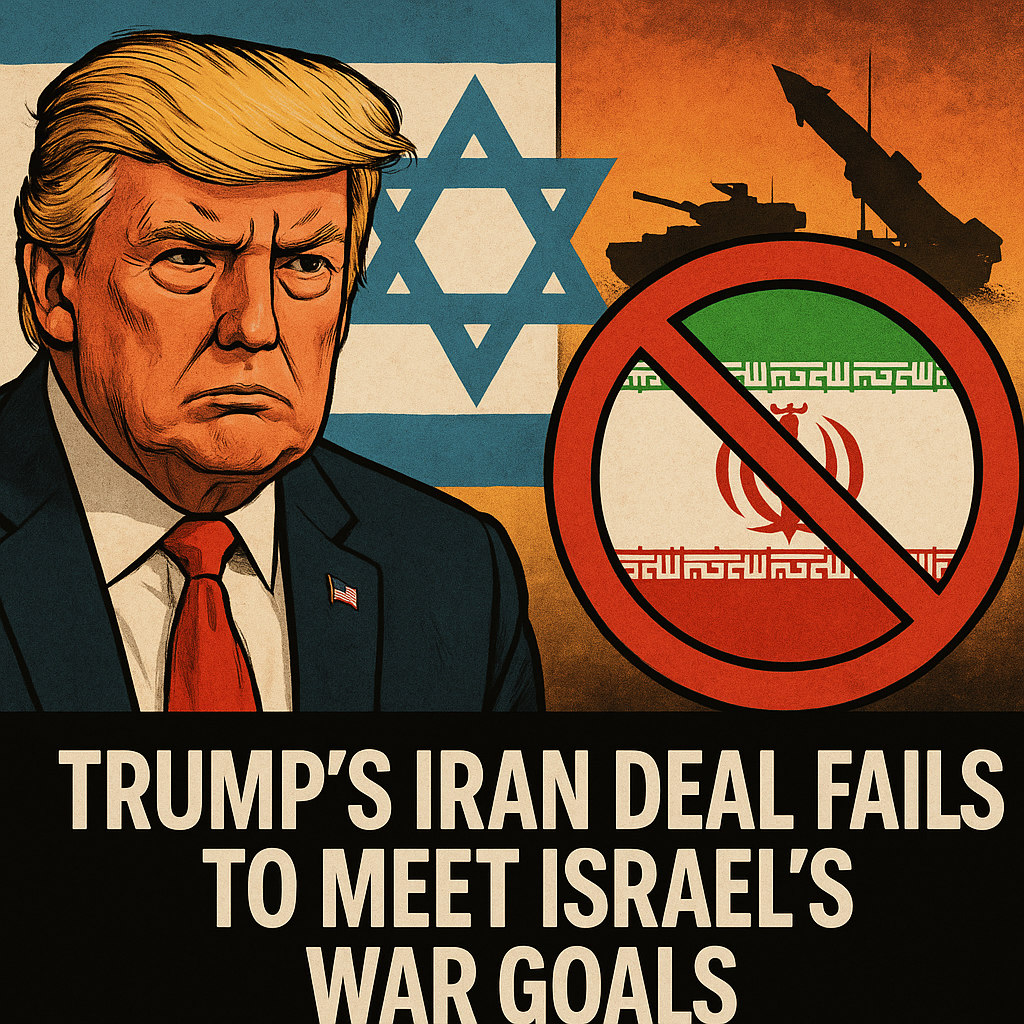
Trump’s Iran Deal Fails to Meet Israel’s War Goals
The recent diplomatic engagement surrounding the Iran deal has been a source of significant tension and frustration in the Middle East, particularly concerning Israel’s security objectives. This ongoing discussion reflects the complexities and divergences in U.S. foreign policy, intensified by the ever-shifting dynamics of regional relations.

The Context of Tension: Israel’s Security Concerns
Israel has historically viewed Iran as its primary adversary, largely due to fears over Tehran’s nuclear ambitions and its influence in various regional conflicts. In light of this, any diplomatic dealings, particularly those involving major powers like the U.S., are closely scrutinized by Israeli officials. Recent comments from Israel’s former Prime Minister Yair Lapid regarding the latest U.S. administration’s approach to the Iran deal epitomize these concerns. He contends that the proposed agreement fails to guarantee Israel’s safety, arguing that its provisions will inadequately constrain Iran’s nuclear program.


According to Lapid, the new deal lacks the rigor necessary to ensure Iran does not pursue nuclear weapons capability, which he claims could embolden the nation in its regional assertiveness. This sentiment is echoed by other Israeli leaders who argue that a revamp of the deal, rather than a new negotiation, risks undermining the nation’s strategic goals. Many observers argue that such a perspective highlights a fundamental disconnect between Israeli security objectives and the approaches favored by the U.S. administration.


Diverging Views: U.S. and Israeli Strategies
While Israeli leaders vocalize their dissatisfaction, U.S. officials portray a different narrative, suggesting that engagement with Iran can ultimately lead to a more stable region. They argue that diplomacy is more beneficial than isolation, asserting that earlier attempts at a nuclear deal did effectively limit Iran’s nuclear capabilities, albeit temporarily.
Reports from various U.S. diplomats cite that maintaining communication channels with Iran may aid in de-escalating tensions and possibly curtailing hostile activities. American analysts often highlight that a purely military approach might generate unintended consequences, possibly leading to an escalation of hostilities rather than resolution. This view suggests that the U.S. aims to strike a delicate balance between addressing Israel’s security needs while simultaneously pursuing broader diplomatic goals.
The Complex Interplay of Regional Dynamics
Moreover, the situation is further complicated by shifting political alliances in the region. For instance, certain Arab nations have indicated a willingness to engage with Iran, reflecting changing geopolitical landscapes. This evolving paradigm may indicate a shift in collective security strategies in the Middle East—a prospect not lost on Israeli leadership who feel increasingly isolated within a rapidly transforming regional context.
The potential for negotiations to cool tensions between Iran and neighboring Arab states poses a dual-edged sword for Israel. While it may allow for broader regional dialogues, the perceived leniency towards Iran might embolden Tehran’s influence and ambitions. Critics of the U.S. strategy argue that without robust assurances for Israel, this approach risks undermining not only Israeli security but also broader regional stability.
Conclusion: Seeking a Balanced Path Forward
In summation, the diverging viewpoints on Trump’s approach to the Iran deal underscore a complex interplay of national interests, security assurances, and the intricacies of regional diplomacy. As the U.S. navigates its foreign policy objectives, the challenge remains to align these with Israel’s security concerns. While the deal may open new avenues for dialogue, the apprehensions voiced by Israeli officials reflect a deep-seated fear that Iran might still emerge as a more formidable adversary.
Ultimately, finding a pathway that addresses both U.S. ambitions for regional diplomacy and Israel’s security needs will require careful consideration of the myriad factors at play. As the situation unfolds, it will be crucial for policymakers not only to listen to Israel’s concerns but also to engage in constructive dialogue that takes into account the broader regional context. In this complex landscape, the efficacy of any Iran deal will depend on its ability to ensure a stable and secure future for all actors involved.