
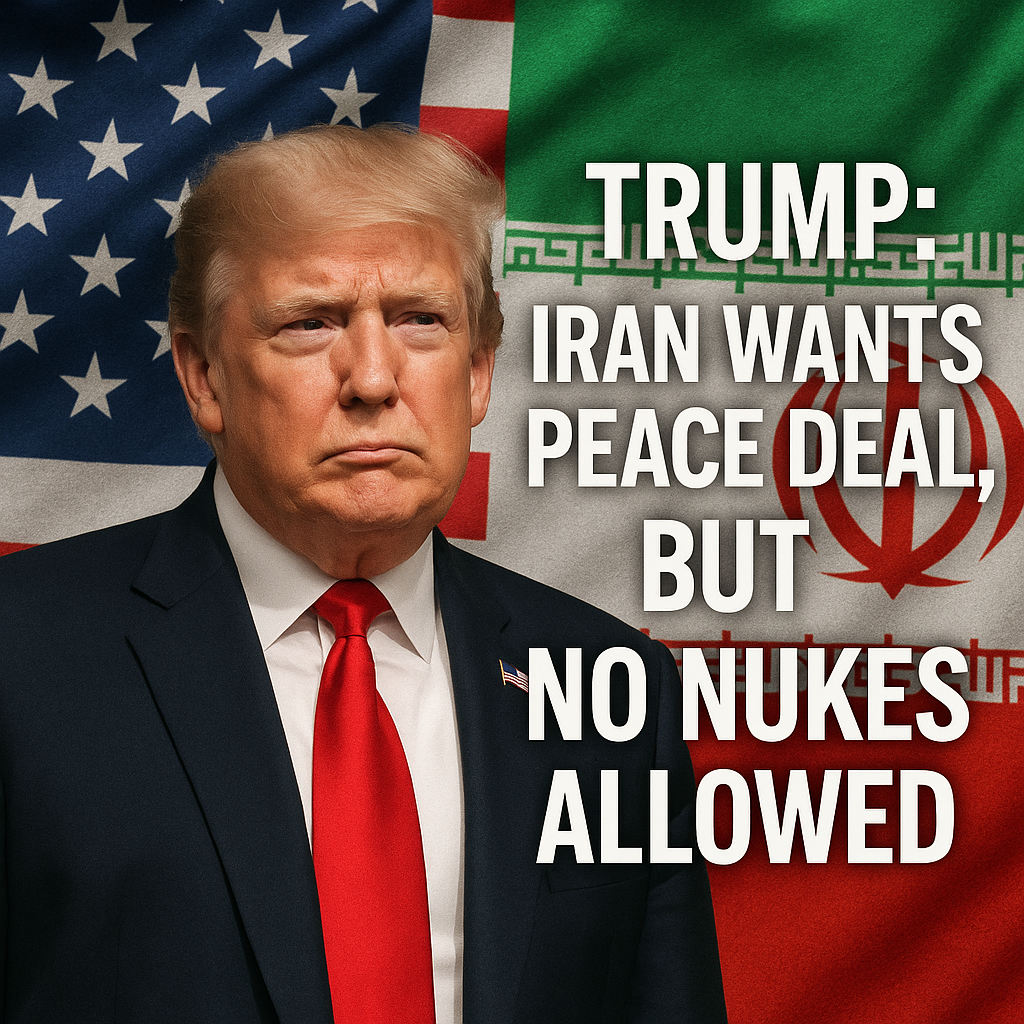
Trump: Iran Wants Peace Deal, But No Nukes Allowed

Trump: Iran Wants Peace Deal, But No Nukes Allowed
Recent statements from former President Donald Trump suggest that Iran is seeking a peace deal regarding its nuclear program, albeit with a critical caveat: no nuclear weapons allowed. This assertion opens the door to a complex discussion about diplomatic relations and security concerns in the Middle East. To explore this topic thoroughly, we will synthesize viewpoints from multiple reputable sources and examine the implications of Trump’s comments on both U.S. foreign policy and Iran’s regional ambitions.

The Context of Trump’s Remarks
In a recent news segment, Trump emphasized that Iran is demonstrating interest in engaging in diplomatic negotiations, indicating that a peace deal could be on the horizon. Trump’s assertions stem from the long-standing issue of Iran’s nuclear ambitions, which have persisted since the initiation of nuclear development programs in the early 2000s. He cautioned, however, that any agreement would need stringent non-proliferation measures, firmly stating his stance against allowing nuclear weapons in the region.


Sources such as Al Jazeera highlight that Trump’s remarks come in the context of ongoing tensions surrounding the Joint Comprehensive Plan of Action (JCPOA), from which the U.S. withdrew in 2018. This withdrawal has left a significant void in negotiations and has fueled regional instability. Trump’s position reflects a broader concern that Iran’s nuclear capabilities could exacerbate an already volatile landscape.


Contrasting Perspectives on Diplomacy
While Trump’s comments indicate a willingness to engage with Iran, perspectives on how successful such negotiations would be vary significantly among experts. Progressive commentators argue that Trump’s administration’s previous approach, characterized by sanctions and isolation, failed to curb Iran’s nuclear ambitions and instead pushed it further toward the development of advanced weapons capabilities.
According to a report from RT, some analysts maintain that Iran is indeed interested in a peace agreement but only under conditions that ensure sovereign rights to nuclear technology for peaceful purposes. This sentiment aligns with Iran’s historical narrative that its nuclear program is intended solely for civilian use. The Iranian government has repeatedly emphasized its commitment to nuclear non-proliferation, presenting itself as a responsible actor on the international stage.
Contrastingly, more hawkish commentators and analysts suggest that Iran’s overtures may be a strategic tactic to relieve sanctions without making real concessions. They argue that any peace deal could be nothing more than a temporary solution, keeping Iran’s long-term strategic ambitions intact.
A Nuanced View on the Future of Negotiations
The complexity of Iran’s nuclear aspirations cannot be overstated. Many experts note that any peace deal would require extensive verification measures and trust-building measures that have been historically absent in U.S.-Iran relations. For instance, the potential involvement of European powers and other international entities in the negotiation process could create a multipolar approach that might be more effective than bilateral talks.
The challenge lies in balancing diplomatic engagement with adequate checks to prevent nuclear proliferation. It is essential for any deal to include robust monitoring mechanisms—a point emphasized by various analysts in the field. In light of the historical context and the current geopolitical landscape, reaching a consensus that satisfies all stakeholders remains a formidable task.
Uncertainties and Concluding Thoughts
As discussions around a possible peace deal continue, uncertainties prevail. With Trump’s comments generating ongoing debate, it is clear that both diplomatic solutions and the stringent conditions necessary for ensuring regional security require significant compromises from both sides.
While the former president’s assertion that “Iran wants peace” could indicate a shift toward more dialogue, the insistence on the exclusion of nuclear weapons signifies the complexities that remain. Without mutual trust and a transparent framework, achieving a lasting resolution seems elusive.
In summary, while Trump’s framing of the situation presents an opportunity for renewed dialogue and demonstrates a potential path forward, the deeply entrenched issues surrounding Iran’s nuclear ambitions and regional strategy reveal the challenges that lie ahead. The discourse will need to reflect the multifaceted nature of international relations and prioritize mutual respect and verification to pave the way for a lasting peace deal.















