
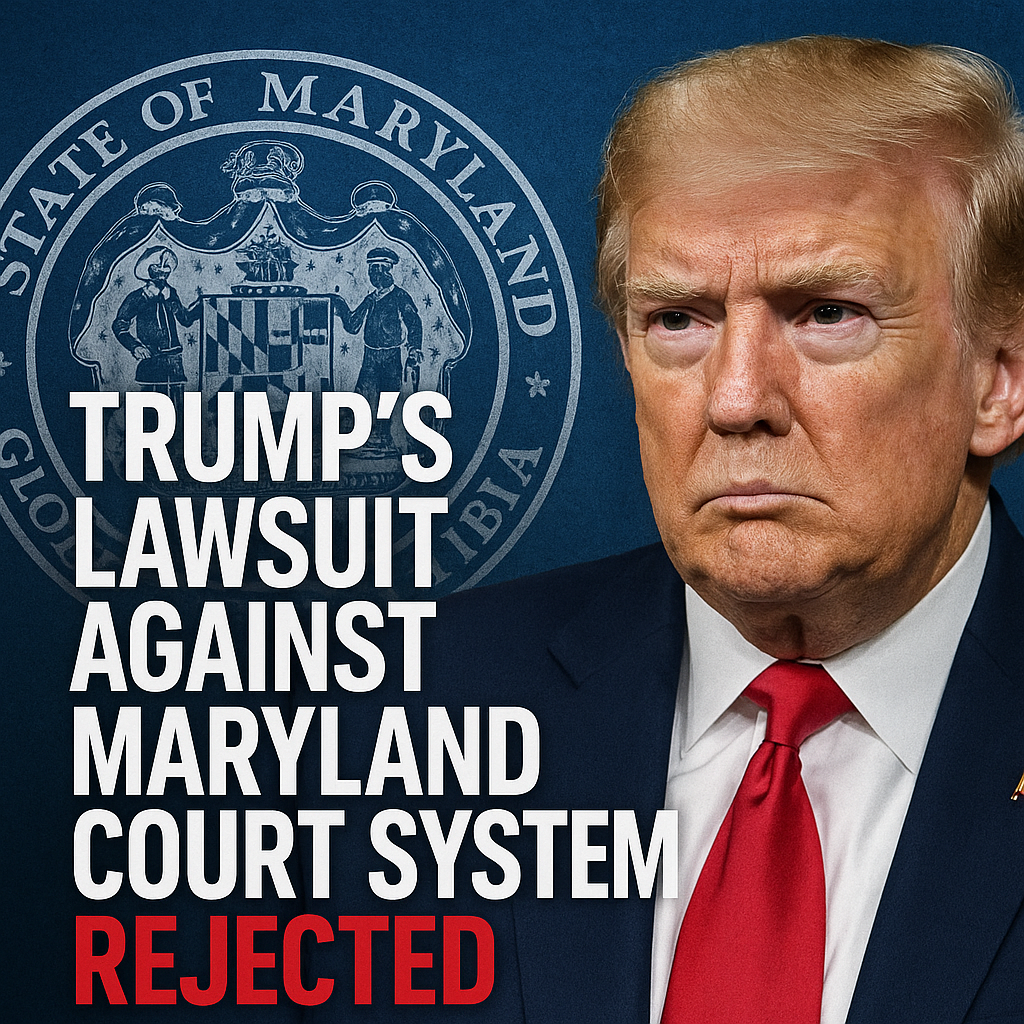
Trump’s Lawsuit Against Maryland Court System Rejected

Trump’s Lawsuit Against Maryland Court System Rejected
Former President Donald Trump faced a significant legal setback recently, as a Maryland federal court rejected his lawsuit against the state’s court system. This decision raises important questions about the ongoing legal woes facing the former president and the implications for future political and judicial interactions.

Understanding the Lawsuit
Trump’s lawsuit aimed to challenge certain practices within the Maryland court system, seeking to protect his interests and contest alleged judicial overreach. According to reports from Al Jazeera, the court deemed the lawsuit to lack sufficient legal grounding, stating that it did not present a viable claim under existing laws.


This rejection underscores a broader trend in Trump’s legal strategy, as he has frequently called into question the integrity and fairness of the legal systems that have scrutinized him. Observers note that this isn’t the first time Trump’s legal challenges have been dismissed; various lawsuits have faced similar fates across the nation, often highlighting a pattern of aggressive but ultimately unsuccessful legal maneuvering.


Differing Perspectives on Legal Accountability
The rejection of Trump’s lawsuit has elicited varied reactions from legal experts and commentators. Some argue that the ruling is a reaffirmation of the integrity of the judicial process. They contend that Trump’s attempts to undermine the court systems are strategically designed to shift public perception rather than produce legitimate legal outcomes. This viewpoint emphasizes the importance of judicial independence and the rule of law, asserting that obstructive lawsuits can threaten the foundation of the legal system.
Conversely, some critiques posit that Trump’s challenges bring to light systemic issues within state judicial practices that warrant closer examination. Individuals within this camp assert that his high-profile legal battles could encourage discussions about fairness, bias, and accountability in the courts. They argue that, regardless of the merit of any specific lawsuit, Trump’s actions may contribute to broader reform efforts aimed at transparency and justice.
The Implications for Trump’s Political Future
The outcome of the lawsuit may have significant implications for Trump as he contemplates another presidential run. With increasing legal challenges and ongoing investigations related to his business dealings and conduct while in office, every dismissed case adds to the narrative surrounding his candidacy. Some political analysts suggest that Trump’s persistent legal struggles could alienate potential supporters who are concerned about his contentious relationship with the law.
However, Trump’s base appears largely unmoved. Many supporters see his legal battles as politically motivated attacks designed to hinder his political advancements. Echoed sentiments from various broadcasts, particularly on platforms like RT, suggest that Trump’s supporters perceive these legal challenges not as an indictment but as a badge of honor—evidence that he is someone willing to fight against what they see as a biased system.
Concluding Thoughts
As Trump’s legal challenges continue to evolve, the recent rejection of his Maryland lawsuit serves as a microcosm of a larger narrative surrounding accountability and the role of the judiciary in American democracy. The stark division in public perception illustrates the complexities of legal accountability in a highly polarized political environment. While the courts aim to maintain impartiality, the interplay between public sentiment and legal proceedings remains fraught with tension.
The implications of this ruling extend beyond the courtroom, prompting discussions about the future of political legislation, judicial reform, and public trust in the American legal system. As the saga unfolds, it raises the fundamental question: What does justice look like in a divided society? Whether the judicial system will emerge unscathed or become further embroiled in political controversy remains an open question in the landscape of American democracy.















