
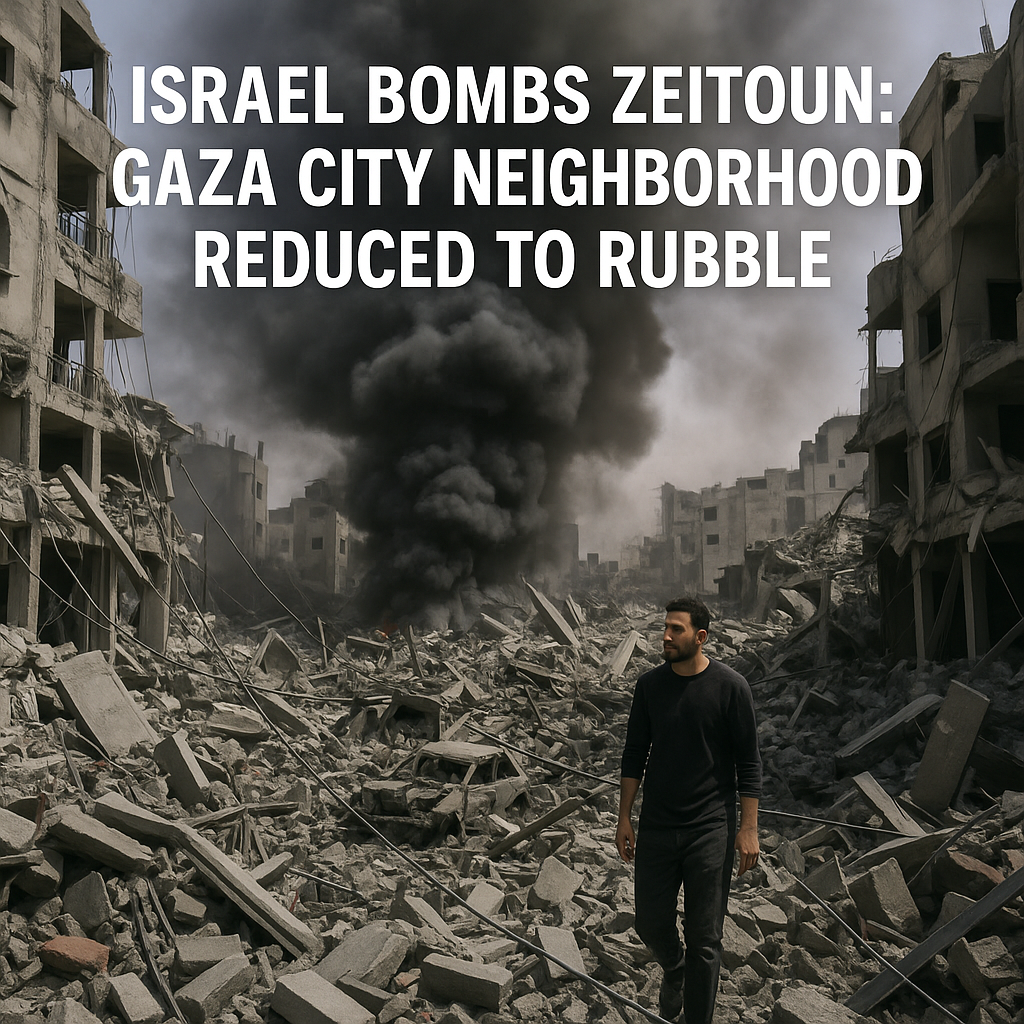
Israel Bombs Zeitoun: Gaza City Neighborhood Reduced to Rubble

Israel Bombs Zeitoun: Gaza City Neighborhood Reduced to Rubble
In a devastating escalation of conflict, Israel has launched airstrikes on the Zeitoun neighborhood of Gaza City, reducing what was once a bustling area to rubble and fleeing families. This incident underscores the ongoing tensions and humanitarian crisis in the region, prompting a range of responses from various stakeholders, including local residents, international organizations, and political figures.

The Context of the Attack
The recent airstrikes on Zeitoun come amid a backdrop of intensified conflict between Israel and Hamas, with violence spiking in recent weeks. According to reports from Al Jazeera, the bombardment targeted both residential buildings and alleged militant infrastructure. Eyewitness accounts describe scenes of chaos as families fled for their lives. Local health authorities report numerous casualties, further straining Gaza’s already overwhelmed healthcare system.


Furthermore, the attacks on residential areas raise pressing questions about the legality and morality of such military actions. International law stipulates that attacks must distinguish between military targets and civilian infrastructure. However, as seen through various lenses, opinions on the legitimacy of these strikes vary. Some argue that these measures are a necessary response to ongoing hostilities from militant groups, while others contend that they indiscriminately harm civilians and violate fundamental human rights.


Humanitarian Implications
The humanitarian ramifications of the recent bombings in Zeitoun cannot be overstated. Organizations like UNICEF and the Red Cross have emphasized the urgent need for medical supplies and shelter for displaced families. Reports indicate that the destruction has left thousands without homes, exacerbating the already dire humanitarian situation in Gaza. Access to clean water, healthcare, and basic necessities remains critically hampered due to ongoing blockades, which many cite as contributing factors to the region’s deteriorating living conditions.
In addition, psychological trauma among survivors and the broader population is a growing concern. Many families now live in fear, not knowing when or where the next airstrike may occur. As one resident interviewed by Al Jazeera stated, “We were just trying to live our lives… now everything is gone.” This sentiment highlights the broader context of fear and instability that affects daily life in Gaza.
International Reactions and Divergent Views
Responses from the international community have been mixed. Some countries have condemned the strikes, calling for immediate ceasefire and cessation of hostilities. Others maintain a more cautious stance, emphasizing Israel’s right to defend itself against attacks from Hamas. For instance, RT reported various government officials weighing in, with some highlighting the need for Israel to ensure the protection of civilian lives during military operations.
This divergence in viewpoints often reflects larger geopolitical loyalties. Countries with strong ties to Israel may lean towards justifying its military actions as a defensive necessity, while others advocate for a more balanced approach that emphasizes the protection of human rights and the importance of diplomatic resolution.
The Challenge of Moving Forward
As the situation evolves, the challenge lies in finding pathways to peace that account for the complexities and historical grievances at play. Calls for a renewed dialogue have emerged, but skepticism remains high on both sides. Achieving any lasting resolution will require addressing the underlying issues that fuel the conflict, including border disputes, the status of refugees, and mutual recognition.
In conclusion, the airstrikes on Zeitoun not only illustrate the immediate human cost of escalation but also highlight a broader narrative regarding the struggle for peace in the region. Efforts to mediate this complex and often volatile situation must consider the multifaceted perspectives involved, recognizing the urgent need for humanitarian relief alongside political solutions.
As the world watches, the hope for a ceasefire and a more sustainable peace remains fraught with challenges, yet increasingly essential. It is imperative that all stakeholders prioritize the value of human life and dignity in any future negotiations.















