
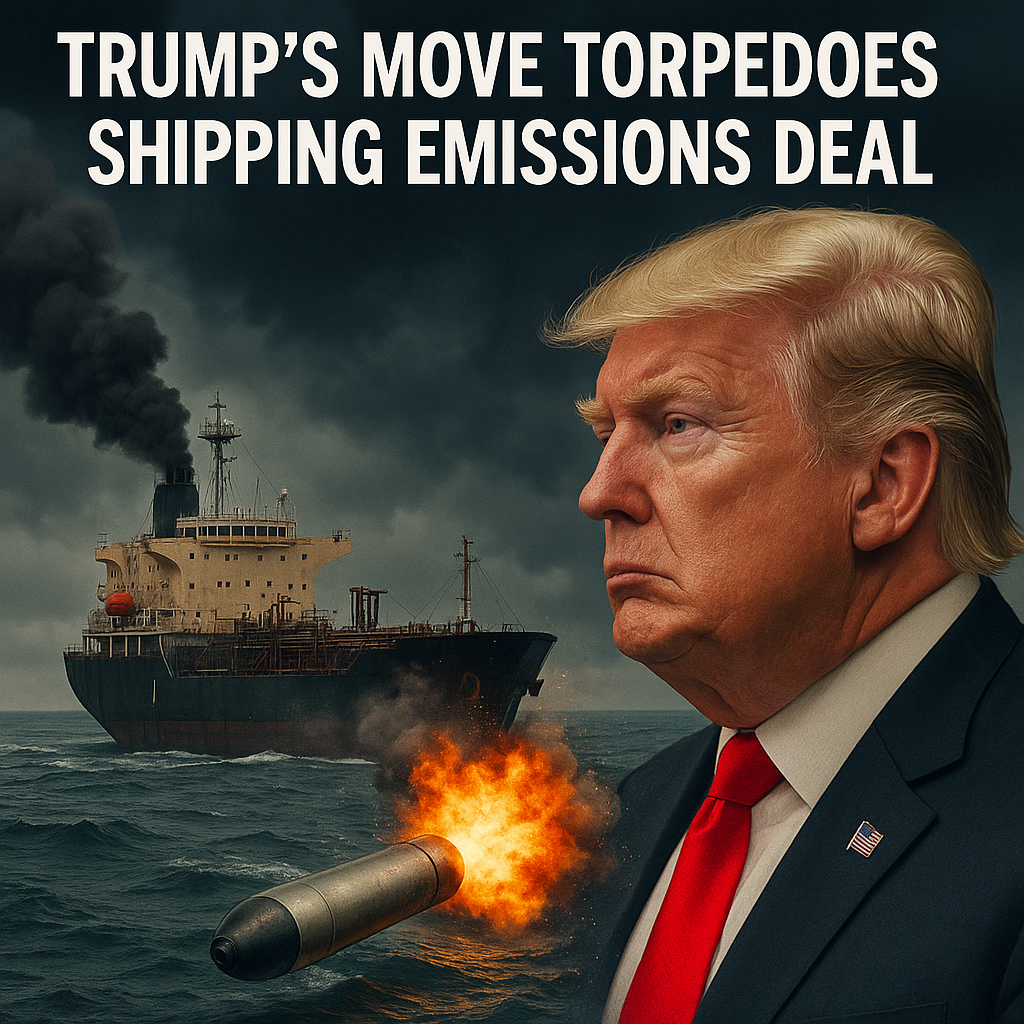
Trump’s Move Torpedoes Shipping Emissions Deal

Trump’s Move Torpedoes Shipping Emissions Deal
Ex-President Donald Trump’s recent actions have raised significant concerns about international efforts to combat climate change, particularly in the shipping industry. His move to withdraw the United States from a pivotal emissions reduction agreement has sparked fierce debate among environmentalists and industry stakeholders.

Overview of the Deal
The contentious agreement aimed to drastically reduce greenhouse gas emissions from the global shipping sector by 2050. According to the International Maritime Organization (IMO), the shipping industry accounts for around 2-3% of total global emissions, a figure that has been trending upward. The agreement sought to cut these emissions in half within the next decade and ultimately achieve net-zero emissions by 2050.


Trump’s withdrawal from the deal underscores a broader skepticism towards international climate agreements that has characterized his administration. Proponents viewed the deal as a critical step toward achieving climate goals, while critics argued that it placed undue burdens on shipping businesses and economic growth.


Varied Perspectives on the Withdrawal
The reactions to Trump’s decision reveal a complex landscape of opinions.
Supporters of the Withdrawal:
Many business leaders and conservative political figures support Trump’s stance, arguing that stringent emissions regulations could hinder the shipping industry’s competitiveness. They contend that an overregulation could lead to increased costs for consumers and disrupt global supply chains, which are already strained by ongoing economic issues.
– Economic Concerns: Critics of the agreement suggest that it could complicate trade relations, leading to potential job losses in shipping and related sectors.
– Advocacy for Technological Solutions: Some supporters advocate for market-driven technological advancements rather than regulatory frameworks, arguing that innovation can lead to more sustainable practices without the constraints of international agreements.
Opponents of the Withdrawal:
On the other side, environmentalists and international leaders argue that abandoning collective efforts to reduce emissions is a significant setback in the fight against climate change. They assert that the shipping industry, already a major contributor to global warming, must be held accountable.
– Environmental Impact: Environmental advocates emphasize that neglecting the shipping sector will have dire consequences, undermining global attempts to limit warming to 1.5 degrees Celsius as outlined in the Paris Agreement.
– Global Cooperation: Critics argue that climate change is a transnational issue, requiring collaborative efforts. Trump’s decision could embolden other nations to backslide on their commitments, undermining global progress.
The Global Response
In the wake of Trump’s announcement, international reaction has been swift. Many countries have reaffirmed their commitment to the original agreement, emphasizing that the maritime industry must play its part in addressing the climate crisis. Leaders from several nations indicated that they would pursue stricter regulations independent of the U.S. stance.
The Broader Implications
Trump’s refusal to engage in global environmental negotiations could have lasting impacts not only on climate policy but also on international relations. Countries that prioritize environmental sustainability may challenge one another to step up their commitments, potentially leading to a fragmented approach to climate action.
Several experts also point out the economic implications of inaction. The shipping industry itself is poised to face increasing pressure from consumers and regulators to adopt greener practices. A 2020 report from a major think tank highlighted that the long-term financial viability of shipping companies is increasingly tied to their environmental practices.
Conclusion: Uncertainty and Future Directions
As the world continues to grapple with climate change, Trump’s withdrawal from the shipping emissions deal has opened a new chapter of debate within the environmental and economic landscapes. While some view his actions as a necessary adjustment of priorities, many worry that it reflects a dangerous trend that could set back significant progress.
In terms of moving forward, the path remains fraught with uncertainty. International stakeholders must now decide how to navigate this new reality—whether through increased regulatory measures that incentivize green innovations or by fostering open dialogues on best practices that encompass economic and environmental sustainability.
The future of shipping emissions policy will likely hinge on finding a balance between economic interests and ecological responsibility, a challenge that demands concerted effort and innovative thinking on a global scale.















