
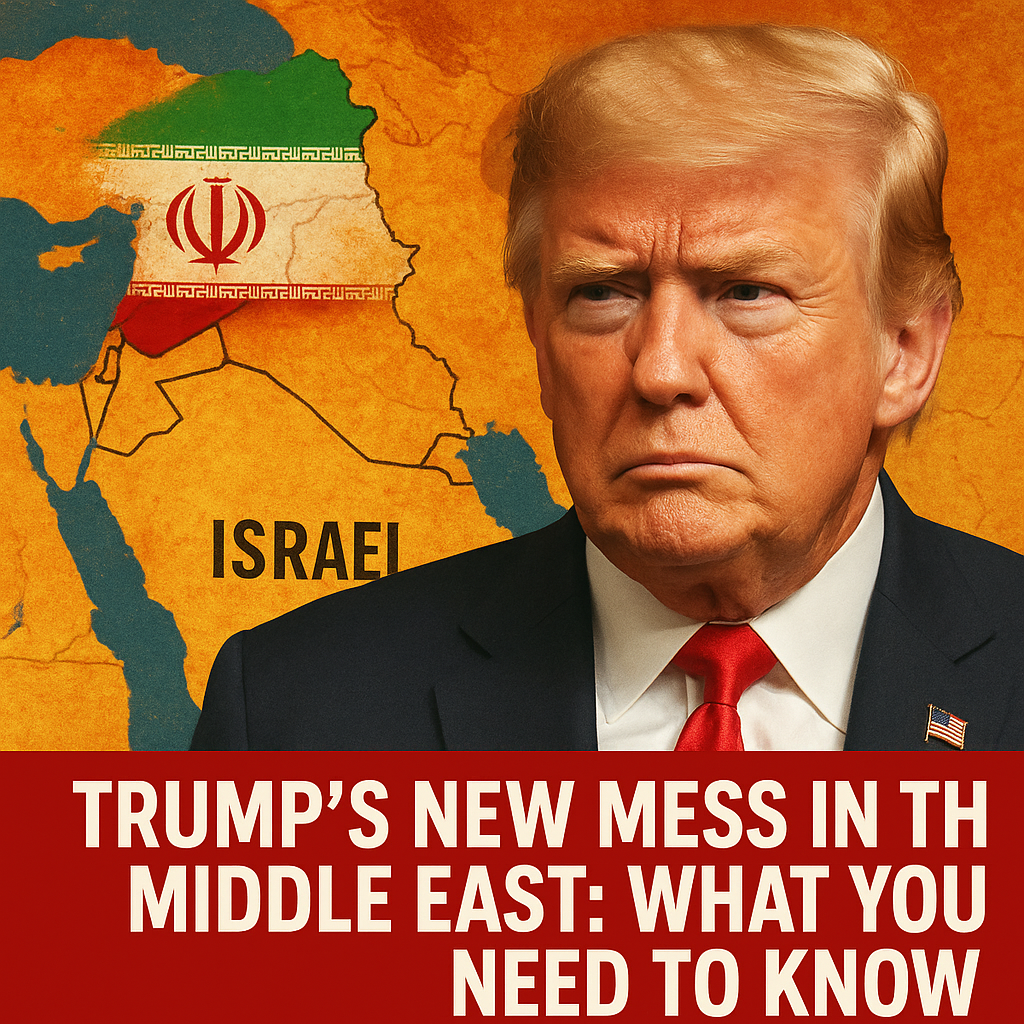
Trump’s New Mess in the Middle East: What You Need to Know

Trump’s recent actions in the Middle East have sparked significant debate and concern about the stability of the region. His bold claims and decisions have led many to question the long-term implications for U.S. foreign policy and international relations. Understanding the complexities of this situation requires examining multiple perspectives.

Ongoing Tensions and Military Movements
Following the U.S. withdrawal from Afghanistan, Trump’s rhetoric regarding the Middle East has intensified. Reports indicate that he has continuously criticized the current administration’s approach while proposing a more aggressive stance against Iran and reshaping relationships with traditional allies, such as Israel.


Key developments include:


– Iran’s Nuclear Program: Trump’s desire to reintroduce stringent sanctions on Iran has reignited fears of an arms race in the region. Meanwhile, Iran continues to push forward with its nuclear program, sparking criticisms from various international leaders who fear that heightened tensions could lead to conflict.
– Israel’s Role: Trump’s administration changed the dynamics of Israeli-Palestinian relations by promoting the Abraham Accords, which normalized relationships between Israel and several Arab nations. However, critics argue that this shift has sidelined Palestinian concerns, complicating peace efforts. Reports from Al Jazeera highlight the increased unrest in Palestinian territories, directly correlating it to Trump’s previous policies, suggesting they have heightened tensions rather than alleviated them.
International Perspectives and Reactions
Reactions to Trump’s renewed assertiveness in the Middle East have varied widely, reflecting both support and skepticism.
– Support from Allies: Some U.S. allies express support for a firm approach towards Iran. Notably, Israel views Trump’s position as a necessary counterbalance to Iranian aggression. Sky News flags statements from Israeli leaders calling for stronger ties with the U.S. under Trump’s guidance, indicating a belief that renewed pressure on Iran could stabilize their own security.
– Concerns from Opponents: On the flip side, critics argue that Trump’s strategies could lead to disastrous outcomes. The RT network emphasizes how a hardline approach risks inflating existing hostilities within the region. Furthermore, international observers warn that rekindling aggressive rhetoric could undermine diplomatic channels, which are crucial for long-term regional stability.
The Complexities of Middle Eastern Alliances
The Middle East is a tapestry of complex alliances, and Trump’s actions could dramatically reshape these relationships. The normalization agreements, though groundbreaking, have created deeper rifts in existing relationships:
– Turkey’s Position: Turkey’s support for the Palestinian cause has placed it at odds with both Israel and the U.S. Any renewed hostilities could see Turkey stepping in to assert its influence, complicating the already volatile situation.
– Russia’s Influence: Additionally, Russia is looking to capitalize on the shifting landscapes. With Trump’s harsh stance against Iran, there’s a possibility that Russia could strengthen its ties within the region as it positions itself as a counterweight to U.S. influence. This was indicated by several outlets in their analyses of ongoing military engagements in Syria and beyond.
Conclusion: A Path Forward?
As Trump’s actions unfold, the impacts on the Middle East remain uncertain. While some factions view his tough approach as a necessary evil to counteract perceived threats, others see it as a return to more chaotic foreign policy that prioritizes military solutions over diplomacy.
The dialogue surrounding this issue is multi-faceted, embracing urgent questions about peace, power, and the role of the U.S. as a global leader. As various stakeholders react to Trump’s proposals, the potential for both collaboration and conflict continues to shape the landscape of Middle Eastern geopolitics.
In summary, navigating Trump’s new challenges in the Middle East will require careful consideration of both historical legacies and future possibilities. The complex web of alliances, long-standing grievances, and emerging diplomatic strategies all point toward a period of significant instability and uncertainty in the region.















