
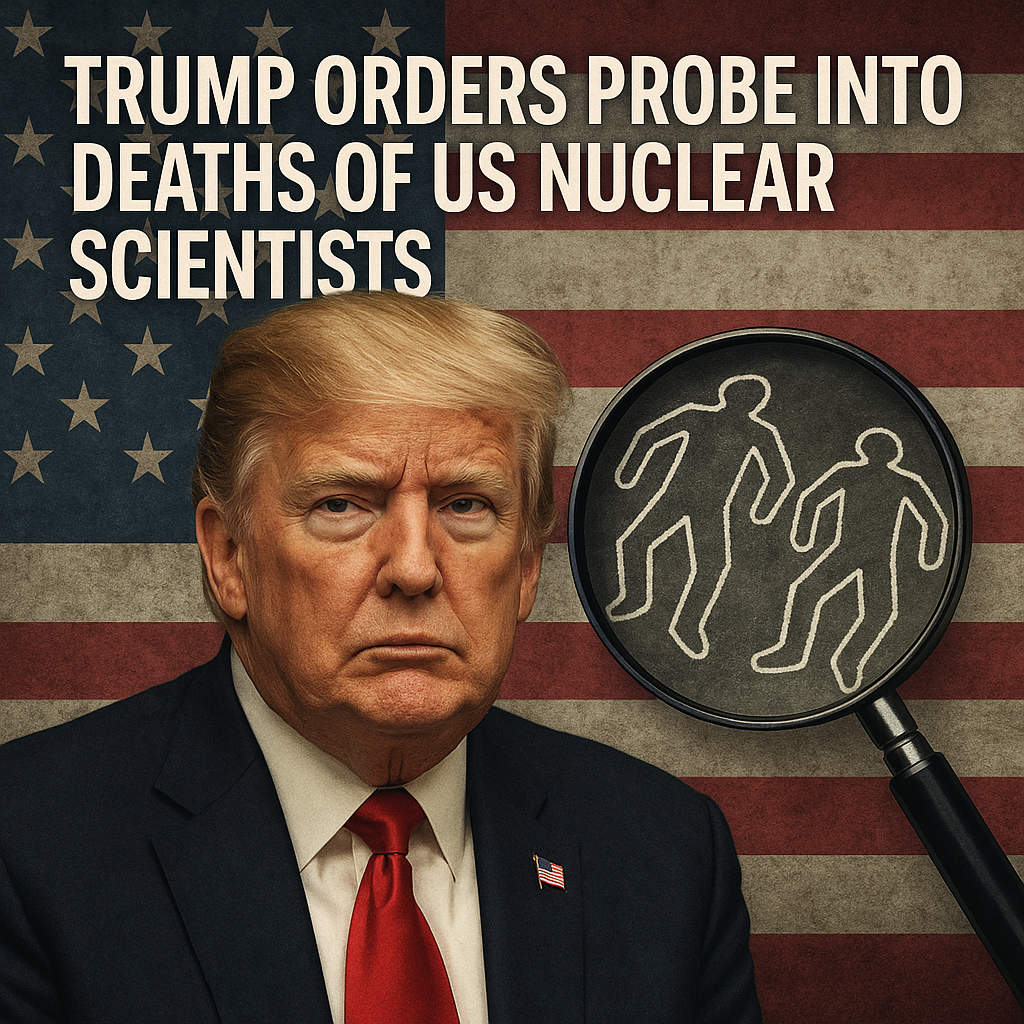
Trump Orders Probe into Deaths of US Nuclear Scientists

Trump Orders Probe into Deaths of US Nuclear Scientists: A Complex Issue
The recent directive by former President Donald Trump to investigate the deaths of several U.S. nuclear scientists has stirred a whirlwind of reactions across the political spectrum. This move not only raises questions about national security and scientific integrity but also touches upon broader themes regarding government oversight and trust in institutions.

Investigating a Mysterious Trend
In recent months, there have been reports of unusual circumstances surrounding the deaths of various nuclear scientists. Some speculate these incidents might be linked to espionage, while others suggest internal safety violations may have played a role. Trump’s announcement for a formal probe into these deaths has been perceived as an attempt to address public unease and the potential implications for national security.


The Motivations Behind the Probe
Supporters of the investigation argue that it is crucial to uncover any underlying issues that may compromise U.S. nuclear capabilities. For instance, multiple sources, including RT News, point out that the nuclear sector is inherently sensitive and any event that raises questions about safety should be scrutinized. Moreover, they assert that these suspicious deaths may correlate with increased tensions between the U.S. and other nations, particularly those known for espionage in nuclear technology.


On the flip side, critics have expressed skepticism regarding the rationale behind the investigation. Al Jazeera presented a viewpoint suggesting that such orders can create baseless alarms and divert attention from more pressing national issues. Furthermore, some opponents argue that the probe could politicize what are likely tragic, unfortunate incidents, framing it as an attempt to rally Trump’s base around a narrative of victimization.
National Security vs. Political Posturing
The investigation demands a careful consideration of national security implications. Advocates for a thorough probe highlight that the integrity of nuclear scientists is vital to prevent potential espionage or technology theft. Indeed, ensuring robust security measures in sensitive sectors is of paramount importance and can genuinely safeguard against foreign threats.
Conversely, the politicization of these deaths poses its own risks. Critics maintain that framing this as a national security crisis might distract from systemic issues affecting the scientific community, like underfunded research programs and workforce sustainability. Instead of focusing solely on potential international plots, a balanced approach would encourage addressing these foundational aspects that contribute to the nuclear sector’s safety and integrity.
The Broader Implications
The directive also opens up a larger conversation about how the government addresses scientific research and the environment researchers operate in. The deaths of scientists can generate narratives about accountability and efficacy within the institutions responsible for overseeing nuclear safety. Rather than merely pointing fingers at potential foreign adversaries, it may be worthwhile engaging in a comprehensive review of how U.S. nuclear programs are managed.
On the other hand, public trust in government interventions can easily be eroded if such probes are perceived as politically motivated rather than genuinely concerned for safety. A significant portion of the population may view this investigation as a theater rather than a sincere attempt to solve real issues. As noted in Sky News, the shift of focus could lead to a decline in public trust in the scientific community, which is counterproductive in times when scientific collaboration and credibility are crucial.
Conclusion: Navigating Complex Waters
Trump’s order for a probe into the deaths of U.S. nuclear scientists undoubtedly raises critical questions about national safety and the integrity of scientific operations. However, it also highlights the complexities surrounding the intersection of politics and science. Balancing transparency with genuine intentions will be key to ensuring that this investigation serves its purpose and does not devolve into political posturing.
As the situation unfolds, the impact of this probe on both nuclear policy and public perception will require keen observation. Engaging stakeholders across the political and scientific spectrum may help navigate these complexities more effectively—aiming to protect not only national interests but also the integrity and future of scientific research. The intertwined fates of national security and public trust in science could hinge on how these delicate issues are addressed moving forward.















