Trump Redefines Ceasefire in the Middle East Conflict

Trump’s New Interpretation of Ceasefire in the Middle East Conflict
In a landscape defined by prolonged strife and evolving geopolitical dynamics, former President Donald Trump’s reinterpretation of a ceasefire in the Middle East conflict is stirring conversations among political analysts and news commentators alike.

A Shifting Paradigm: Trump’s Stance on Ceasefire
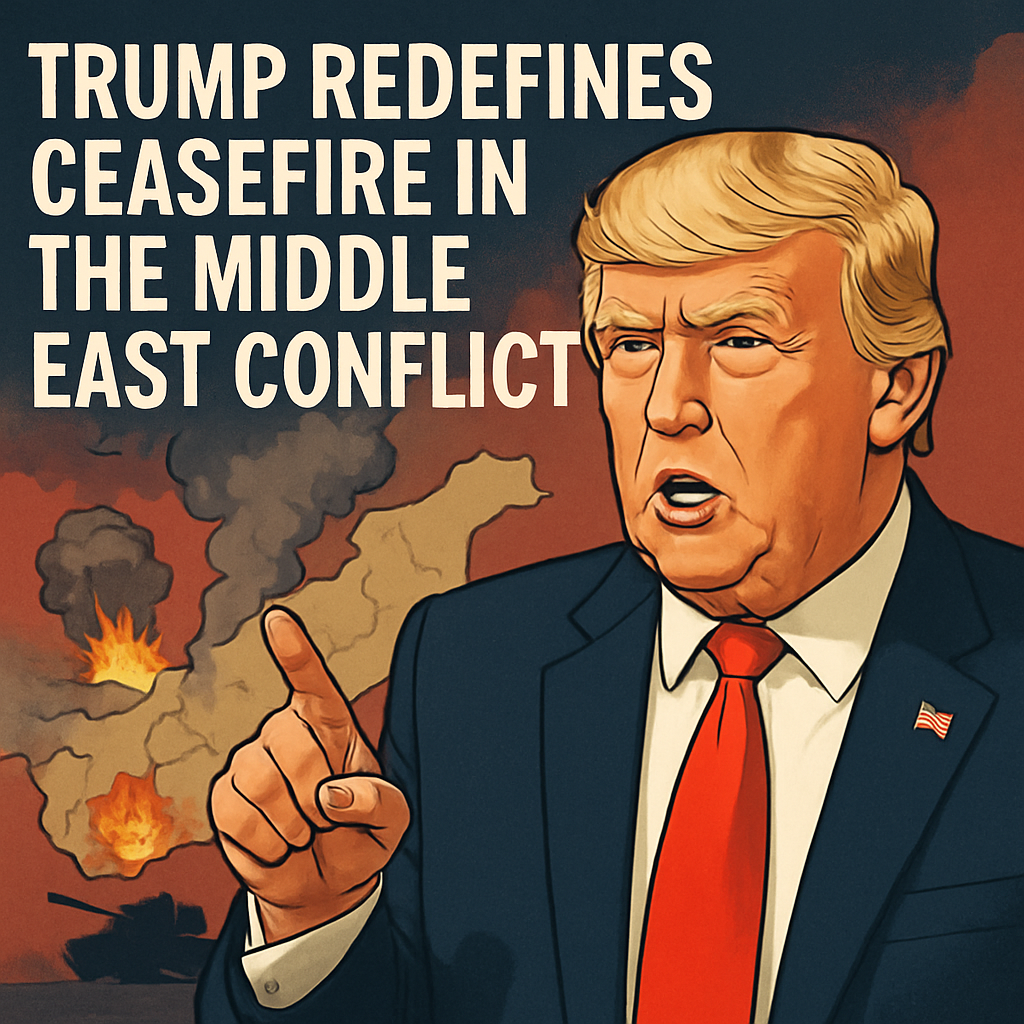
Trump’s recent comments following Israel’s incursion into Gaza highlight his revision of what constitutes a ceasefire. Traditionally, a ceasefire has been viewed as an immediate halt to hostilities, allowing for humanitarian assistance and dialogue. However, Trump argues that the term can encompass conditions that do not necessarily demand an end to all military actions, suggesting that the United States’ involvement could still provide leverage in negotiations.


This perspective is in stark contrast to the sentiments expressed by numerous analysts who argue that a true ceasefire must prioritize immediate cessation of violence. For instance, Al Jazeera reported from multiple sources that a fragmented understanding of ceasefire can lead to exacerbated tensions, especially among civilians affected by ongoing military operations. Critics of Trump’s approach warn that reframing ceasefire could undermine efforts for sustainable peace in the region.


Mixed Reactions from Global Observers
The international community’s response to Trump’s latest pronouncement reflects a palpable divide. Some commentators on outlets like Sky News highlight that Trump’s loose definition of ceasefire could appeal to a base yearning for strong leadership that prioritizes American interests abroad. Proponents argue that increased U.S. intervention, rather than a straightforward ceasefire, could stabilize areas at risk of falling into chaos.
Yet, contrasting viewpoints underscore the dangers of such a reinterpretation. Many Middle Eastern experts caution against viewing ceasefire merely as a mechanism for U.S. influence. As pointed out in RT’s coverage, a more nuanced understanding of ceasefire must consider the catastrophic humanitarian situation on the ground, where thousands are displaced and in need of urgent assistance.
Understanding the Implications of Redefining Ceasefire
Trump’s approach poses critical questions about the future of U.S. foreign policy in the region. If ceasefires are no longer seen as inviolable agreements among conflicting parties, but rather as tactical pauses meant to facilitate strategic advantage, the implications could be profound. The long-standing pursuit of lasting peace may become more elusive as various stakeholders react to these newly painted boundaries.
Furthermore, as the realities in Gaza continue to evolve, the prospect of a genuine ceasefire becomes clouded by differing definitions. As noted by various analysts, including those from Al Jazeera, the role of external powers in the ceasefire process must not only focus on immediate outcomes but also consider long-term ramifications for local populations.
Navigating the Complexity of Ceasefire Definitions
The discourse surrounding Trump’s redefinition of ceasefire suggests a complex interplay of power, morality, and realpolitik in international relations. While Trump’s supporters advocate for a more pragmatic approach to U.S. involvement in Middle Eastern affairs, critics highlight the moral obligation to pursue peace through traditional and widely accepted definitions of ceasefire.
In grappling with these perspectives, it becomes evident that understanding ceasefire requires more than political rhetoric; it demands empathy for those affected by conflict. The humanitarian toll, often sidelined in policy discussions, must remain at the forefront as nations navigate their foreign policies. An opportunity arises here for an inclusive dialogue—one that incorporates voices from diverse affected communities, leading to a more representative narrative in ceasefire negotiations.
As this contentious debate unfolds, Trump’s redefinition of ceasefire will undoubtedly shape the discourse around U.S. foreign policy and Middle Eastern affairs for years to come. The complexities of war and peace are never easily reconciled, and the need for a balanced approach to ceasefire discourse has never been more critical.