
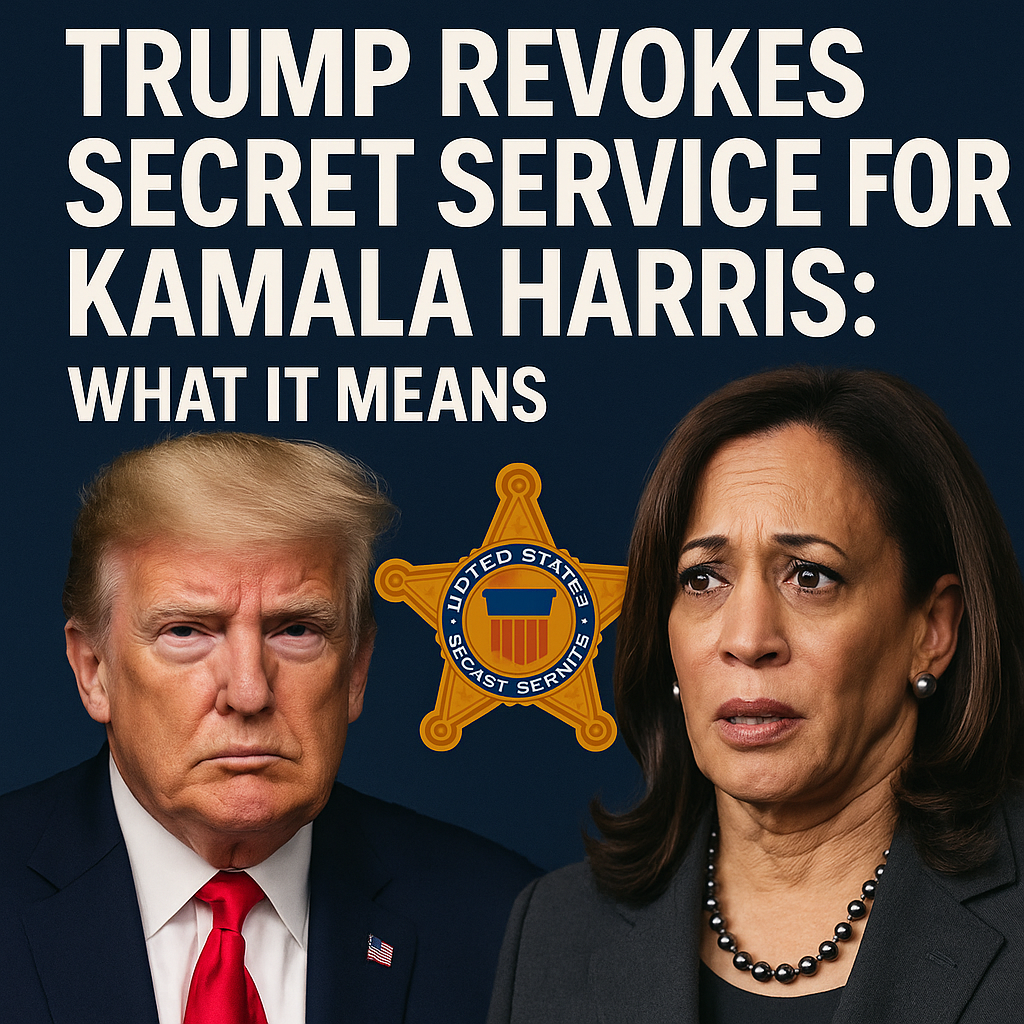
Trump Revokes Secret Service for Kamala Harris: What It Means

Trump Revokes Secret Service for Kamala Harris: What It Means
The recent decision by former President Donald Trump to revoke Secret Service protection for Kamala Harris has sparked a whirlwind of debate regarding security for former officials and the implications of such a bold move. As public figures, former vice presidents typically retain this protection due to the stature and responsibilities associated with their former roles. This situation raises essential questions about safety, political optics, and the evolving norms surrounding public service.

The Context of Secret Service Protection
Typically, former presidents and vice presidents are afforded Secret Service protection following their time in office as a means to ensure their safety from potential threats. Kamala Harris, who served as vice president from 2021 to 2025, has become a figure of significant focus in U.S. politics, warranting such protection to safeguard her amidst an increasingly polarized political landscape. According to Sky News, Trump’s decision to withdraw this protection appears not only unprecedented but politically motivated.


The Implications of Revoking Protection
Arguments surrounding the withdrawal of Harris’s protection highlight two primary concerns: security and political symbolism. Critics argue that revoking Secret Service protection not only endangers Harris but also undermines the established protocols intended to ensure the safety of prominent leaders. In a statement to Al Jazeera, a former security official emphasized that “politics should not dictate the safety of individuals who have served the nation at the highest level.”


On the other hand, Trump and his supporters may frame the decision as a move towards accountability and a challenge to what they perceive as excessive privileges granted to political elites. Some supporters believe this could serve as a deterrent, urging public figures to remain grounded and connected to the citizens they serve.
The Political Landscape and Security
The current political climate in the U.S. is characterized by heightened tensions and divisive rhetoric. The decision to revoke Secret Service protection can be seen as a symbolic gesture reflecting the broader landscape of disagreement and mistrust that permeates American politics today. Trump’s move appears to resonate with a faction of his base who feel disillusioned by traditional political norms and are advocating for disruption as a means to revise the status quo.
Diverse Reactions to the Decision
Reactions to Trump’s decision have been varied and deeply rooted in personal beliefs about governance. Many Democrats have condemned the move, arguing that it represents a dangerous precedence where political motivations can override evidence-based practices intended for public safety. As noted by multiple sources, including RT, the prevailing sentiment among political analysts is that this move can set a worrying precedent for future leaders.
Conversely, some Republican commentators have expressed support for Trump’s decision, seeing it as an opportunity to challenge what they view as an overreach by government agencies concerning the perceived privileges of political officials. This division showcases the urgency with which this issue is being viewed—one where personal, political, and public safety concerns collide.
Navigating Uncertainties Amidst Tension
Despite the clear divide in opinions, uncertainty looms over the consequences of revoking Harris’s protection. While some argue that it sends a strong message about accountability and political engagement, others express legitimate fears about the security implications for a high-profile individual. The tension between acknowledging the political symbolism and ensuring the safety of public figures creates a complex scenario warranting careful consideration and dialogue.
The ramifications of this decision could extend beyond Harris alone, influencing how future former officials are treated regarding security and public trust. The situation lends itself to broader discussions about what security means today in a hyper-partisan environment and calls into question the responsibilities that come with public office.
Conclusion: A Call for Dialogue and Understanding
In conclusion, the revocation of Secret Service protection for Kamala Harris serves as a microcosm of the broader challenges facing political discourse and security in the United States. As this discourse evolves, it is crucial for leaders and constituents alike to engage in thoughtful discussions that weigh all perspectives responsibly. Ultimately, the balance between safety and political accountability remains delicate; approaching it with empathy and nuance may pave the way for more constructive dialogues in the future.
In times marked by division, fostering understanding can be a pivotal step toward finding common ground—even amid controversies that challenge our notions of safety and governance.















