
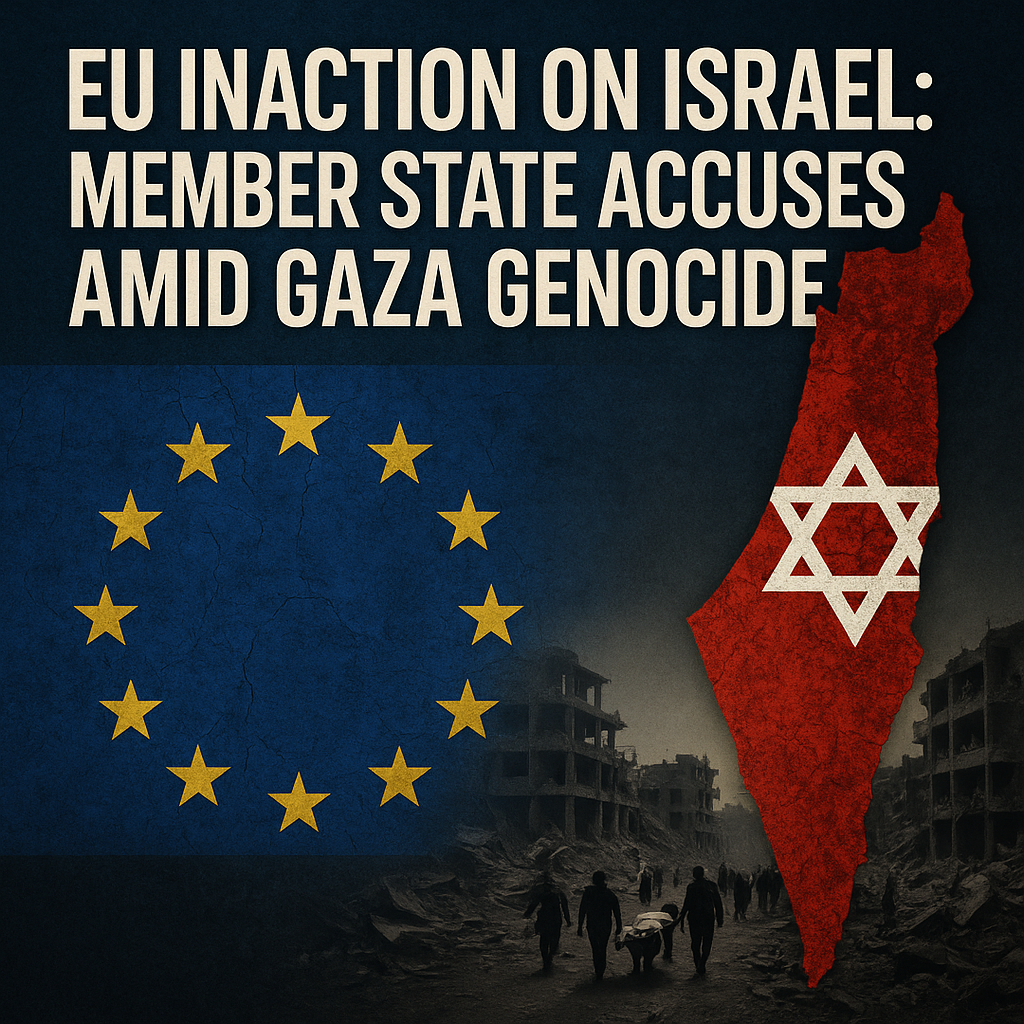
EU Inaction on Israel: Member State Accuses Amid Gaza Genocide

EU Inaction on Israel: Member State Accuses Amid Gaza Genocide
The ongoing conflict in Gaza has reached alarming levels, prompting European Union (EU) member states to grapple with complex humanitarian and geopolitical issues. As reports emerge detailing widespread devastation in Gaza, protests have erupted across Europe, and Slovenian officials have accused the EU of inadequate action against Israel, highlighting a disconnect between EU rhetoric and tangible support for Palestinian civilians.

The Slovenian Critique: A Call to Action
Slovenia’s strong stance against the EU’s perceived inaction mirrors a growing frustration among citizens and politicians alike. Slovenia’s government has called the situation in Gaza a “genocide,” emphasizing the urgency for the EU to adopt a more proactive role. According to Slovenian officials, the inadequate response from Europe has left many feeling that the EU has failed its moral and legal obligations to protect human rights.


The notion of genocide is not taken lightly and signifies a critical escalation in rhetoric. Slovenian Prime Minister Robert Golob has urged for concrete actions, which has led to a heated debate within the EU regarding how to handle this persistent crisis. Critics argue that while there are calls for “peaceful resolutions” and diplomatic dialogue, these measures have not translated into effective action for those suffering on the ground.


Diverse Perspectives: A Complex Landscape
The EU’s response to the ongoing violence is far from uniform. While Slovenia emphasizes immediate action and humanitarian assistance, other member states exhibit a more cautious approach. For instance, countries like Hungary have offered unwavering support for Israel, often citing the necessity of national security. This divergence in opinions complicates any potential unified EU policy on the conflict.
Al Jazeera reports that nations across the EU share concerns regarding the humanitarian disaster but debate the appropriate level of intervention. Certain member states advocate for sanctions against Israel, while others prioritize maintaining diplomatic ties. These differing stances create significant obstacles in formulating a cohesive EU response.
Beyond the fray of political alliances, public sentiment across Europe appears to lean towards solidarity with the Palestinian people. Large-scale protests have erupted in major cities, driven by a heightened urgency to address humanitarian needs in Gaza. Demonstrators are echoing Slovenia’s claims, arguing that the EU must leverage its influence to advocate for an immediate ceasefire and humanitarian access.
Humanitarian Consequences and Moral obligations
The gravity of the situation in Gaza cannot be understated. Reports from various humanitarian organizations highlight the dire conditions faced by civilians, including indiscriminate bombings and severe shortages of essential resources. The International Red Cross and other agencies have voiced alarm over the transforming landscape, where basic necessities like food, water, and medical supplies are dwindling.
The EU is at a crossroads. On one hand, member states are wary of taking actions that might escalate tensions in an already volatile region. On the other hand, the moral responsibility to alleviate suffering and uphold human rights grows increasingly urgent. As the Slovenian government calls for action, the complexities of international relations and security considerations threaten to overshadow humanitarian needs.
Weighing Evidence and Sentiments
The EU’s indecision illustrates a broader challenge within international politics—balancing ethical imperatives against practical realities. While Slovenia has strongly articulated the need for decisive action, the lack of consensus among EU member states highlights the inherent complexities in addressing long-standing grievances in Israel-Palestine relations.
Indeed, EU officials find themselves navigating a labyrinth of competing interests and perspectives. Some critics assert that the current lack of a unified response constitutes complicity, while others contend that a measured approach would maintain credibility for future negotiations.
As these narratives unfold, the clarion call for humanitarian actions grows louder. The absence of clear, coherent policy-making risks alienating citizens who are increasingly disillusioned with governmental inaction. Moreover, the EU’s credibility on the world stage hinges on its ability to adapt and respond effectively to evolving crises.
Conclusion: Toward a Balanced Perspective
The claim of genocide by Slovenia amidst the ongoing unrest in Gaza is not just a political statement; it reflects a broader moral dilemma facing the EU. As various member states grapple with their respective narratives and agendas, the urgency for coherent and compassionate action cannot be overstated.
The pressing need for the EU to unify its approach toward Israel and Gaza is evident. How this unfolds will not only affect the immediate humanitarian crisis but will also shape the future dynamics of international relations and the EU’s role within it. As the world watches, the expectation for accountability and action only grows, challenging the EU to balance its complex geopolitical responsibilities with its foundational principles of human rights and humanitarian aid.















