Trump’s Rogue Move Forces Netanyahu into a Tough Spot

Trump’s Rogue Move Forces Netanyahu into a Tough Spot
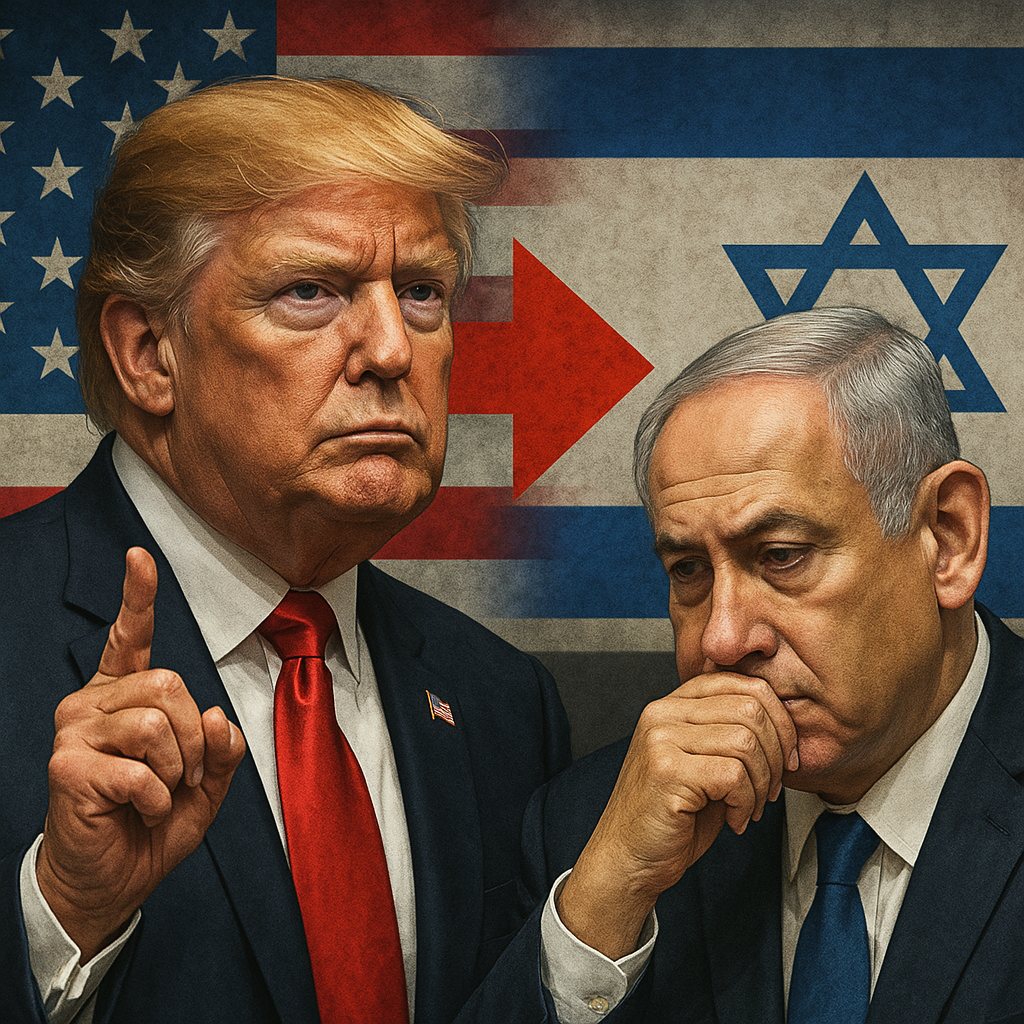
Former President Donald Trump’s recent actions pose significant challenges for Israeli Prime Minister Benjamin Netanyahu, creating a precarious political landscape that complicates the Israeli-Palestinian conflict. Trump’s controversial decisions, particularly regarding the U.S.’s stance on settlements and recognition of Jerusalem, have left Netanyahu with limited options to navigate both his domestic allies and international diplomacy.

The Dilemma of Coalition Politics
Netanyahu’s coalition government is heavily reliant on right-wing factions that advocate a hardline approach towards the Palestinians. However, Trump’s unexpected overtures have stirred a mix of opportunities and complications. For instance, reports indicate that Trump’s encouragement of settlement expansion—which alienates Palestinians and raises hackles in the international community—places Netanyahu in a highly problematic situation.


A recent piece from Sky News emphasizes that Trump’s actions have put Netanyahu in a “horrendous choice”: either support Trump’s pro-settlement agenda to maintain the favor of his coalition or pivot towards a more diplomatic stance that acknowledges Palestinian rights and aspirations. The latter would likely inflame tensions within his government, especially among far-right supporters who view any concession as a capitulation.


On one hand, aligning with Trump could bolster Netanyahu’s standing among hardliners at home. Conversely, deviating from Trump’s policies could risk the stability of his coalition, especially with members from parties that are staunchly opposed to any form of concessions to the Palestinians.
International Implications
Netanyahu’s predicament is not just a domestic concern; it resonates on the international stage as well. Responses from the Arab world, as discussed in Al Jazeera coverage, reflect the broader implications of Trump’s maneuvers. The region’s leaders are increasingly frustrated with what they perceive as a lack of a balanced approach from the U.S., signaling that continued support for any hardline measures could further erode fragile relationships.
Despite Trump’s influence, there is a sense of fatigue among Arab nations regarding negotiations that fail to account for Palestinian rights. Consequently, Netanyahu’s alignment with Trump could jeopardize Israel’s relations with key regional partners that have historically prioritized peace and stability.
This dichotomy leads to increasing skepticism about Israel’s long-term strategy. Many observers argue that reliance on Trump’s agenda may lead Netanyahu towards further isolation. Notably, support for the two-state solution—which previously garnered bipartisan support in the U.S.—is increasingly under siege. The subsequent lack of a viable framework could entrench tensions, with negative repercussions for Israel’s security and standing globally.
Weighing the Consequences
As Netanyahu grapples with these challenges, a careful examination of the situation is crucial. Trump’s rogue move is more than a political game; it embodies shifting dynamics within both U.S. and Middle Eastern politics. Observers note that Netanyahu has often demonstrated a talent for navigating complex situations, but this will require a recalibration of strategies.
Moreover, listening to the voices across the spectrum of Israeli society may yield important insights. Many Israelis express weariness towards the continued cycle of conflict without tangible resolution. Should Netanyahu persist down the path of aligning too closely with Trump, he risks alienating moderates who may be looking for genuine progress.
In navigating this complex terrain, Netanyahu might consider emphasizing diplomacy and cooperation rather than solely adhering to hardline rhetoric. The changing global landscape—where international public opinion is increasingly critical of unilateral moves—demands a more nuanced approach that could potentially open doors for dialogue with the Palestinians and beyond.
Conclusion
The contrasting views surrounding Trump’s recent maneuvers illustrate the precarious balancing act Netanyahu must perform. With pressure from both domestic allies and international observers, the paths ahead for both leaders remain fraught with uncertainties. As Trump rallies support through his controversial statements, Netanyahu must balance these external influences with the stark realities of governance in a deeply divided Israel. This moment in Israeli politics highlights not just the difficulties of coalition-building in a turbulent landscape, but also the potential for rethinking ingrained diplomatic norms that have guided the region for decades.