
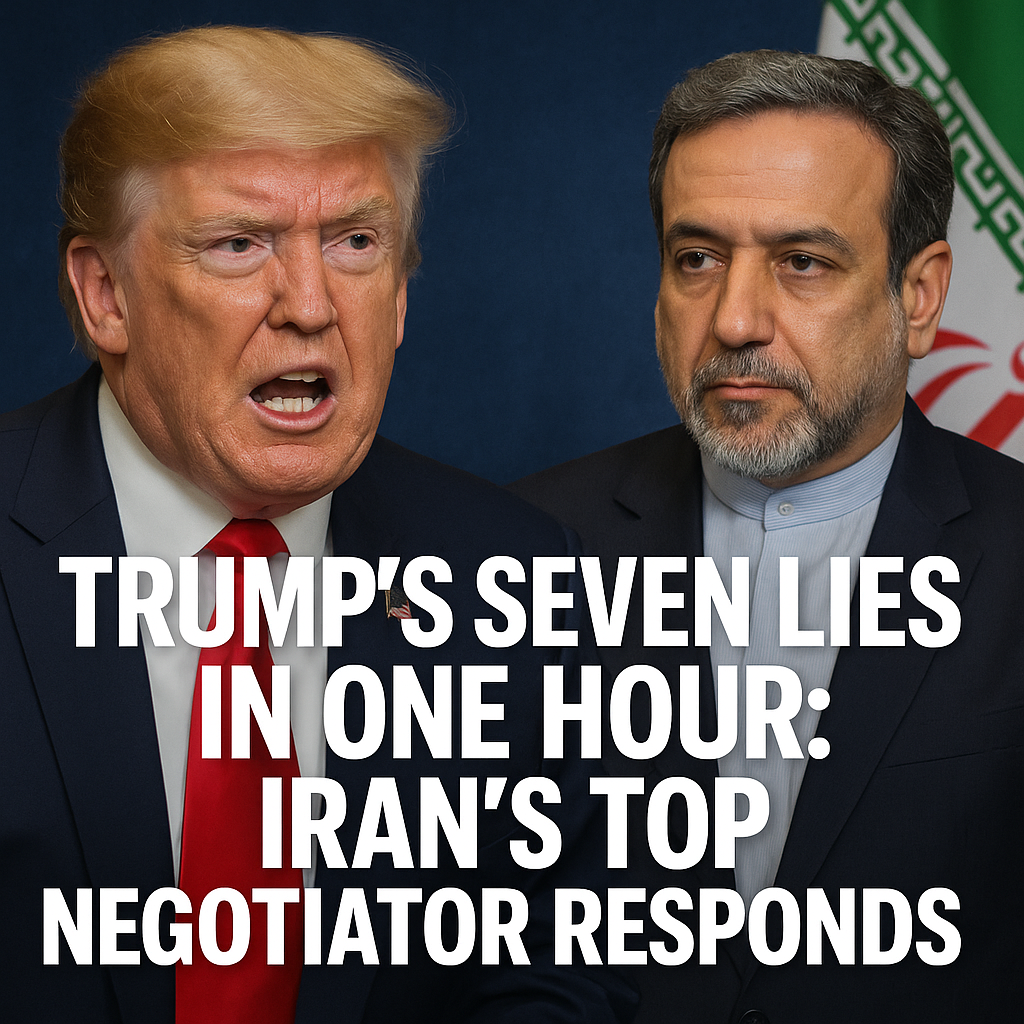
Trump’s Seven Lies in One Hour: Iran’s Top Negotiator Responds

Trump’s Seven Lies in One Hour: Iran’s Top Negotiator Responds
In the complex landscape of international relations, statements made by political leaders can influence both global perceptions and real-world policies. Recently, former U.S. President Donald Trump made headlines for what many are calling “seven lies in one hour,” a claim addressed by Iran’s top negotiator regarding ongoing discussions about the nuclear deal. This situation offers a nuanced exploration of rhetoric, diplomacy, and the intricacies of U.S.-Iran relations.

Understanding the Context of Trump’s Assertions
Trump’s comments came in the wake of escalating tensions between the U.S. and Iran, particularly surrounding the re-negotiation of the Joint Comprehensive Plan of Action (JCPOA), commonly referred to as the Iran nuclear deal. His remarks ranged from criticisms of Iranian leadership to unfounded claims about Iran’s military capabilities and intentions.


Key Claims and Counterarguments
1. Military Threats and Aggression: One of Trump’s key assertions was that Iran poses a substantial military threat to the region and beyond. He characterized Iranian forces as destabilizing and aggressive, a narrative that echoes longstanding U.S. foreign policy perspectives. However, Iranian negotiators, including the chief nuclear negotiator Ali Bagheri Kani, countered this by highlighting Iran’s right to self-defense and portraying their military as a stabilizing force in the region.


2. Nuclear Capabilities: Trump claimed that Iran was close to acquiring nuclear weapons, arguing that the international community had failed to successfully curb these ambitions. In response, Kani emphasized that Iran’s nuclear program is strictly for peaceful purposes, citing the need for scientific advancement and energy independence.
3. Economic Sanctions: Trump argued that the U.S.’s economic sanctions were effective in crippling Iran’s economy, while Kani challenged this narrative by mentioning the resilience of the Iranian people and the sanctions’ counterproductive effects on international relations. He pointed out that the sanctions have led to a humanitarian crisis, further complicating negotiations.
Diverse Viewpoints on U.S.-Iran Dialogue
Responses to Trump’s remarks have varied widely, depending largely on the political and ideological stance of the commentators. For instance, some conservative commentators echoed Trump’s views, arguing that a hardline approach toward Iran is necessary to ensure U.S. national security and stability in the Middle East. They maintain that characterizing Iran as a threat is justified given its past behaviors and regional ambitions.
On the other hand, progressive voices advocate for a diplomatic approach, arguing that aggressive rhetoric and unwillingness to engage in dialogue are counterproductive. They point out that labeling Iran as a significant threat without a nuanced understanding of the geopolitical landscape only serves to escalate military tensions.
The Broader Implications for Diplomacy and Global Relations
Kani’s responses point toward a critical juncture in U.S.-Iran dialogues. The relentless cycle of accusations and counterclaims creates an atmosphere of mistrust, complicating efforts for a renewed JCPOA. The ability for both parties to engage in meaningful discourse may hinge on their willingness to either establish a common ground or recognize the complexities underpinning their actions.
The Role of International Stakeholders
The international community plays a vital role in mediating these tensions, as other countries have stakes in the outcome of U.S.-Iran negotiations. European nations, in particular, have expressed a desire to see the JCPOA restored, emphasizing that a nuclear-armed Iran would be detrimental not only to regional stability but to global security.
The challenge lies in balancing national interests with cooperative diplomacy. Consensus-building appears crucial, but how can parties that fundamentally distrust one another effectively reach a negotiated agreement? This question remains at the forefront of discussions as the landscape progresses.
Conclusion: Charting a Path Forward
Trump’s recent proclamations and Kani’s responses reflect an ongoing struggle for understanding and clarity in U.S.-Iran relations. The diverse viewpoints presented indicate that while there are significant barriers to forging a path forward, there is also a pressing need for open dialogue that acknowledges each party’s concerns.
This complex interplay between rhetoric and reality illuminates the broader geopolitical dynamics at play and underscores the necessity for informed and engaged discourse. As national leaders grapple with their positions, it will be the nuanced, grounded dialogue that may ultimately pave the way toward resolution and stability—as difficult as that journey may be.
The intricate dance of diplomacy requires both sides to move beyond entrenched narratives to create a sustainable framework for international cooperation. As we monitor future developments, the hope remains that understanding and strategic dialogue prevails over discord and division.















