
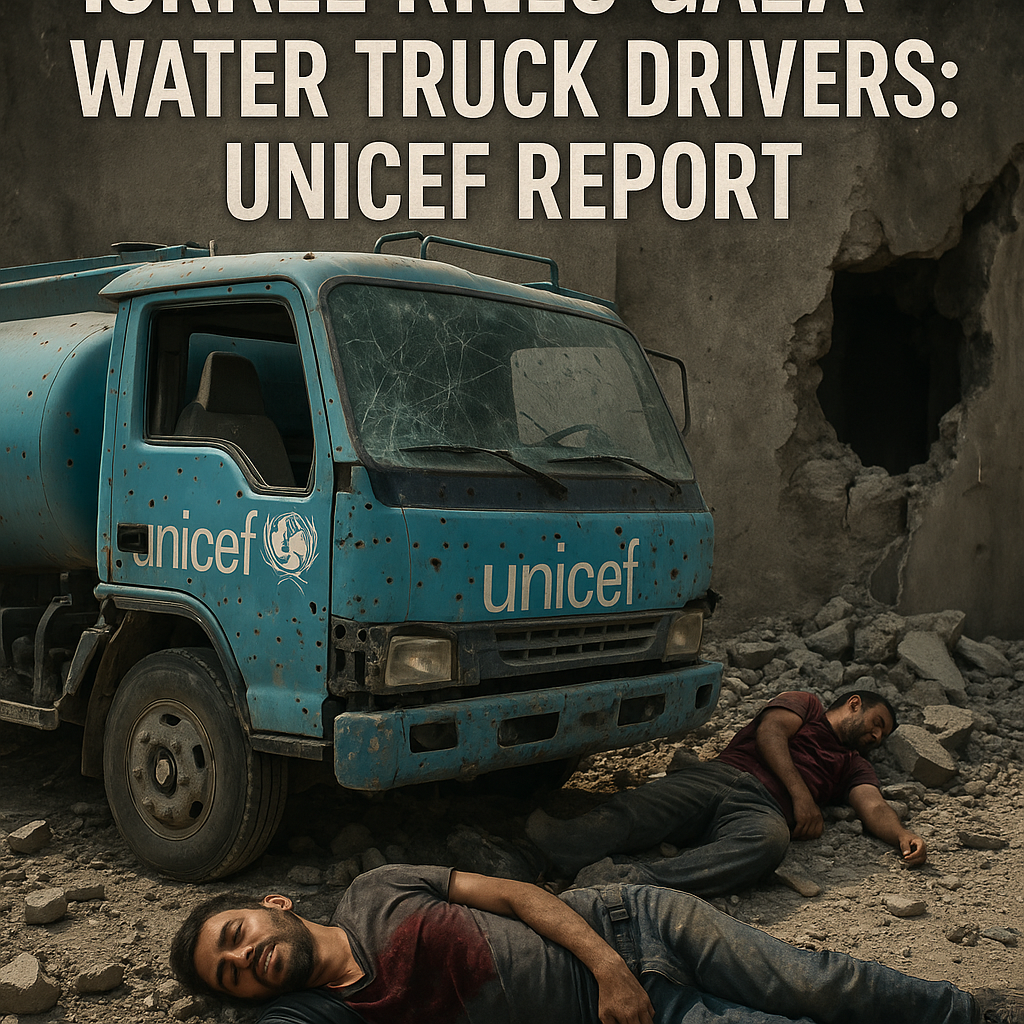
Israel Kills Gaza Water Truck Drivers: UNICEF Report

Israel Kills Gaza Water Truck Drivers: A Focus on Humanitarian Crisis
Recent reports indicate a tragic incident where Israeli forces killed a pair of water truck drivers in Gaza, underscoring the dire humanitarian situation in the region. The ongoing conflict has severely affected basic services in Gaza, making access to clean water not just a luxury but a pressing humanitarian need.

The Incident: A Tragic Loss Amid Ongoing Conflict
According to RT, the two men, identified as working for the Gaza Water Authority, were allegedly targeted while attempting to deliver water amidst the escalating violence in the region. The incident forms part of a broader pattern of attacks impacting essential services, including healthcare and sanitation, as highlighted by UNICEF. Their report notes that such targeting disrupts humanitarian aid initiatives vastly needed by the Gaza population, which already grapples with limited access to fundamental resources.


Al Jazeera articulates the gravity of the situation by emphasizing that, for many families in Gaza, water trucks represent one of the few links to accessing the essential resource. The United Nations has previously described the water crisis in Gaza as “catastrophic,” with an estimated 1.8 million people residing in the area lacking access to safe drinking water.


The emotional fallout from such tragedies cannot be overstated. Families are left grieving, alongside a community already burdened with psychological trauma from continuous conflict. The repercussions of targeting humanitarian workers extend beyond immediate physical harm; they further entrench despair within a populace that finds it increasingly difficult to meet basic needs.
Perspectives on the Conflict and Humanitarian Access
While the killing of the water truck drivers has drawn international condemnation, opinions remain split regarding the broader Israeli military campaign in Gaza. Some argue that Israel’s actions are justified as a means of self-defense against militant groups operating within the territory, as articulated in multiple reports from RT and Sky News. This perspective suggests that in times of war, the complexities of distinguishing between combatants and non-combatants become convoluted.
On the other hand, humanitarian organizations stress the imperative of protecting civilians and ensuring access to vital services. UNICEF and other agencies have repeatedly called for all parties involved in the conflict to allow unrestricted access to humanitarian assistance, emphasizing that targeting aid workers directly contravenes international humanitarian law.
The agents of aid in Gaza argue for a nuanced understanding of the conflict. While recognizing the security concerns of the Israeli government, they assert that the targeting of transporters of essential resources like water exhibits a lack of proportionate response to the challenges posed by armed groups in the region. They call for accountability measures that respect the boundaries of humanitarian efforts and the rights of civilians.
The Broader Impact on Gaza’s Population
The recent killings emphasize a broader humanitarian crisis that has been escalating in Gaza for years, exacerbated by a blockade and recurrent military operations. The water crisis is a symptom of a much larger malaise that affects various sectors, including health, education, and infrastructure. According to UNICEF, the lack of water access has led to increased incidences of diseases, further straining already overwhelmed healthcare services.
Moreover, Sky News reports on the rising tensions within the Gaza Strip, where civilians are caught in the crossfire, struggling to secure basic needs. Reports of shortages in medical supplies and electricity further complicate the landscape, indicating that the actions against water truck drivers are indicative of systemic issues rather than isolated events.
Humanitarian groups are advocating for comprehensive strategies to address both the immediate needs of civilians and the underlying issues that perpetuate violent cycles. There is a growing consensus among these organizations that lasting solutions can only be achieved through dialogue and cooperation, rather than retaliation and violence.
Conclusion: A Call for Humanitarian Consideration
The killing of the water truck drivers is a harrowing reminder of the humanitarian crises exacerbated by ongoing conflict in Gaza. While views surrounding the Israeli military’s tactics differ, the necessity for a clear distinction between combatants and humanitarian workers must prevail. As the international community grapples with these complexities, an urgent call for action emerges—not only for immediate relief but also for comprehensive peace efforts that could eventually secure a sustainable future for all communities involved.
The voices of Gaza’s populace deserve to be heard, echoing the hopes for peace, water, and the fundamental right to live without fear. The differences in perspectives should not overshadow the crucial need for dialogue, humanitarian efforts, and a commitment to respecting the dignity of all lives affected by this prolonged conflict.















