
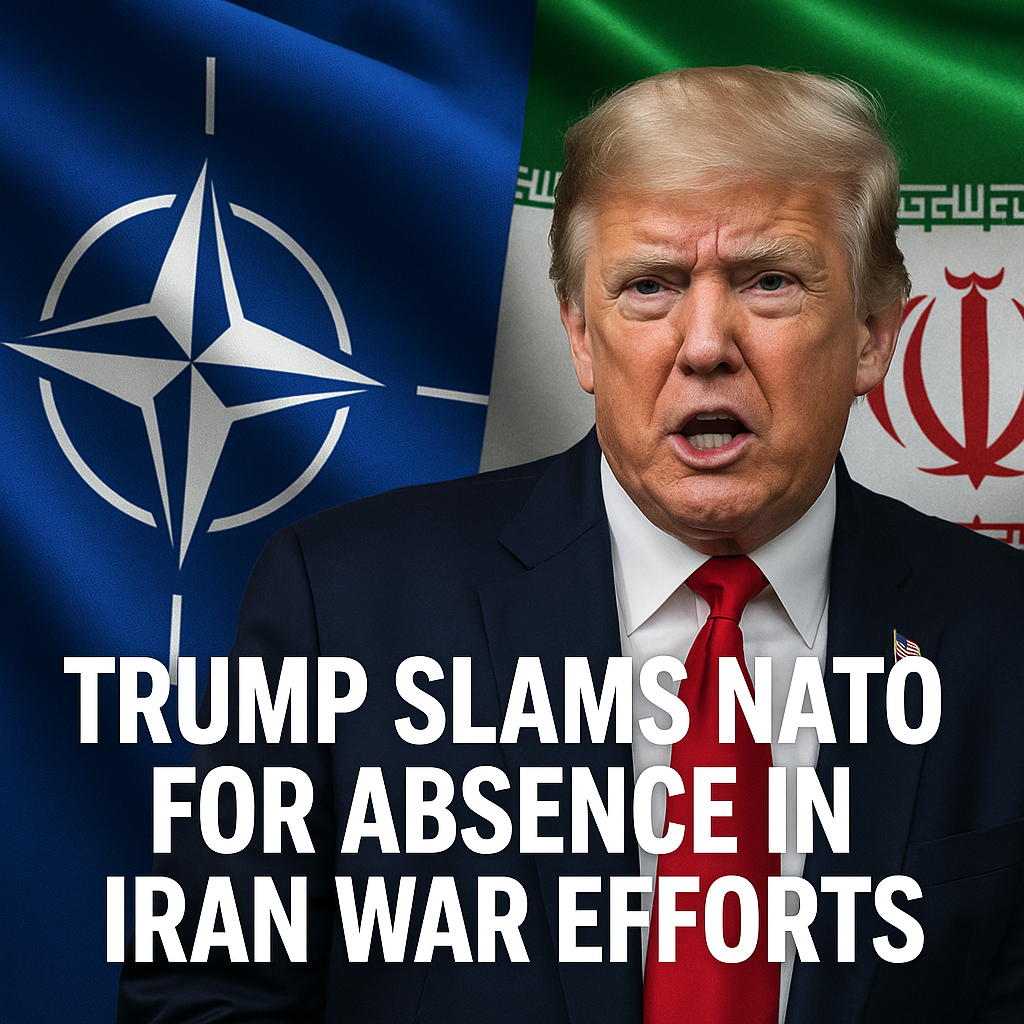
Trump Slams NATO for Absence in Iran War Efforts

Trump Slams NATO for Absence in Iran War Efforts
In recent remarks, former President Donald Trump has criticized NATO for its perceived lack of action concerning Iran, drawing attention to a complex intersection of geopolitics and military alliances. As tensions rise in the region, Trump’s statements highlight the growing debate around NATO’s role and responsibilities outside its traditional European focus.

A Shift in Focus: NATO’s Traditional Role vs. New Challenges
Traditionally, NATO has been viewed as a military alliance primarily focused on collective defense in Europe and the North Atlantic. However, the landscape is shifting as new challenges arise globally, leading many to question whether NATO should extend its focus further into regions like the Middle East.


Trump’s critique centers on the belief that NATO should be more involved in mitigating threats posed by Iran. In his words, “NATO has failed to intervene more robustly in potential conflicts involving Iran,” implying that the alliance’s priorities do not align with contemporary global security needs. This perspective resonates with certain military analysts and politicians who argue for a more proactive stance in global conflict zones.


Conversely, many experts caution against broadening NATO’s involvement. They argue that the alliance’s military commitments are already stretched thin, particularly following its engagement in Ukraine. According to Al Jazeera, “NATO has recently bolstered its presence in Eastern Europe in response to the Russian threat,” which may make a pivot toward the Middle East logistically and strategically complicated.
Divergent Views on NATO’s Future
While Trump and his supporters may see an urgent need for a stronger NATO presence in the Middle East, critics express concern that such a move could dilute the alliance’s effectiveness in defending Europe itself. The fear of overreach is palpable. As highlighted in various sources, including Sky News, there is an evident split within NATO member states regarding their commitment to interventions beyond Europe.
Key Points of Debate
– Increased Tensions with Iran: Many argue that Iran’s nuclear ambitions and its involvement in regional conflicts justify a firmer stance from NATO. Trump’s assertions can be seen as part of a larger call for a unified front against what he regards as a growing threat.
– Resource Allocation: Critics underscore that NATO members are already dedicating significant resources to counter the Russian threat. Expanding NATO’s reach could stretch these resources even thinner, undermining the alliance’s credibility and operational capabilities.
– Diplomatic Solutions vs. Military Action: Some analysts advocate for a diplomatic approach to handle tensions with Iran, arguing that military intervention might escalate conflicts. They stress that NATO should play a role in facilitating dialogue instead of launching operations that could lead to instability.
The Complexity of Global Alliances
Trump’s remarks also bring forth the broader question of what a military alliance like NATO should prioritize in the evolving landscape of international relations. With geopolitical dynamics continuously shifting, is it viable for NATO to redefine its mission to include areas like the Middle East, or is that a bridge too far?
While some members of the alliance may support increased action against Iran, others are hesitant. The diversity of perspectives illustrates the challenge of achieving consensus on global issues that increasingly affect member states differently based on their geographical and political contexts.
Moreover, the calls for NATO’s involvement in the Iran situation beg the question of whether the alliance has the capacity to manage numerous fronts effectively. As stated in reports, “NATO is confronted with multiple challenges—from cybersecurity to defense initiatives against Russia—making any potential expansion of its responsibilities a precarious endeavor.”
Conclusion: Navigating Future Challenges
While Trump’s criticism of NATO touches on important issues concerning national security and military readiness, the path forward is fraught with complexities. The alliance now faces the delicate task of balancing its existing commitments while grappling with calls for broader engagement.
As various perspectives continue to emerge, the future of NATO will likely require nuanced debates among its member states, considering not only the urgency of issues like Iran but also the overarching need for unity in the face of divided opinions. Understanding this landscape will be crucial for NATO as it seeks to navigate the complexities of modern geopolitical threats.
In conclusion, as the dialogue surrounding NATO’s role evolves, stakeholders must weigh the implications of expanding their focus while maintaining the alliance’s core mission: collective defense against aggression, primarily in Europe.















