
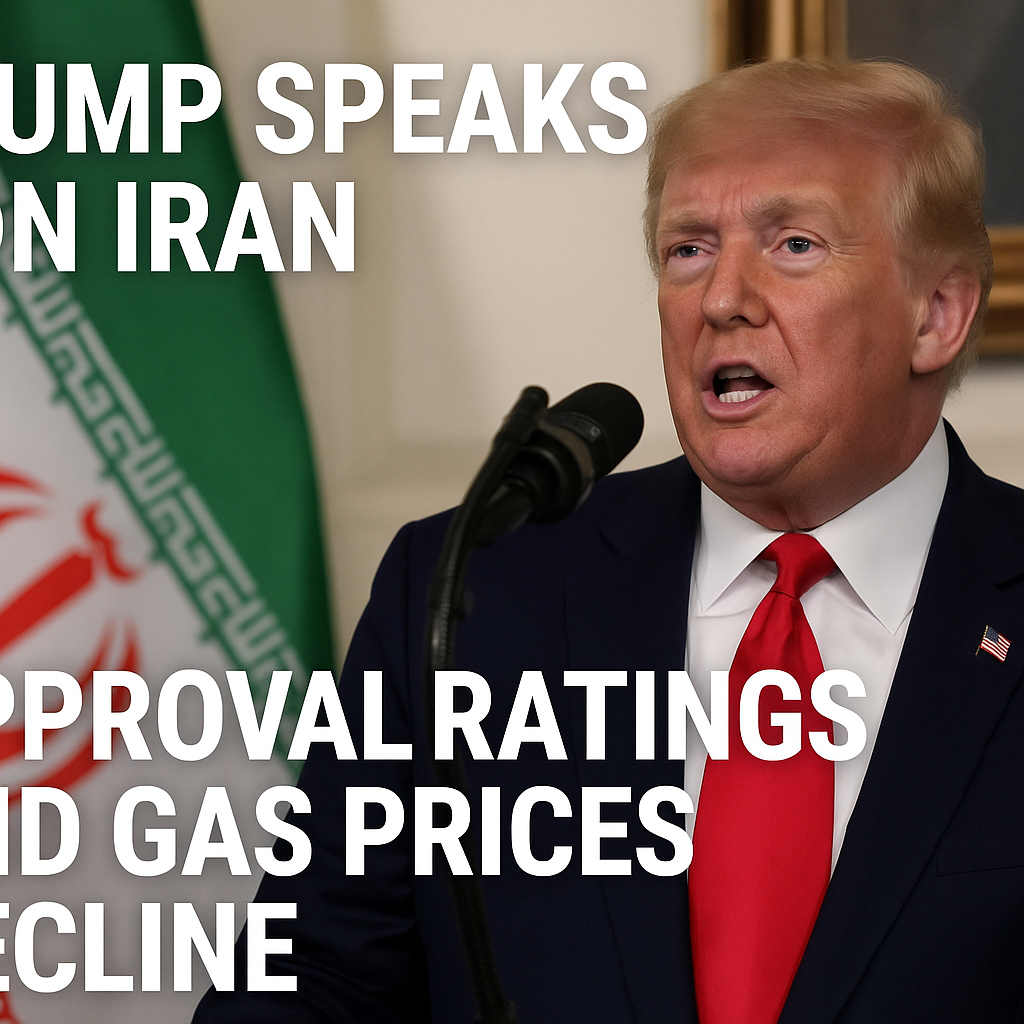
Trump Speaks on Iran as Approval Ratings and Gas Prices Decline

Trump’s Commentary on Iran Amid Declining Approval Ratings and Rising Gas Prices
In recent weeks, former President Donald Trump has made headlines discussing the U.S.’s relationship with Iran, coinciding with a noticeable decline in his approval ratings and concerns over rising gas prices. As political tensions mount and economic indicators shift, Trump’s words carry a weight rooted in both historical context and contemporary issues.

The Convergence of Politics and Economic Realities
Trump’s remarks regarding Iran have reignited discussions about U.S. foreign policy and its implications for domestic issues. According to RT News, Trump criticized the current administration’s handling of Iran, asserting that their approach fuels instability and emboldens aggressors. He conveyed a sense of urgency around re-establishing a firm stance against Iran, citing fears that the regime’s perilous activities threaten global peace.


Simultaneously, his approval ratings have dipped as voters express dissatisfaction over several pressing issues, particularly inflation and gas prices. A recent poll mirrored this sentiment, showing that a significant portion of Americans—over 80%—are worried about the rising cost of living and its impact on their daily lives. This provides a critical backdrop for understanding Trump’s appeal as he suggests that ensuring energy independence is vital for national security.


Diverging Opinions on Foreign Policy Impact
While Trump advocates for a tough approach to Iran, voices from sources like Al Jazeera highlight a contrasting perspective. They argue that treating Iran solely through the lens of aggression may overlook vital diplomatic solutions. The recent history of U.S.-Iran relations suggests that military action often escalates rather than alleviates conflict. The outlet asserts, “A strategy emphasizing negotiation over confrontation could lead to more durable peace.”
Moreover, as tensions rise in the Middle East, the implications extend far beyond just international relations. The interconnectedness of gas prices to foreign policy decisions has left many Americans anxious. As highlighted by Sky News, soaring gas prices severely impact American wallets, compounding existing economic frustrations. The report notes that the current spike in fuel costs is intricately tied to geopolitical issues, including relations with Iran and energy market fluctuations.
Evaluating the Implications of Trump’s Position
Trump’s focus on energy and its link to national security is not merely rhetoric; it reflects a growing concern over U.S. energy reliance on foreign sources. As global tensions—and particularly those involving Iran—remain high, the ability of the U.S. to maintain stable energy prices is inextricably linked to foreign policy decisions. Trump’s assertion that a strong stance against Iran would aid in reducing gas prices resonates with voters feeling the pinch at the pump.
However, critics argue that Trump’s approach might provoke unnecessary escalation in the region, potentially destabilizing oil markets further. The clear consensus between outlets like RT and Al Jazeera is that a balance must be struck between maintaining U.S. interests abroad and ensuring economic stability at home.
The Challenges Ahead: Navigating a Complex Landscape
As elections loom and economic pressures mount, Trump’s narrative surrounding Iran could serve as both a weapon and a shield—weaponizing foreign policy to divert attention from domestic criticisms while asserting his return to a strong leadership model. The complexity of this reality demands that voters consider the multifaceted implications of such views.
In conclusion, while Trump addresses Iran from a perspective that marries foreign policy with domestic economic concerns, the reality is that, despite his rhetoric, the U.S.’s relationship with Iran and its effects on gas prices remain deeply complex. The current economic climate demands nuanced discussions rather than simplified narratives. For voters eyeing the intersection of national security and pocketbook issues, understanding these dynamics is crucial in preparing for the outcomes of future elections.















