
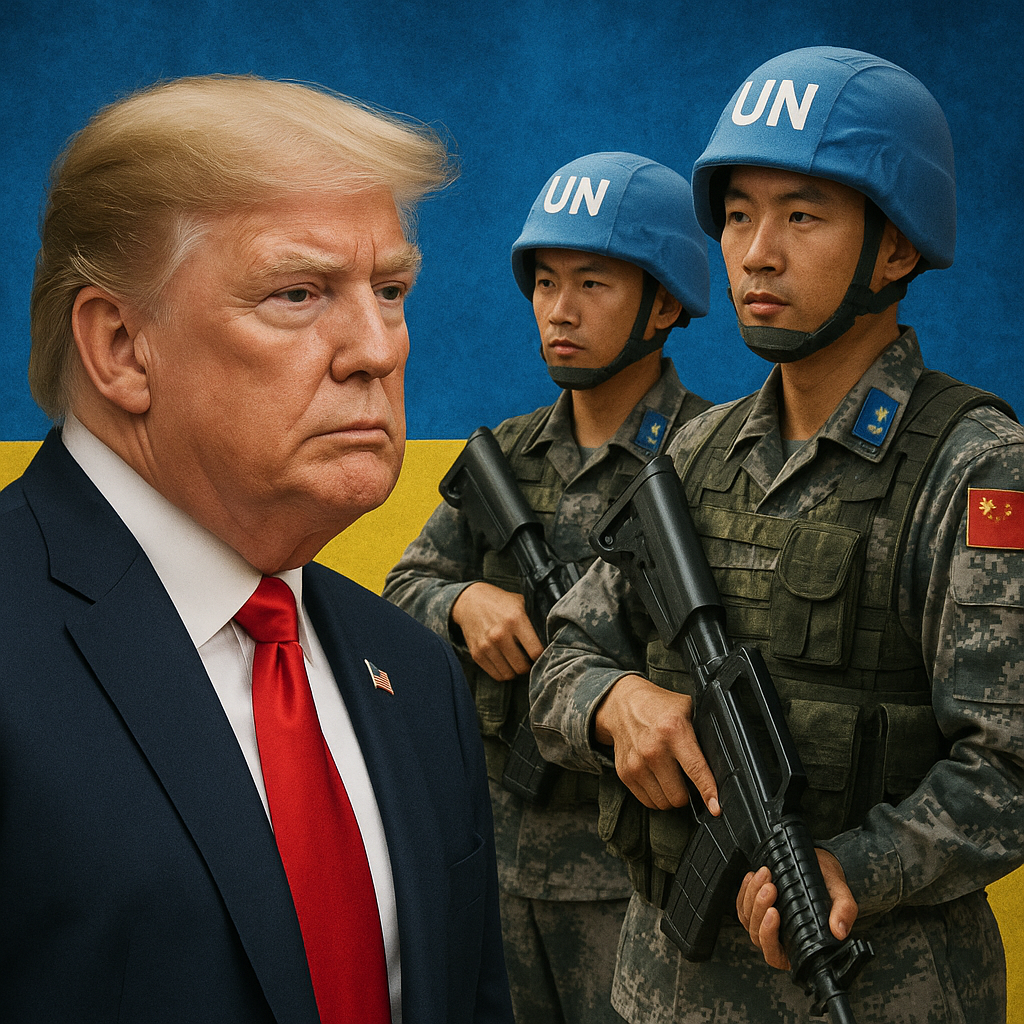
Trump Supports Chinese Peacekeepers in Ukraine

Trump Supports Chinese Peacekeepers in Ukraine
The topic of international peacekeeping has taken a unique turn as former President Donald Trump recently expressed his support for the deployment of Chinese peacekeepers in Ukraine. This unexpected stance has ignited discussions across the globe, as it raises questions about the implications for U.S.-China relations and the ongoing conflict in Ukraine.

The Context of Trump’s Support
In a recent interview, Trump articulated a belief that China could play a constructive role in negotiating peace in Ukraine. “If China wants to come in and help, why not?” he stated, suggesting that such an initiative could contribute to stabilizing the conflict. Trump’s remarks echo a broader sentiment that has emerged as nations grapple with the complexities of the Ukraine crisis since Russia’s invasion in 2022.


This position is somewhat unexpected, especially coming from a figure who has often taken an antagonistic stance towards China during his presidency. Analysts interpret this as a potential shift in tone, aimed at appealing to the U.S. electorate who are increasingly weary of prolonged military engagements abroad. As tensions in Eastern Europe escalate, the former president’s proposal poses both risks and opportunities.


Diverse Responses from Global Leaders
Reactions to Trump’s proposal have been varied and complex. Some U.S. lawmakers voiced skepticism about relying on China, given its historical ties with Russia. Senator Lindsey Graham, for instance, remarked that inviting Beijing into Ukraine might “complicate” matters, indicating a belief that the Chinese government is not a neutral party in the conflict.
On the other hand, a faction of analysts and commentators suggests that Trump’s support for Chinese peacekeepers could indicate a growing international consensus that recognizes the necessity of third-party mediation to end the Ukraine crisis. A peaceful resolution, they argue, might be more likely if major global players, including China, engage collaboratively.
China’s official stance has also been measured. While the Chinese government has historically expressed support for Ukraine’s sovereignty, how willing it would be to deploy peacekeepers remains uncertain. Additionally, China’s involvement could be perceived as an effort to bolster its global influence, prompting discussions about the strategic motivations behind such a move.
Weighing Evidence: A Complex Landscape
The geopolitical landscape surrounding the Ukraine conflict is rife with complexities. Many observers are quick to cite the U.S.’s historical reluctance to rely heavily on nations perceived as adversaries, such as Russia and, in a different context, China. On one hand, Trump’s endorsement could be viewed as a pragmatic approach to potentially halt violence and foster dialogue. On the other hand, engaging China in Ukraine might also afford Beijing an opportunity to assert itself on the global stage, raising anxiety among both U.S. allies and NATO.
There’s also a significant concern that the involvement of Chinese peacekeepers might not be welcomed by all factions within Ukraine. Some Ukrainian officials have expressed unease about foreign military presence, which they fear could be co-opted for political gain by Moscow. The potential for miscommunication or miscalculation in such a sensitive environment adds another layer of complexity to any discussions surrounding this proposal.
Open Questions and Challenges Ahead
While Trump’s suggestion has sparked conversation about the role of peacekeepers, it also highlights the unpredictability of international relations. Can China act as an honest broker in a conflict where its own strategic interests are at stake? And how would the U.S. respond if China sought to expand its influence through such operations?
Experts emphasize the need for caution. While diplomatic efforts are necessary, there are legitimate concerns about making alliances that might further entrench divisions rather than heal them. The lack of a clear consensus on the matter indicates that there is no straightforward solution to the challenges posed by this war.
In summary, Donald Trump’s support for Chinese peacekeepers in Ukraine introduces a new dimension to an already complicated geopolitical narrative. While the idea may usher in discussions about innovative paths to peace, it also brings forth critical questions about the nature of international collaboration in conflict resolution. As the situation develops, it will remain essential for policymakers and analysts alike to navigate these complexities with care and consideration, keeping the broader impacts in focus.















