
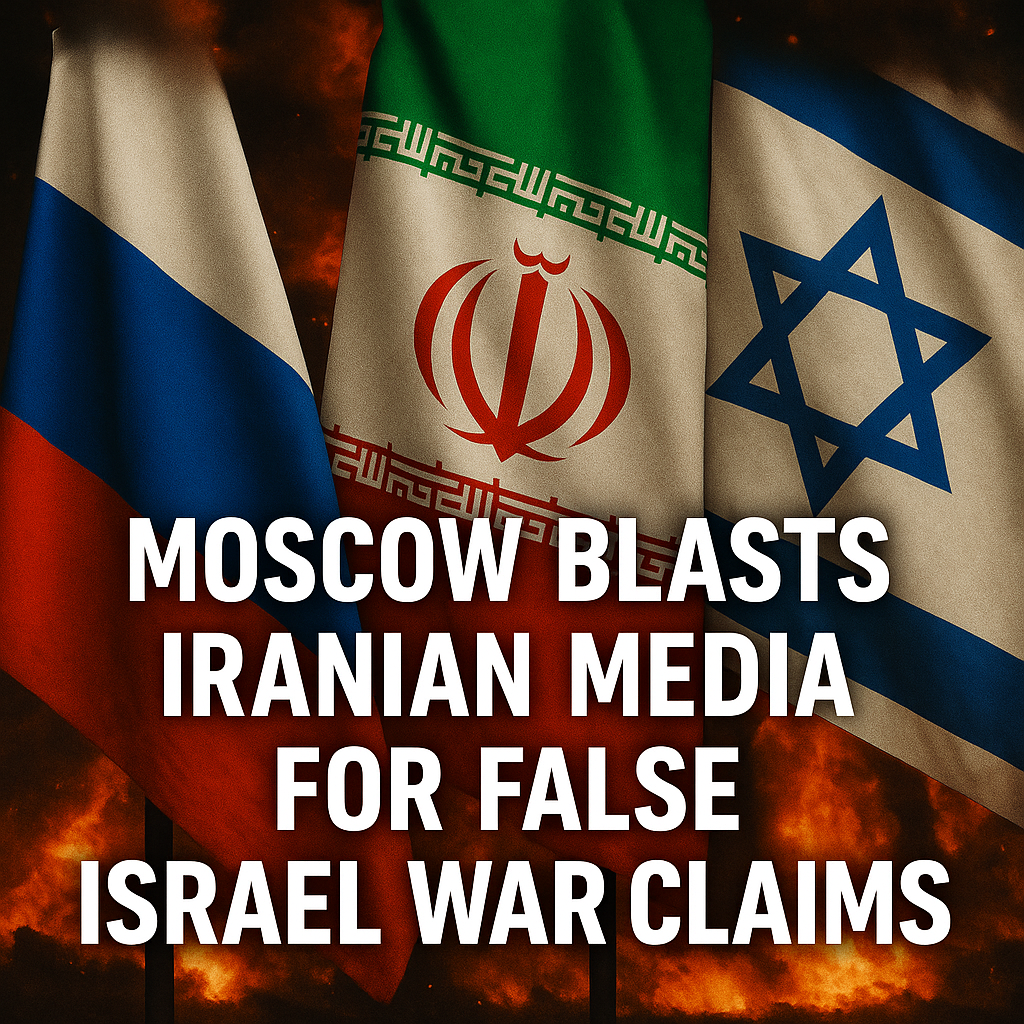
Moscow Blasts Iranian Media for False Israel War Claims

Moscow Blasts Iranian Media for False Israel War Claims
The relationship between Moscow and Tehran has hit a new snag as Russian officials publicly criticized Iranian media for allegedly spreading misinformation regarding the Israel-Palestine conflict. This incident serves as a reminder of the complexities and shifting alliances in the region.

Context of the Claims
Recently, Iranian media outlets reported extravagant assertions about Russia’s involvement in the ongoing Israel-Palestine hostilities. Russian Foreign Ministry spokeswoman Maria Zakharova responded firmly, stating that such claims were “unfounded and misleading.” This criticism reflects a broader trend of tensions between the two nations, who, despite sharing common interests, often diverge in their narratives and approaches to foreign relations.


Diverse Reactions from the Media Landscape
The Iranian claims reported by state-run media suggested that Russia had a more aggressive role in the conflict, framing Moscow as a party complicit in the advancements of Israeli forces. Such narratives, while they may serve certain political agendas in Iran, have been dismissed by Russian authorities.


– Iranian Perspective: Iranian media outlets often portray the Israel-Palestine conflict through a lens that emphasizes resistance against perceived western imperialism and collaboration. This perspective aligns with Iran’s established position as a supporter of Palestinian groups. However, by overstating Russia’s involvement, these reports may backfire and create diplomatic friction with Moscow.
– Russian Reaction: Moscow’s strong rebuttal signifies its desire to maintain a balanced stance in the Middle East. Citing an interest in promoting stability, Russia is keen to avoid being dragged into narratives that could jeopardize its relationships with various players in the region, including Israel. The Kremlin’s pushback also underscores its strategy of asserting sovereignty in its diplomatic narrative—resisting overtures from Iranian narratives that may constrain its action.
Analyzing the Underlying Dynamics
The incident unveils a crucial dynamic in international relations within the Middle East. The Russian-Iranian partnership has been historically complicated, largely structured around mutual interests rather than ideological alignment. Both nations are pivotal players in the Syrian civil war and share the goal of countering U.S. influence. However, contrasting priorities surface distinctly in moments such as these.
1. Strategic Alliances: While both nations may align on certain issues, like supporting the Assad regime in Syria, their interests can diverge substantially on matters such as the Israel-Palestine situation. Russia often engages diplomatically with Israel, fostering communication rather than escalating tensions.
2. Media Influence and Propaganda: The role of state-controlled media in shaping public perception cannot be underestimated. For Iran, leveraging media narratives improves its internal solidarity while reinforcing its anti-Western image. In contrast, Russia’s challenge lies in countering false information to assert its credibility on the international stage.
3. Impacts of Misinformation: Misreporting on critical geopolitical events can lead to diplomatic fallout. Misinformation can exacerbate tensions not only between the nations involved but across the broader international community. Russian officials’ public rebuke of Iranian claims indicates a serious commitment to mitigating any adverse effects that could emerge from inaccurate portrayals.
Conclusion: Navigating the Complexity
As we analyze the backlash from Moscow against Iranian media’s claims, it becomes evident that this situation reflects more than an isolated incident of false reporting. It signifies a larger issue of navigating relationships steeped in complex historical contexts and competing narratives.
While Iran may continue to use sensational narratives regarding the Israel-Palestine conflict to galvanize support at home and reinforce its position as a resistant force, Russia’s firm and measured response serves to emphasize its intent to construct a balanced approach. As diplomatic dynamics evolve, both nations may need to recalibrate their media narratives and diplomatic strategies to avoid misunderstandings that could lead to more profound international repercussions.
The ongoing discourse around this issue marks not just a critical moment for Russia and Iran but also offers broader insights into the complexities of international diplomacy in regions where history, ideology, and current events create a tangled web of interests.















