
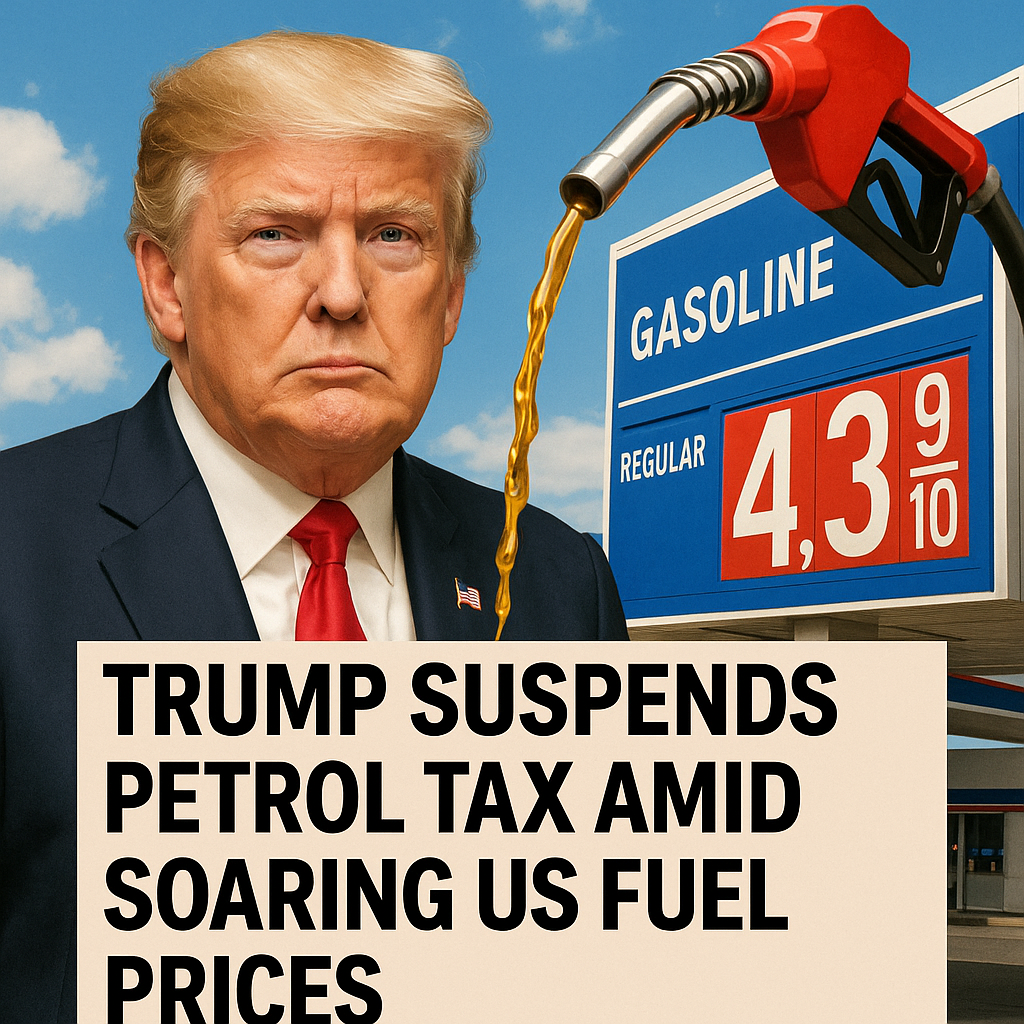
Trump Suspends Petrol Tax Amid Soaring US Fuel Prices

Amid soaring US fuel prices, the decision by former President Donald Trump to suspend the petrol tax has ignited a multifaceted debate around economic policy, fiscal responsibility, and the implications for consumers and the broader market.

The Context of Rising Fuel Prices
Fuel prices in the United States have reached alarming heights, driven by factors including global supply chain disruptions, ongoing geopolitical tensions, and rising crude oil prices. The fuel tax, designed to bolster federal infrastructure funding, represents a substantial portion of the costs that consumers face at the pump. Currently, it accounts for more than 18 cents per gallon of gasoline. While aimed at alleviating the financial strain on American households, Trump’s proposed suspension invites contrasting opinions from various economic experts and political commentators.


Economic Implications of Suspending the Petrol Tax
On one side, supporters of the suspension argue that it would provide immediate relief to consumers grappling with record-high prices. A recent article from Al Jazeera highlighted that many families are feeling the pinch, with fuel costs significantly affecting their monthly budgets. Proponents assert that temporarily lifting the tax may stimulate consumer spending and enhance economic activity during a challenging period.


However, critics of the suspension caution against the potential long-term ramifications. Many believe that while a temporary tax holiday could provide short-term relief, it may undermine vital funding for infrastructure projects, which are integral to the country’s economy. According to a report from Sky News, some economists argue that such a move might lead to increased road maintenance issues down the line, as the federal government relies heavily on these funds for upkeep and upgrades.
Additionally, skeptics warn that merely suspending the tax may not lead to proportional decreases in gas prices. A report from RT noted that fuel prices are also heavily influenced by global market trends, with many of the underlying issues, such as geopolitical instability and OPEC+ decisions, remaining unaddressed. As a result, the anticipated savings at the pump may be more symbolic than substantive.
Political Perspectives on Tax Suspension
The political ramifications of Trump’s decision further complicate the discussion. Supporters of the former president view his actions as a bold attempt to relieve economic pressure on Americans, particularly as elections loom. Their stance resonates with those prioritizing immediate economic relief over long-term fiscal planning.
Conversely, opponents argue that such populist measures are often more about political theatrics than sound economic policy. Critics from various sources emphasize that suspending the petrol tax might serve Trump’s political ambitions rather than delivering genuine, sustainable solutions. For example, some analysts note that during an election year, proposals like this can be designed to bolster voter support rather than address complex economic challenges.
The Bigger Picture: Short-Term Fixes vs. Long-Term Solutions
The debate surrounding the petrol tax suspension encapsulates a broader issue: the tension between short-term economic relief and long-term fiscal responsibility. While immediate measures may provide temporary reprieve, they can inadvertently set a precedent that complicates future financial planning.
Moreover, the question arises: will suspending the petrol tax be followed by comprehensive policies that target the root causes of rising fuel prices? Without systemic change addressing supply chain vulnerabilities and energy independence, the relief provided by tax suspension may be fleeting.
Conclusion: Weighing the Arguments
As the debate over Trump’s suspension of the petrol tax evolves, it highlights the complexities of economic policy in the United States. While the intentions behind such a proposal can be seen as noble, the implications for infrastructure funding and long-term economic planning raise significant concerns.
Ultimately, the discourse surrounding this issue reflects broader challenges in the American economic landscape—balancing immediate consumer needs with sustainable fiscal strategies. The conversation will likely continue as stakeholders from various sectors weigh the potential benefits and drawbacks of such an influential economic policy. As fuel prices remain a critical topic of concern for many Americans, ongoing dialogue will be essential in determining the best path forward.















