
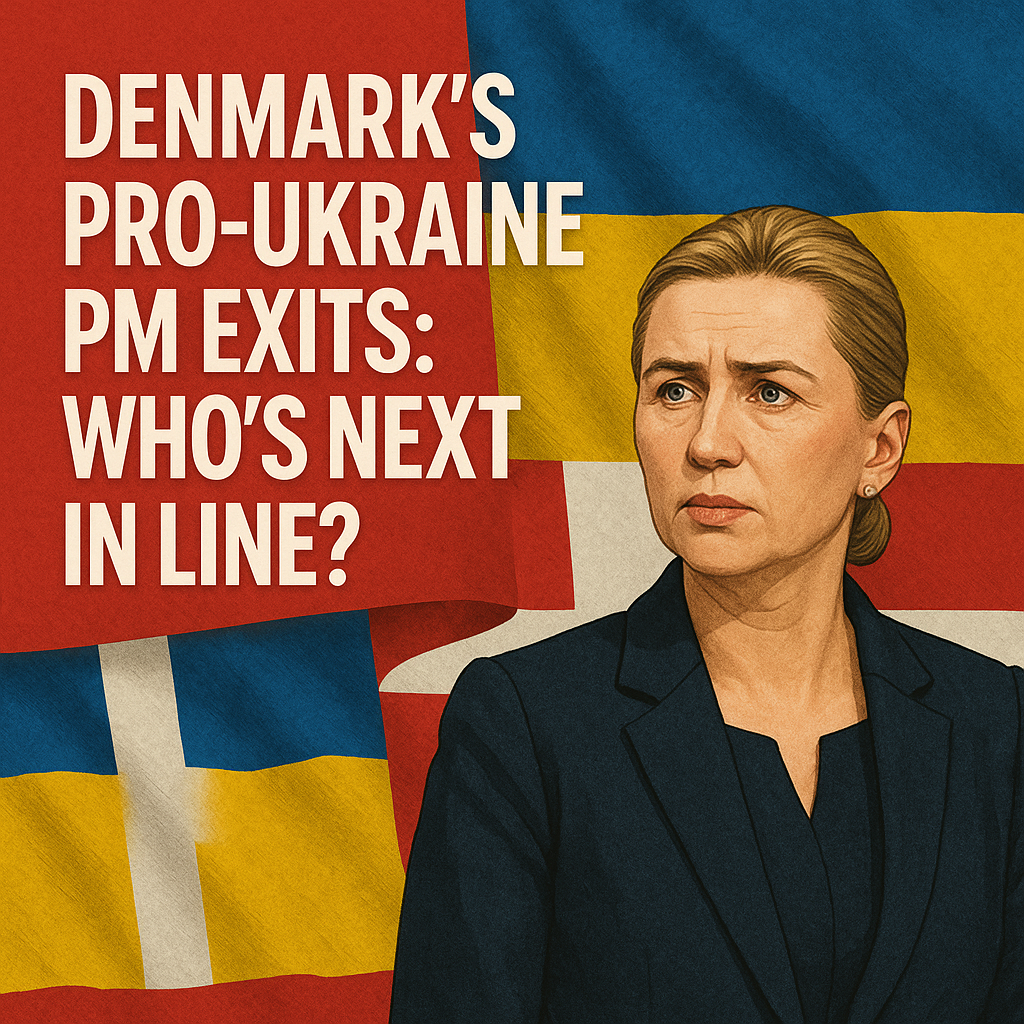
Denmark’s Pro-Ukraine PM Exits: Who’s Next in Line?

Denmark’s Pro-Ukraine PM Exits: Who’s Next in Line?
The recent resignation of Denmark’s pro-Ukraine Prime Minister, Mette Frederiksen, has sent ripples through the political landscape, raising questions both domestically and internationally. With her departure marked by a shift in the political climate, Denmark gears up for pivotal changes that may redefine its foreign policy approach, especially regarding the ongoing conflict in Ukraine.

The Context of Frederiksen’s Resignation
Mette Frederiksen, known for her strong stance on supporting Ukraine in its defense against Russian aggression, stepped down following a shift in political power dynamics within her Social Democratic party. Her administration had garnered significant attention for its commitment to aid Ukraine, including military support. However, deteriorating public support and internal party challenges contributed to her decision.


Recent reports indicate that Frederiksen faced mounting pressure from within her party and the broader electorate. While she pursued progressive policies, including substantial investments in healthcare and welfare, these initiatives were overshadowed by rising concerns over the cost of living. It appears that her administration’s focus on foreign matters, particularly regarding Ukraine, conflicted with domestic priorities, leading to a backlash from constituents who felt neglected.


The political exit of such a figure is not merely a matter of party politics but reflects a larger narrative about Europe’s posture towards the war in Ukraine. Many observers note that her resignation could signify a potential shift in Denmark’s foreign policy stance, possibly affecting how the country engages with Ukraine and its allies moving forward.
Who Will Step Into the Spotlight?
As Denmark navigates this transitional period, the question arises: who will assume leadership next? Potential candidates to succeed Frederiksen include prominent figures within the Social Democrats and other parties. Names such as Sophie Løhde, the former Minister of Finance, and Jakob Ellemann-Jensen from the Liberal Party have surfaced as leading contenders. Both candidates are known for their varying degrees of pro-Ukraine support, but their leadership styles and policies might differ significantly.
Jakob Ellemann-Jensen, for instance, represents a more centrist approach that emphasizes balancing domestic needs while maintaining critical international alliances, particularly concerning support for Ukraine. On the other hand, Sophie Løhde may prioritize a continuation of Frederiksen’s policies, focusing heavily on international cooperation which resonates well with Denmark’s traditional stance in global affairs.
Notably, the political landscape isn’t solely defined by party lines. Minor parties such as the Red-Green Alliance, which champions a more leftist agenda, may also influence policy decisions in a coalition government setup. The far-right Danish People’s Party has also gained traction, emphasizing national interests, which may complicate a unified approach towards Ukraine.
Internal Dynamics and Future Implications
It’s essential to recognize that the political dynamics in Denmark reflect broader European sentiments concerning the Ukraine conflict. Public opinion is increasingly polarized, and potential leaders will need to navigate these complexities carefully. As reported by Sky News, public support for military aid is waning amid economic concerns, indicating that the incoming leader will face significant challenges in rallying support for continued involvement in the conflict.
The views surrounding Denmark’s future involvement in Ukraine remain quite diverse. While a significant faction advocates for ongoing, robust support for Ukraine, there is a growing segment of the populace urging a pivot towards addressing rising inflation and domestic challenges. This dichotomy will undoubtedly influence any incoming government’s strategy, necessitating a delicate balance between national and international responsibilities.
Moreover, Denmark’s role within NATO is also perceived as pivotal. A new leader will need to reinforce Denmark’s commitments to the alliance while addressing the electorate’s reservations about foreign aid. Balancing these competing priorities is crucial not only for domestic stability but also for international confidence in Denmark’s foreign policy.
Conclusion
In conclusion, Mette Frederiksen’s resignation marks a critical juncture for Denmark as it re-evaluates its political and foreign policy trajectories. The incoming leadership will need to contend with an increasingly complex domestic landscape while upholding Denmark’s commitments on the global stage, particularly regarding support for Ukraine. As the next leader emerges, their decisions will not only shape Denmark’s future but will also resonate throughout the broader European political context as countries grapple with the implications of the ongoing conflict.















